
Every lyophilized peptide compound arrives as a dry, freeze-dried powder that cannot be used until it is properly dissolved in a compatible aqueous diluent. Getting that diluent wrong does not just waste a vial. It can destroy the structural integrity of the compound, introduce microbial contamination, and invalidate months of experimental data. Bacteriostatic water for peptides exists precisely to solve that problem. It is the industry-standard reconstitution solvent for multi-dose peptide research, and yet too many Canadian research labs still purchase it as an afterthought or source it from suppliers with no verifiable quality documentation. This guide explains what BAC water actually is, why its specifications matter at a chemical level, and how to source bacteriostatic water for sale in Canada that meets genuine research-grade standards.
Table of Contents
- Quick Takeaways
- What Is Bacteriostatic Water and Why Does It Matter for Peptide Research
- BAC Water vs. Sterile Water: Which One Belongs in Your Protocol
- Quality Specifications That Separate Research-Grade BAC Water from the Rest
- Reconstitution Guide: How to Use BAC Water with Lyophilized Peptides
- Storage, Shelf Life, and Handling Errors That Ruin Vials
- Comparison: BAC Water, Sterile Water, and Distilled Water for Peptide Reconstitution
- Sourcing Bacteriostatic Water in Canada: What to Demand from Your Supplier
- Frequently Asked Questions
- References
Quick Takeaways
| Key Insight | Explanation |
|---|---|
| BAC water contains 0.9% benzyl alcohol | This concentration (9 mg/mL) is the USP-standard preservative level that actively inhibits bacterial growth after each vial puncture, making multi-dose use safe for research protocols. |
| 28-day in-use window once opened | Opened and refrigerated BAC water vials maintain bacteriostatic protection for up to 28 days when aseptic technique is observed consistently. Sterile water offers no such window. |
| Sterile water is single-use only | Without benzyl alcohol, sterile water can show bacterial growth within 24 to 72 hours of the first vial breach. BAC water is the correct choice for any multi-withdrawal protocol. |
| Pyrogen-free and endotoxin-free are not the same claim | Pyrogen-free is a broader term. Research labs should confirm both designations separately, as endotoxins are a specific class of pyrogens that require dedicated LAL testing to rule out. |
| Distilled water is not a substitute | Bottled distilled water is not sterile and typically contains low levels of bacteria. Using it to reconstitute research peptides introduces contamination on day one of the experiment. |
| pH near 5.7 supports peptide stability | Research-grade BAC water maintains a pH range of approximately 4.5 to 7.0, with a target near 5.7. This range is compatible with the structural stability of most research peptide compounds. |
| Chain of Custody documentation is non-negotiable | For Canadian research labs, supplier documentation including batch traceability and independent laboratory verification protects the integrity of experimental records and institutional compliance. |
What Is Bacteriostatic Water and Why Does It Matter for Peptide Research
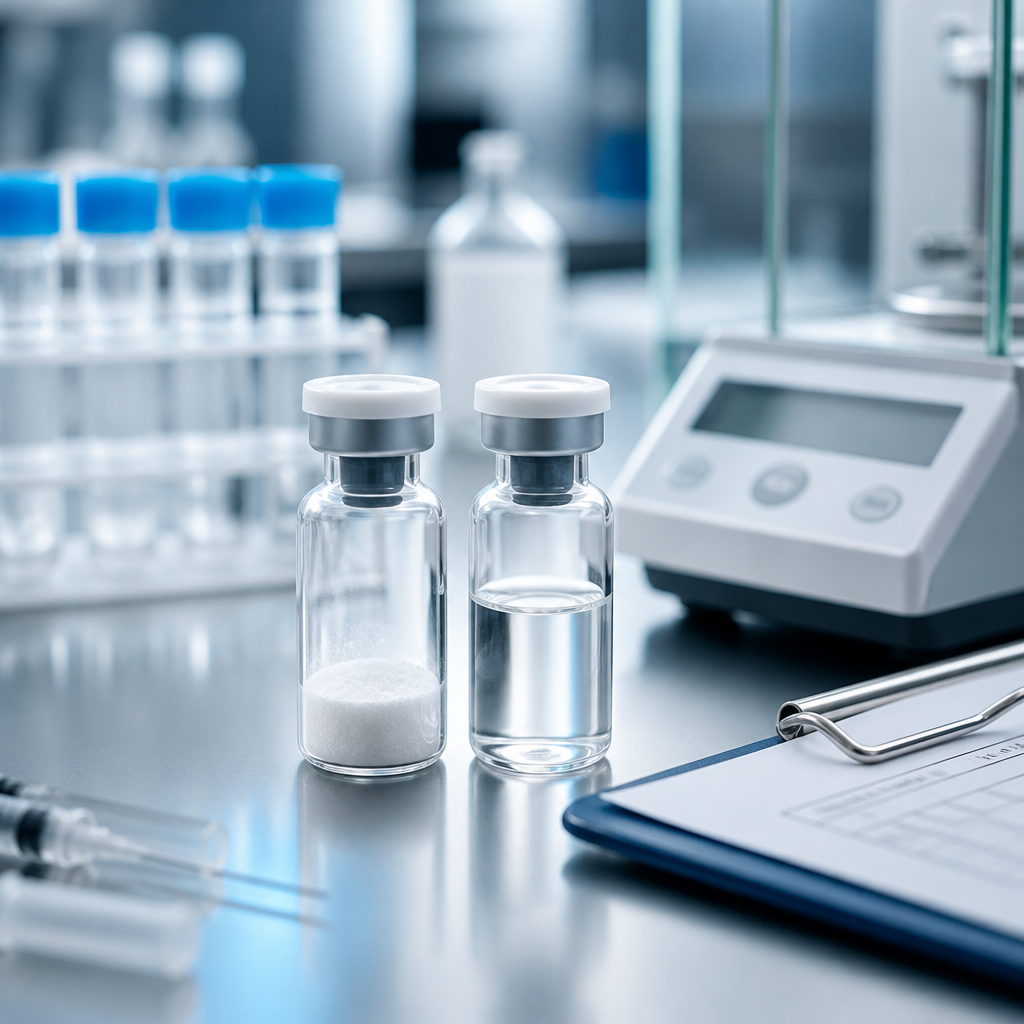
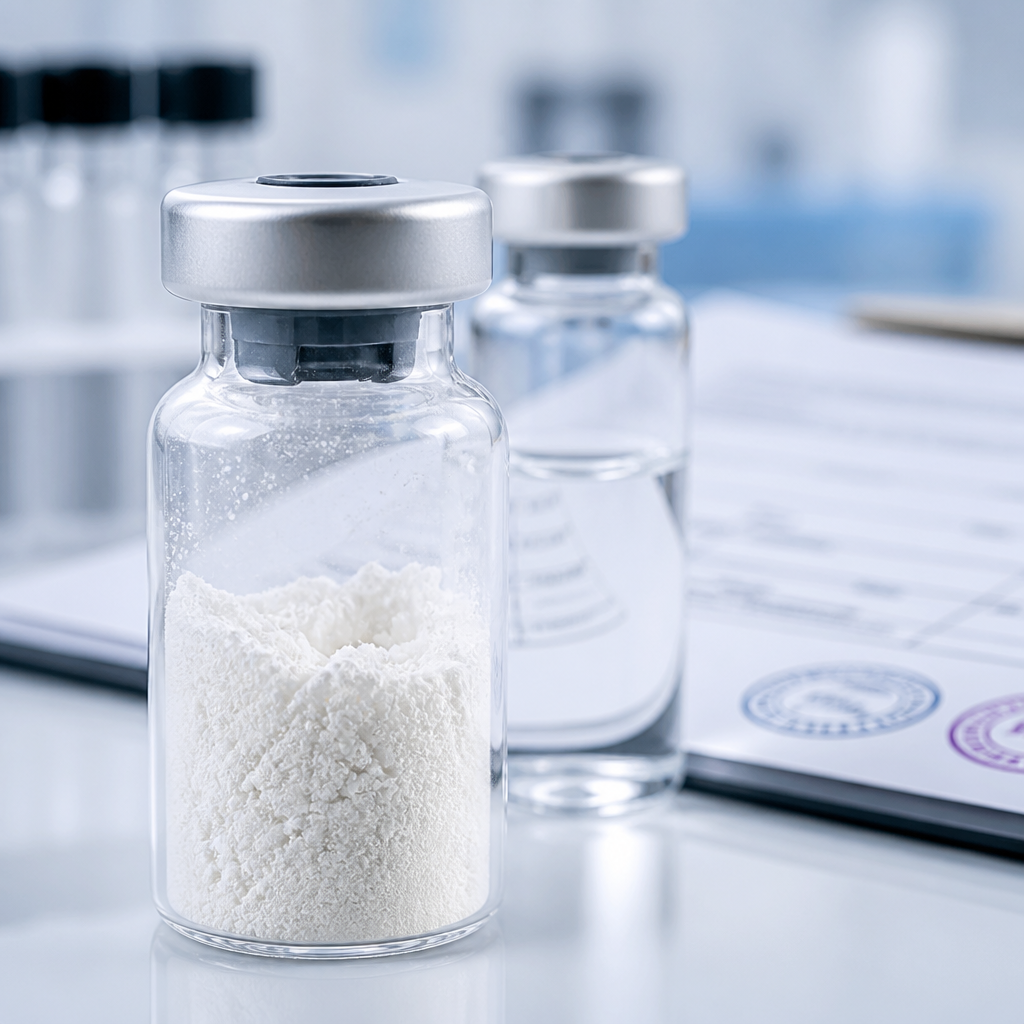
Bacteriostatic water (commonly abbreviated as BAC water) is a sterile, non-pyrogenic aqueous solution containing 0.9% benzyl alcohol (9 mg/mL) as a preservative. The benzyl alcohol does not sterilize the water - it inhibits the multiplication of bacteria that are introduced through the repeated needle punctures that characterize a multi-dose research protocol. That is the defining property: it does not kill contaminants outright, but it prevents them from reaching populations large enough to compromise the solution.
For peptide researchers, this matters enormously. Lyophilized peptide compounds are supplied as dry powders precisely because they are unstable in aqueous form over long periods. Once reconstituted, the clock starts. The reconstituted solution is vulnerable to bacterial contamination every single time the vial rubber septum is pierced. Without benzyl alcohol present in the diluent, even meticulous aseptic technique cannot fully compensate for cumulative contamination risk across multiple withdrawals.
The solution maintains a pH range of approximately 4.5 to 7.0, with a target near 5.7, which is compatible with the structural stability of most common research peptide compounds. This pH compatibility is not incidental. It is one of the reasons BAC water became the standard diluent across the peptide research community rather than alternatives with less predictable ionic chemistry.
"A bacteriostatic preservative does not sterilize. It prevents bacteria from reproducing to harmful concentrations. The distinction matters because it defines both the strength and the limits of multi-dose vial safety in research settings."
Pro tip: Always confirm that your BAC water specifies both sterile and non-pyrogenic on the product documentation. A vial can be bacteriostatic without being fully pyrogen-free, and the difference is the difference between clean results and confounded data in any sensitive assay.
BAC Water vs. Sterile Water: Which One Belongs in Your Protocol
The practical difference between bacteriostatic water and sterile water becomes apparent the moment a vial is punctured more than once. Sterile water for injection contains no additives or preservatives. Once the seal is broken, any bacteria introduced by the needle or the surrounding environment have nothing to prevent them from multiplying. In practice, a reconstituted peptide solution prepared with sterile water can show meaningful bacterial growth within 24 to 72 hours of the first vial breach, even under clean bench conditions.
BAC water addresses this directly. Because benzyl alcohol is present at the 0.9% concentration throughout the solution, the reconstituted vial can support multiple withdrawals over an in-use period of up to 28 days when stored refrigerated and handled with consistent aseptic technique. That 28-day window is not a rough estimate. It is the guideline derived from the pharmacopoeial standard for benzyl alcohol-preserved multi-dose preparations.
When sterile water is the right choice
Sterile water is appropriate for single-use reconstitution scenarios where the entire vial content will be used in one experimental session. It also avoids any potential concern about benzyl alcohol interaction with peptide compounds that have sensitivity to alcohols at that concentration, though this concern is rarely supported by evidence for common research peptides at normal working dilutions.
Why BAC water is the default for peptide research
Most peptide research protocols involve multiple injections or sample withdrawals over days or weeks. Reconstituting a 10 mg, 20 mg, or 60 mg lyophilized vial and using the entire content in a single session is the exception, not the rule. BAC water is the practical default precisely because it matches how peptide research is actually conducted. Choosing sterile water as a cost-saving measure in a multi-withdrawal context is not a neutral decision. It is a contamination risk that compromises the integrity of the entire experiment.
Quality Specifications That Separate Research-Grade BAC Water from the Rest
Not all BAC water available for sale in Canada meets the same standard. Suppliers often use broadly positive language like "high purity" or "laboratory grade" without specifying the underlying test data. In practice, the following specifications are what distinguish a research-grade product from a nominally compliant one.
Sterility and non-pyrogenicity
Research-grade BAC water must be manufactured under conditions that guarantee the absence of viable microorganisms and pyrogens. Pyrogens are fever-inducing substances, with bacterial endotoxins being the most clinically significant class. Endotoxin testing uses the Limulus Amebocyte Lysate (LAL) test to confirm concentrations below detection threshold, typically below 0.005 EU/mL for cell culture and research-grade applications. A product described only as "sterile" without an accompanying endotoxin or pyrogen-free designation has not necessarily passed this more rigorous test.
Benzyl alcohol concentration precision
The 0.9% (9 mg/mL) benzyl alcohol concentration is not a target range. It is a specific value set because it is the minimum effective bacteriostatic concentration without introducing meaningful cytotoxicity concerns at typical research dilution factors. Products that do not specify this concentration on documentation leave the researcher with no confirmation that the preservative level is adequate.
Multi-dose glass vial format
Research-grade BAC water is supplied in multi-dose glass vials with a rubber septum designed for repeated needle puncture. The vial material matters. Plastic containers are inappropriate for long-term storage because benzyl alcohol can leach compounds from certain polymer liners. Glass with a pharmaceutical-grade stopper is the standard format for a reason.
Pro tip: When evaluating a BAC water supplier for Canadian research use, request the Certificate of Analysis (COA) before purchasing. A legitimate research-grade supplier will provide batch-specific documentation showing sterility, endotoxin levels, and benzyl alcohol concentration. If that documentation is not available on request, the product does not meet the threshold for serious laboratory work.
Reconstitution Guide: How to Use BAC Water with Lyophilized Peptides
The reconstitution step is where the quality of the BAC water and the handling technique both come into direct contact with the peptide compound. Errors made here are irreversible. The peptide cannot be re-lyophilized by the end user, and a contaminated or structurally compromised solution does not produce usable experimental data.
The correct reconstitution technique
Begin with a clean bench environment. Wipe the rubber septa of both the peptide vial and the BAC water vial with 70% isopropyl alcohol and allow them to dry completely before puncturing. Draw the required volume of BAC water into a clean syringe. Insert the needle at an angle into the peptide vial and inject the BAC water slowly down the inside wall of the glass rather than directly onto the lyophilized powder. Direct stream injection can mechanically disrupt peptide structure, particularly for more fragile compounds. Gently swirl the vial, do not shake it. Vigorous shaking introduces air bubbles and can cause peptide aggregation.
Calculating BAC water volumes for specific peptide vials
The target concentration determines the volume of BAC water required. For a 10 mg lyophilized vial, adding 2.0 mL of BAC water produces a concentration of 5 mg/mL. For larger vials such as 20 mg or 40 mg, researchers typically use proportional volumes to achieve a working concentration appropriate for the protocol. For example, a 20 mg vial reconstituted with 4.0 mL of BAC water yields the same 5 mg/mL concentration. The key constraint is that the final volume must be compatible with the vial capacity. Most standard research vials accommodate up to 3 mL without overflow risk; larger peptide quantities such as 40 mg, 60 mg, or 84 mg vials require appropriate vial sizing from the supplier to accommodate sufficient diluent volume.
At Pepura Labs, lyophilized Retatrutide compounds are supplied in dosages ranging from 10 mg up to 84 mg specifically to accommodate different research scale requirements. Each vial format is sized to accept the BAC water volumes appropriate for precise working concentrations without forcing the researcher into inconvenient dilution arithmetic.
Storage, Shelf Life, and Handling Errors That Ruin Vials
Unopened BAC water vials stored at room temperature away from direct light and heat carry a shelf life of approximately two to three years from the manufacturer's production date. This is meaningfully longer than most reconstituted peptide solutions, which means BAC water is not the limiting factor in a well-stocked research lab. The shelf life concern applies to the reconstituted peptide solution, not the diluent itself.
Post-reconstitution storage rules
Once a peptide compound has been reconstituted with BAC water, the solution should be stored refrigerated, typically between 2 and 8 degrees Celsius. The 28-day in-use window applies from the date of first puncture on the BAC water vial, not from the reconstitution date of the peptide vial. Track both dates separately. An opened BAC water vial used to reconstitute multiple peptide compounds across different days needs its own date log.
Critical handling errors to avoid
Do not freeze BAC water. Freezing causes benzyl alcohol to separate from the aqueous phase, and the rubber stopper can degrade at freezing temperatures. A thawed vial of BAC water that has been frozen may no longer maintain the 0.9% uniform concentration, making the preserved peptide solution unreliable. Do not store BAC water vials near organic solvents or volatile chemicals. And do not reuse syringes between BAC water and peptide vials without fresh needles. Cross-contamination through needle reuse negates the entire bacteriostatic protection of the system.
Comparison: BAC Water, Sterile Water, and Distilled Water for Peptide Reconstitution
Choosing the wrong diluent for peptide reconstitution is one of the most common, and most avoidable, errors in research preparation. The following comparison lays out the functional differences clearly.
| Diluent Type | Key Properties | Appropriate Use Case |
|---|---|---|
| Bacteriostatic Water (BAC Water) | Sterile, non-pyrogenic, 0.9% benzyl alcohol preservative, pH approximately 5.7, multi-dose safe for up to 28 days when refrigerated | Standard choice for multi-dose peptide reconstitution in research labs. Best fit for lyophilized compounds used across multiple sessions or withdrawals. |
| Sterile Water for Injection | Sterile, non-pyrogenic, no preservative, no additives, single-use safe | Appropriate when the entire reconstituted volume will be used in a single session. No bacteriostatic protection after first breach. Not suitable for multi-dose protocols. |
| Distilled Water | Demineralized, not sterile, no preservative, variable microbial content, not suitable for injection or reconstitution | Not appropriate for peptide reconstitution. Introduces microbial contamination from the first use. Cannot be treated as equivalent to pharmaceutical-grade sterile water without autoclaving or filtration by the end user. |
The conclusion from this comparison is unambiguous. For the vast majority of peptide research protocols conducted in Canadian laboratories, BAC water is the correct and appropriate diluent. Sterile water occupies a narrow niche for single-use scenarios. Distilled water has no legitimate role in peptide reconstitution.
Sourcing Bacteriostatic Water in Canada: What to Demand from Your Supplier
Canadian research labs face a specific sourcing challenge that laboratories in other jurisdictions sometimes do not. The domestic peptide supply chain in Canada has historically been thinner than what is available in the United States or Western Europe, which pushes some researchers toward suppliers who provide fewer quality guarantees, slower shipping, or incomplete documentation. None of those compromises are acceptable when the experimental outcome depends on diluent purity.
Documentation requirements for Canadian lab compliance
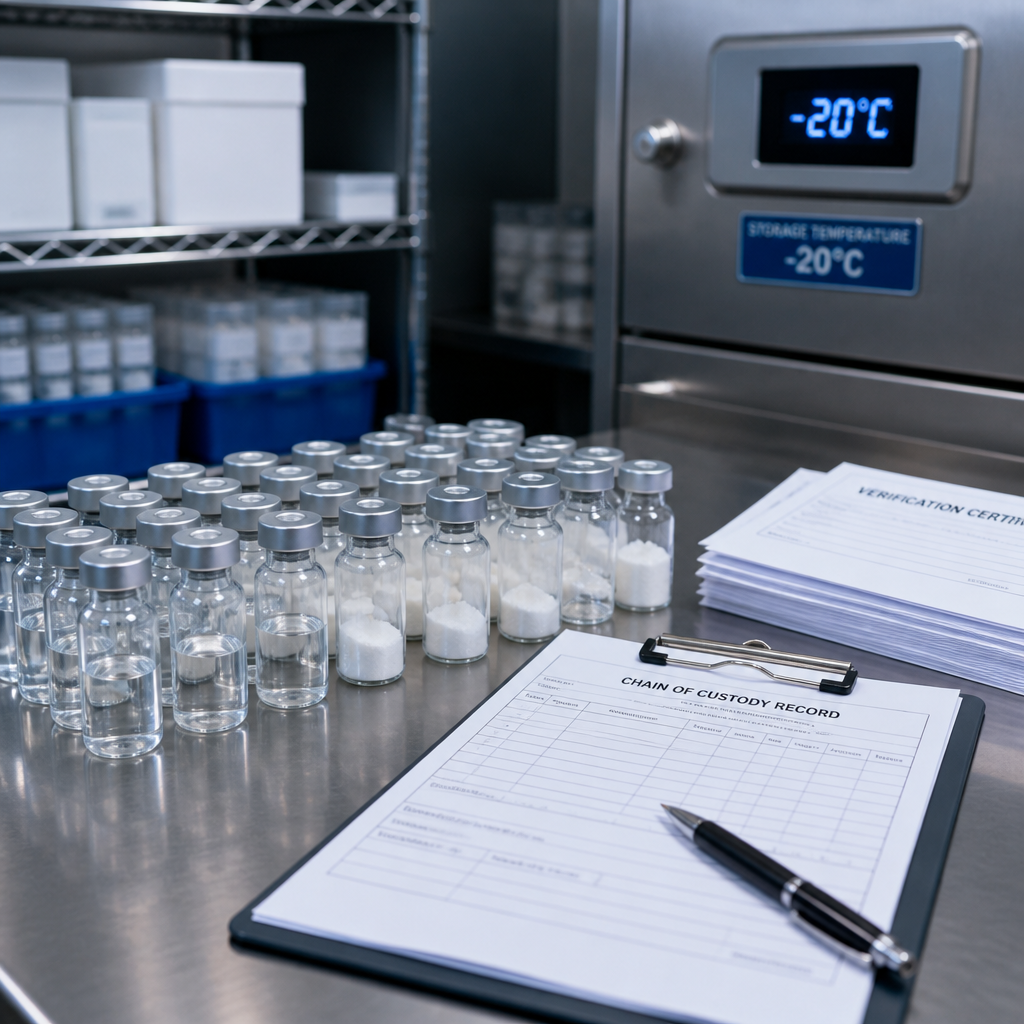
Any BAC water supplier serving Canadian research institutions should be able to provide batch-specific documentation including a Certificate of Analysis (COA) confirming sterility, endotoxin status, and benzyl alcohol concentration. For labs that require it, Chain of Custody documentation tracing the product from production through delivery is the gold standard. This is not bureaucratic formality. It is the documentation that protects experimental integrity and satisfies institutional review requirements when research records are audited.
What Pepura Labs provides with every order
Pepura Labs supplies bacteriostatic water as part of its complete peptide research supply offering, specifically designed for Canadian research institutions and laboratories. Every product is independently verified by Canadian laboratories, and full Chain of Custody documentation accompanies each order. BAC water is available to pair directly with Pepura Labs' lyophilized Retatrutide compounds (available in 10 mg, 20 mg, 40 mg, 60 mg, and 84 mg vials), ensuring that researchers have a verified, compatible, and documented diluent alongside each peptide compound they order.
Delivery across Canada is via Xpresspost, which matters practically. A lyophilized peptide compound arriving at a Canadian lab should not be waiting days for a BAC water order to catch up. When both the compound and the diluent are available from the same Canadian supplier with the same rapid shipping, the lag between delivery and first use is minimized, reducing both peptide degradation risk and operational friction in the lab.
Pro tip: Order BAC water at the same time as your lyophilized peptide compounds. Waiting until after the peptide arrives to source the diluent creates unnecessary delays and may force you into reconstituting with a lower-quality alternative out of urgency. Keep at least one spare BAC water vial in the lab refrigerator at all times if your research program runs on peptide compounds regularly.
Frequently Asked Questions
What is bacteriostatic water and how is it different from regular water?
Bacteriostatic water is a sterile, non-pyrogenic solution containing 0.9% benzyl alcohol. The benzyl alcohol acts as a preservative that inhibits bacterial growth after the vial has been opened and punctured multiple times. Regular tap water and even bottled distilled water are not sterile, contain no preservative, and are entirely unsuitable for peptide reconstitution or any research application where contamination control is required.
Can I use bacteriostatic water with any peptide compound?
BAC water is compatible with the vast majority of lyophilized research peptide compounds, including Retatrutide and most other peptide hormones and analogs commonly used in research settings. In rare cases involving compounds with known sensitivity to alcohol at the 0.9% concentration, single-use sterile water may be preferred. In practice, this is the exception rather than the rule, and the relevant product documentation from your peptide supplier should specify if the compound has unusual solvent requirements.
How long can I keep a reconstituted peptide solution made with BAC water?
Reconstituted peptide solutions prepared with BAC water should be stored refrigerated and used within 28 days of the first puncture of the BAC water vial, provided aseptic technique is maintained throughout. The 28-day window is the standard in-use period supported by the bacteriostatic preservative at 0.9% benzyl alcohol concentration. Freezing the reconstituted solution is generally not recommended unless specifically validated for the compound in question, as freeze-thaw cycles can damage peptide structure.
Is bacteriostatic water for sale in Canada subject to any regulatory restrictions?
Bacteriostatic water supplied for research and laboratory use in Canada falls within the category of research-grade reagents and is not subject to the same controlled substance regulations as the peptide compounds it is used to reconstitute. However, both the BAC water and the peptide compounds it accompanies are supplied strictly for in vitro research applications, not for human or veterinary use. Canadian research institutions should ensure their procurement and use aligns with their institutional ethics and compliance frameworks.
Why should I source BAC water from the same supplier as my peptide compounds?
Sourcing both from a single verified Canadian supplier like Pepura Labs ensures that the BAC water is compatible in quality standard with the peptide compounds, arrives with matching Chain of Custody documentation, and ships on the same timeline. Using a verified domestic supplier also eliminates border crossing delays and the documentation gaps that can arise when combining products from multiple international sources. For research labs that require audit-ready records, having both the compound and the diluent from the same documented source simplifies compliance significantly.
What volume of BAC water do I need for a 10 mg Retatrutide vial?
A common reconstitution standard for a 10 mg lyophilized vial is 2.0 mL of BAC water, which yields a working concentration of 5 mg/mL. This provides clean arithmetic for protocol dosing and is compatible with standard insulin syringe volumes. If a lower concentration is needed for precision at smaller volumes, 4.0 mL can be used to achieve 2.5 mg/mL. The choice depends on the specific protocol, but the injection should always be administered slowly down the inside wall of the vial, never directly onto the lyophilized cake.
How should I store unopened BAC water vials?
Unopened BAC water vials should be stored at room temperature, away from direct sunlight, heat sources, and freezing temperatures. Do not refrigerate unopened vials as a precaution, and absolutely do not freeze them. Freezing causes phase separation of the benzyl alcohol and can degrade the rubber stopper, compromising the seal integrity and the homogeneity of the preservative concentration. Shelf life for properly stored unopened vials is typically two to three years from the manufacture date.
Have you worked through a peptide reconstitution protocol using BAC water in a Canadian lab setting? Share what has worked for your research setup in the comments below.
References
- Bacteriostatic Water vs. Sterile Water for Injection: composition, use cases, and key differences for peptide research
- Complete usage and storage guide for bacteriostatic water in peptide reconstitution protocols
- 0.9% benzyl alcohol water: a laboratory professional's guide to specifications, pH, and 28-day in-use shelf life
- Research-grade bacteriostatic water product specifications: sterility, non-pyrogenicity, and multi-dose vial formats
- Bacteriostatic water versus sterile water for peptide reconstitution: contamination risk and usability over time