
If every research peptide supplier claims their products are "99%+ pure" and "independently verified," the natural question for any serious researcher is: verified by whom, and verifiable how? Canadian laboratory peptide testing that is genuinely independent is not the same as a supplier attaching a document they commissioned from a preferred vendor. The gap between those two things determines whether your experimental data is grounded in a known compound or built on an assumption. For compounds like Retatrutide, where receptor-specificity and dose-response relationships are the entire point of the research, that distinction is not minor. This article breaks down exactly what independent Canadian lab verification means, why it matters more than in-house quality claims, and what a defensible documentation chain actually looks like.
Table of Contents
- Quick Takeaways
- Why Supplier-Issued COAs Are Not Enough
- What Independent Canadian Laboratory Peptide Testing Actually Measures
- Chain of Custody: The Document Trail That Makes or Breaks Reproducibility
- Retatrutide Lab Verification: Why This Compound Demands Higher Standards
- Comparing Verification Approaches in the Canadian Research Peptide Market
- Red Flags in Peptide Quality Documentation
- Frequently Asked Questions
- References
Quick Takeaways
| Key Insight | Explanation |
|---|---|
| HPLC alone does not confirm identity | High-performance liquid chromatography measures how clean a sample is, not what the compound actually is. Mass spectrometry is required to confirm molecular identity. |
| Independence requires separation of interests | A truly independent lab has no commercial relationship with the supplier whose product it is testing. Any financial tie between tester and vendor undermines the independence claim. |
| Chain of Custody is not paperwork, it is proof | A documented chain connecting batch number, COA, receipt condition, storage, and handling events is what allows a lab to defend its data when results are questioned. |
| Lot-specific COAs outperform generic certificates | A certificate that covers a product "in general" provides no guarantee the specific vial in your freezer matches those results. Lot-matched documentation is the only defensible standard. |
| Lyophilized format adds traceability complexity | Once a lyophilized vial is reconstituted, a new set of variables enters the chain: solvent, concentration, preparation date, and storage conditions. These must be recorded separately. |
| Canadian lab testing eliminates cross-border uncertainty | Domestic testing means Canadian regulatory standards apply, cold-chain integrity is maintained during sample transit, and results are not subject to international customs delays or handling variation. |
| Endotoxin and heavy metals testing complete the picture | Purity percentage alone does not confirm safety for research use. Endotoxin testing and heavy metals screening address contamination risks that HPLC cannot detect. |
Why Supplier-Issued COAs Are Not Enough
The research peptide market has a documentation problem that is structural, not accidental. In the research peptide market, quality claims are easy to make and hard to verify. Every supplier claims their peptides are pure. Every product page mentions "lab-tested." The word "tested" does all the work without telling you anything useful. Tested by whom? Using which method? On which lot? Accessible for your own verification?
A supplier-issued COA is a document a supplier controls from start to finish. They choose the lab, they select the sample, they decide what gets published and what stays internal. That is not a process designed to catch failure. It is a process designed to document compliance. The two are very different things, and for research applications where compound identity directly shapes experimental outcomes, only the first one actually matters.
A legitimate COA is valuable, but it should not be overinterpreted. A COA does not automatically establish complete chain of custody, representativeness of every vial, sterility, endotoxin status, exact net peptide content, long-term stability, or suitability for every research application. This is not an argument against COAs. It is an argument for reading them with precision and knowing what they actually prove versus what they leave unaddressed.
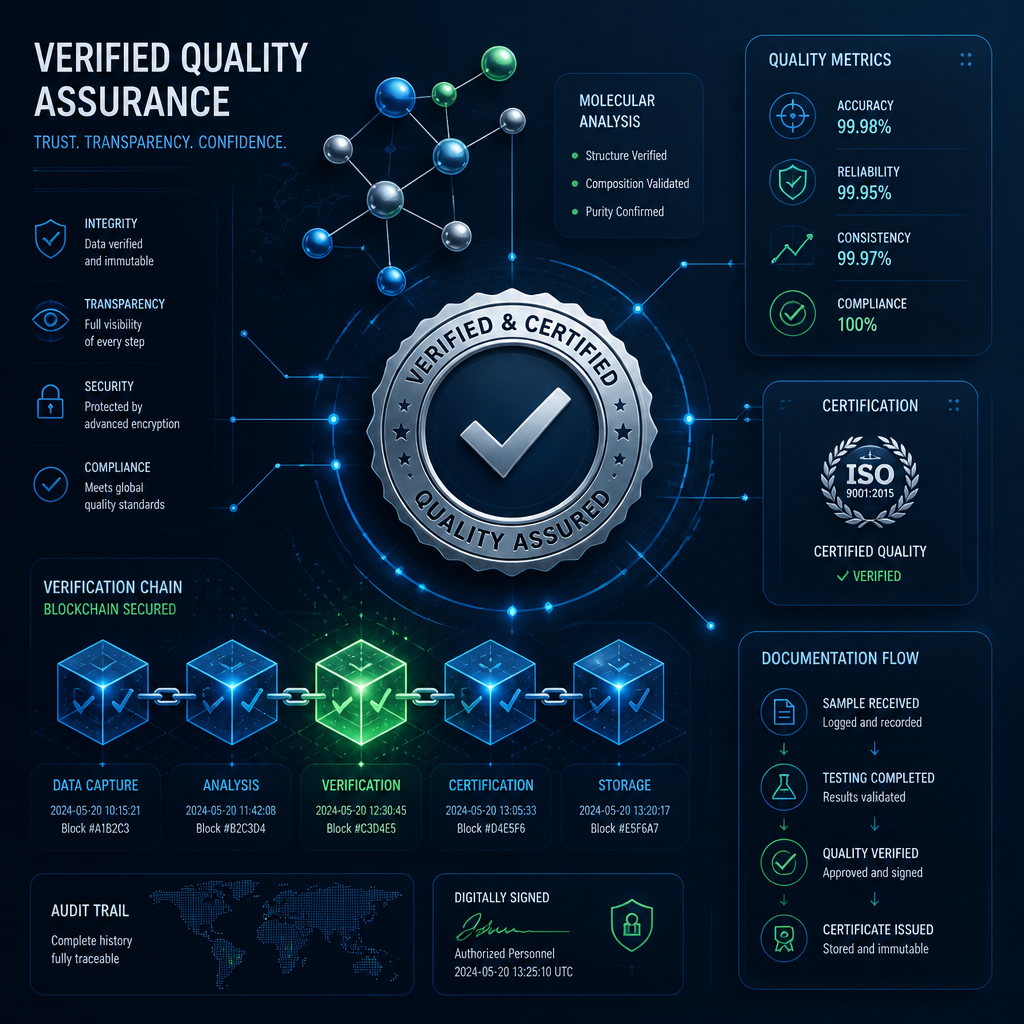
The practical standard that holds up under scrutiny is independent COA verification Canada: a lab with no commercial relationship to the supplier, using standardized methods, producing a report accessible to the researcher directly. Anything less is supplier-controlled marketing documentation dressed up as quality assurance.

What Independent Canadian Laboratory Peptide Testing Actually Measures
Understanding what the tests actually measure prevents researchers from accepting partial verification as complete verification. The three core analyses in serious Canadian laboratory peptide testing are HPLC purity analysis, mass spectrometry identity confirmation, and secondary safety screens. Each answers a different question, and none of them can substitute for the others.
HPLC Purity Analysis
A peptide can be 99.5% pure and still be the wrong peptide. HPLC measures how clean a sample is, but it does not confirm what the sample actually contains. HPLC separates compounds by their interaction with a chromatography column and detects them by UV absorbance. A high purity percentage tells you the target compound makes up most of the sample. It does not tell you the target compound is the one you ordered.
For research-grade work, HPLC purity at or above 99% is the minimum standard worth accepting. Below that threshold, even small amounts of synthesis byproducts or truncated sequences can introduce confounding variables that are invisible in the data until results fail to replicate.
Mass Spectrometry Identity Confirmation
Mass spectrometry (MS) is the technique that confirms peptide identity. It measures the molecular weight of the compound and compares it against the theoretical mass of the stated sequence. A match between observed and theoretical mass, within accepted mass accuracy tolerance, confirms the compound is what the label says it is. Without this step, a purity number is unanchored.
Molecular identity is confirmed via mass spectrometry to ensure the compound matches its stated sequence and molecular weight. For complex peptides like Retatrutide, which has a distinct multi-receptor binding architecture, identity confirmation is not optional. The compound's research utility depends entirely on it being the correct molecule.
Endotoxin and Heavy Metals Screening
Lyophilized products are tested for microbial contamination and endotoxin levels to meet research-grade standards. Endotoxin contamination does not affect purity percentage. It does not show up on an HPLC chromatogram. HPLC purity testing, mass spectrometry identity verification, and full COA reports give Canadian researchers the supply chain transparency they need. Endotoxin testing and heavy metals screening address contamination risks that HPLC cannot detect. For in vitro research, endotoxin contamination can produce false-positive inflammatory responses that invalidate entire experiment sets.
Pro tip: When evaluating a supplier's COA, confirm it reports HPLC purity, mass spectrometry results, and endotoxin data as three separate entries. A single "purity" figure with no method stated is not a research-grade certificate.
Chain of Custody: The Document Trail That Makes or Breaks Reproducibility
Research reproducibility depends on being able to reconstruct exactly what compound was used, in what condition, at what point in an experiment. A peptide chain of custody is not administrative overhead. It is the documented evidence that a specific research material remained identifiable, controlled, and suitable for its intended laboratory workflow from fulfilment through storage, preparation, and final disposition. When a result is questioned, this record is what allows a laboratory to distinguish an analytical finding from a handling failure.
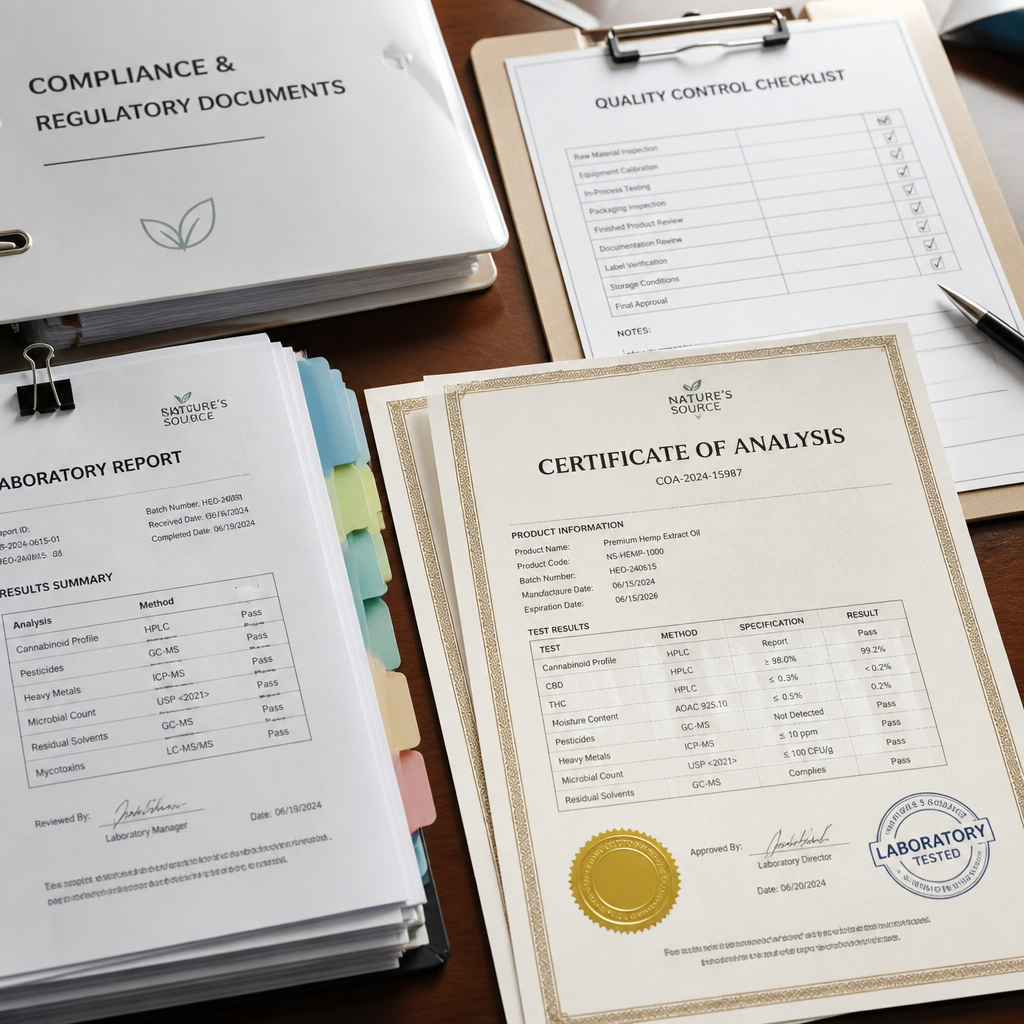
For research-grade peptides, traceability must extend beyond an order confirmation. The record should connect the product identity, batch or lot number, certificate of analysis, receipt condition, storage environment, individual handling events, and any deviation that could affect the material. This level of detail is not bureaucratic excess. It is what separates a defensible experimental record from one that collapses under peer review.
What a Complete Chain of Custody Covers
The record begins with the supplier's documented product information. This normally includes the product name, concentration or fill quantity where applicable, batch or lot identifier, analytical specifications, and COA. For a quality-focused procurement process, the COA should be reviewed against the label before the material enters active inventory.
A lyophilized vial becomes a prepared solution with a new concentration, solvent, preparation date, and defined storage expectation. From that point onward, the original container label alone is not enough to preserve traceability. This is the point where documentation failures most commonly occur. Researchers receive a well-documented vial, reconstitute it without recording the details, and lose the connective thread between the verified lot and the actual working solution used in the experiment.
A chain of custody record is what separates a supplier's quality claim from a laboratory's verified fact. Without it, a COA is a starting point, not a conclusion.
Following synthesis, crude peptides undergo preparatory HPLC to isolate the target sequence from truncated or deletion peptides. Once lyophilized, the unified lot is assigned a permanent identifier that links directly to its primary analytical data. When a supplier provides batch-specific lot numbers tied to verifiable analytical records, they are giving you the starting point of a chain. The receiving laboratory is responsible for extending and maintaining that chain from receipt onward.
Pro tip: When a new peptide lot arrives, record the lot number, COA reference, receipt date, visual inspection result, and storage location before opening the vial. This takes under two minutes and creates the foundation of a defensible custody record that no amount of post-hoc documentation can replace.
Retatrutide Lab Verification: Why This Compound Demands Higher Standards
Retatrutide is a tri-receptor agonist peptide. Its research value comes specifically from its activity at GLP-1, GIP, and glucagon receptors simultaneously, which makes compound identity not just a quality metric but a scientific prerequisite. If the compound in a vial is not confirmed to be Retatrutide at the sequence level, any receptor-binding data generated from it is structurally uninterpretable.
This is why Retatrutide lab verification by an independent Canadian laboratory matters more than a manufacturer's internal release document. The internal release document confirms the compound left the synthesis facility meeting certain criteria. The independent COA confirms the compound that arrived at the researcher's bench still meets those criteria, on that specific lot, verifiable by the researcher directly.
Why Lyophilized Format Matters for Retatrutide Research
Lyophilized Retatrutide is the correct format for research-grade distribution because lyophilization removes the moisture that degrades peptide integrity during storage and transit. A lyophilized compound at ambient temperature during Xpresspost delivery retains its analytical properties in a way a liquid formulation cannot. The COA applies to the lyophilized form. Once reconstituted, the researcher assumes responsibility for the working solution's integrity, which is why preparation documentation matters.
Retatrutide is synthesized via solid-phase peptide synthesis and undergoes multi-stage purification to ensure high-purity analytical standards suitable for controlled research environments. Independent lot-matched verification confirms those purification steps produced the claimed result, not just that the synthesis process was theoretically capable of producing it.
Comparing Verification Approaches in the Canadian Research Peptide Market
Not all "independently tested" claims mean the same thing. The following comparison covers three distinct verification models researchers encounter when sourcing compounds in Canada. Understanding the difference is essential for evaluating any supplier's documentation claims, including those from competitors in the space.
| Verification Approach | What It Provides | Key Limitation |
|---|---|---|
| Supplier In-House Testing | A COA produced by the supplier's own facility or a lab they commission and control. Fast and often visually credible. | No separation of interests. The supplier can select favorable samples, choose what to publish, and is not independently accountable for the results. |
| Third-Party International Lab Testing (e.g., labs outside Canada) | An independent lab not owned by the supplier tests the sample. Provides genuine separation of interests. | Cross-border sample shipping introduces cold-chain uncertainty. Canadian researchers cannot verify regulatory equivalence. Report accessibility for end-users varies widely. |
| Independent Canadian Laboratory Testing with Full Chain of Custody | Canadian lab with no supplier affiliation, using HPLC and mass spectrometry, with lot-matched COAs and full Chain of Custody documentation accessible to the researcher. | Requires supplier commitment to the process. The gold standard, but only meaningful if the testing lab is genuinely independent and the lot numbers are traceable end-to-end. |
The third model is what serious research institutions should require. Independent peptide testing can add confidence when chain of custody, sample selection, report authenticity, method transparency, and lot matching are clear. Each of those five criteria is a checkpoint, and a supplier claiming independence should be able to answer each one specifically.
Red Flags in Peptide Quality Documentation
Identifying inadequate documentation is a practical skill for any researcher procurement process. The following patterns indicate a verification system that will not hold up under scrutiny.
Generic Certificates Without Lot Numbers
A COA that reports results for "Retatrutide 10mg" without a batch or lot identifier provides no traceability. It cannot be matched to the specific vial in your possession. A lot number is only as reliable as the analytical documentation backing it. Principal investigators evaluating supplier quality must look beyond generic specification sheets and insist on lot-specific documentation verified by an accredited laboratory.
No Stated Analytical Method
A certificate that reports "99.2% purity" without specifying whether that was determined by HPLC, by UV absorbance alone, or by some other technique is not a research-grade document. Method transparency is not optional. Researchers cannot assess results they cannot reproduce or contextualize.
Missing Mass Spectrometry Data
As established earlier, purity without identity confirmation is incomplete. Any supplier offering only HPLC data and presenting it as full analytical verification is providing half a certificate. The actual question of how a researcher can independently confirm that the vial they receive contains what its label claims, at the purity level claimed, is rarely answered in any depth. Missing mass spectrometry data is the single most common way that question goes unanswered.
No Accessible Verification Path for the Researcher
An independent COA should be accessible to the researcher directly, without routing through the supplier. If the only way to see the test results is to contact the supplier and ask for them to be forwarded, the independence claim is not functional in practice. Batch-traceable documentation means the researcher can connect their specific lot number to a specific analytical record, not that the supplier can theoretically provide a document if asked.
Pepura Labs addresses this directly by providing full Chain of Custody documentation with each order, with batch numbers tied to independently verified Canadian laboratory results. That is the standard a research institution should hold any supplier to, including when evaluating alternatives like growthguys.com, redfoxpeptides.is, or canadianpeptides.com, where verification transparency and domestic Canadian lab access vary significantly.
Frequently Asked Questions
What is the difference between HPLC and mass spectrometry in peptide testing?
HPLC measures the purity of a peptide sample by separating its components and quantifying the proportion made up by the target compound. It does not confirm what that compound is. Mass spectrometry identifies the compound by measuring its molecular weight and comparing it to the theoretical mass of the stated sequence. Both tests are required for a complete analytical certificate. One without the other leaves a critical verification gap.
Why does it matter that the testing lab is based in Canada?
Canadian laboratory testing means the sample does not cross an international border between the supplier and the testing facility. Cross-border shipments introduce cold-chain uncertainty, customs delays, and potential handling variation that can affect a peptide sample's condition before it is even analyzed. Domestic testing also means Canadian regulatory standards apply throughout the process, which matters for research institutions operating under Canadian oversight.
What should a research-grade Chain of Custody document include?
A complete Chain of Custody connects the product name, lot or batch number, COA, receipt condition, storage environment, handling events, and any deviation that occurred between delivery and use. It must be specific enough to reconstruct the exact material history of a given vial. A delivery confirmation email and a product label are not a chain of custody. The documentation must trace continuity from the supplier's verified batch to the vial in active use.
How do I verify that a COA from a Canadian peptide supplier is genuinely independent?
Start by confirming the testing laboratory has no disclosed commercial relationship with the supplier. Then confirm the COA carries a lot number that matches the lot number on the vial you received. Check that the report states the specific analytical methods used, including the HPLC column conditions and mass spectrometry parameters. Finally, confirm there is a direct way to access or verify the report without routing the request through the supplier. If any of these four checks cannot be completed, the independence claim is unverified.
Is a 99% purity claim meaningful without endotoxin testing?
For in vitro research applications, a 99% purity figure without endotoxin data leaves a significant gap. Endotoxin contamination does not appear in HPLC results and does not affect the purity percentage. In cell-based assays, even low levels of endotoxin can trigger inflammatory pathways and produce results that look like compound activity but are actually contamination artifacts. For any research application where cellular response is being measured, endotoxin data should be part of the standard certificate.
What is batch traceability and why does it matter for Retatrutide research?
Batch traceability means every vial of a compound can be connected by its lot number to a specific analytical record documenting the purity, identity, and test conditions for that production batch. For Retatrutide, where receptor-binding specificity is the core of the research question, knowing that the compound in a specific experiment matched a confirmed sequence at a confirmed purity allows results to be interpreted with confidence and, when needed, reproduced using the same documented standard. Without batch traceability, replication across experiments or between laboratories is not scientifically defensible.
If your laboratory has dealt with documentation gaps or inconsistent COA standards when sourcing research peptides in Canada, share your experience in the comments below.
We would love your feedback and any insights you would share with others. What perspective would you add?
References
- Independent Canadian peptide purity testing service: HPLC, mass spectrometry, and COA documentation for research compounds
- Practical guide to verifying research peptide quality using third-party COAs and independent lab testing
- Chain of custody requirements for research-grade peptides from supplier delivery to laboratory use
- Peptide lot number traceability and batch-level analytical documentation for reproducible research
- Comprehensive overview of research peptide quality standards including COA interpretation and third-party testing