
Research
Lyophilized vs Liquid Peptides: Research Guide
August 30, 2026
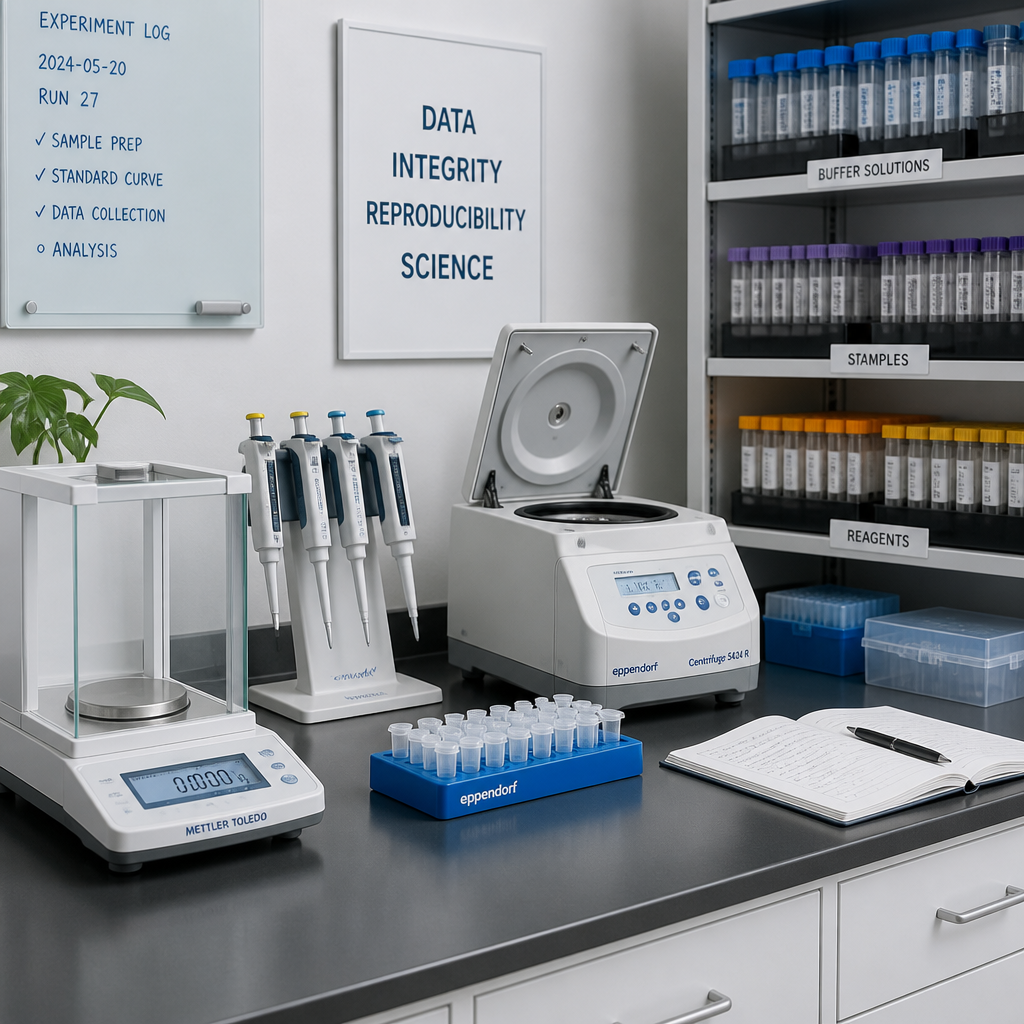
If your in vitro research depends on peptide integrity, you cannot afford to treat storage format as an afterthought. Lyophilized peptide research consistently outperforms liquid-based approaches in data reproducibility, compound longevity, and cold-chain resilience. Yet a surprising number of research teams still accept liquid peptide formats by default, either because of convenience assumptions or because they haven't directly compared degradation rates across a full study timeline. This guide settles the debate with specifics: what each format does to your compound, when the difference matters most, and how to handle each correctly so your results reflect biology, not chemistry errors.
Table of Contents
- Quick Takeaways
- What Lyophilization Actually Does to a Peptide
- Why Liquid Peptides Degrade Faster
- Storage Conditions and Shelf Life Compared
- Format Comparison for Research Applications
- Reconstituting Lyophilized Peptides Correctly
- What to Demand from Your Supplier
- Frequently Asked Questions
- References
Quick Takeaways
| Key Insight | Explanation |
|---|---|
| Lyophilized format is the stability baseline | Peptides supplied in lyophilized form are, as a general rule, more stable than their counterparts in solution. Water is removed, eliminating the primary driver of hydrolytic degradation. |
| Liquid shelf life is dramatically shorter | Once reconstituted, peptide solutions should typically be used within 28 to 60 days under refrigeration, depending on the compound. Lyophilized stock stored at -20°C can remain viable for two or more years. |
| Sequence composition determines risk level | Peptides containing Asp or Pro bonds are especially prone to acid-catalyzed chain cleavage in liquid form. Cys, Met, and Trp residues oxidize readily. These risks are substantially reduced in lyophilized format. |
| Freeze-thaw cycles destroy both formats | Repeated freezing and thawing accelerates degradation regardless of format. Aliquoting lyophilized peptide before reconstitution is the correct way to avoid this. |
| Moisture content is the key lyophilization metric | A properly lyophilized peptide has a moisture content of roughly 1 to 3%. Above that range, residual water begins driving the same hydrolytic reactions as a liquid formulation. |
| Chain of custody documentation matters for research validity | Purity claims without batch traceability and independent lab verification are not auditable. Research-grade peptide sourcing requires documented evidence, not manufacturer self-reporting. |
| Liquid format has one legitimate advantage: convenience in high-throughput screens | When assays require rapid serial dosing of large sample sets within a narrow window, pre-dissolved peptide saves time. This advantage disappears entirely in multi-week or multi-month studies. |
What Lyophilization Actually Does to a Peptide
Lyophilization, also called freeze-drying, is a low-temperature dehydration process that freezes a peptide solution and then removes water by sublimation under reduced pressure. The result is a dry, porous solid that retains the structural integrity of the original compound without the thermal damage that conventional drying methods inflict. The low-temperature, low-pressure environment is specifically beneficial for temperature-sensitive substances like peptides, avoiding the decomposition and denaturation that high heat causes.
The porous structure of a lyophilized peptide cake is not cosmetic. It is what allows rapid, complete reconstitution when you add solvent. Rehydration returns the compound to a state chemically comparable to the pre-lyophilization solution, provided the process was executed correctly and the moisture content of the final product is controlled to roughly 1 to 3%.
The Role of Water Activity in Peptide Stability
Water is not a passive bystander in peptide formulations. It acts as a plasticizer that facilitates molecular unfolding and enables the hydrolytic and oxidative reactions that degrade peptide bonds. When water is removed through lyophilization, those reaction pathways are largely shut down. The compound can then be stored under vacuum or inert gas conditions, further reducing oxidative exposure during long-term storage and transport.
This is why lyophilized peptides stored at -20°C under proper conditions remain viable for two or more years, while the same compound in solution degrades within weeks to months. The difference is not trivial. For any multi-experiment research program, the lyophilized format is the only one that gives you a consistent starting material across the full study duration.
The primary determinant for peptide stability is the amino acid composition and sequence. In general, peptides supplied in a lyophilized format are more stable than their counterparts in solution.
Why Liquid Peptides Degrade Faster
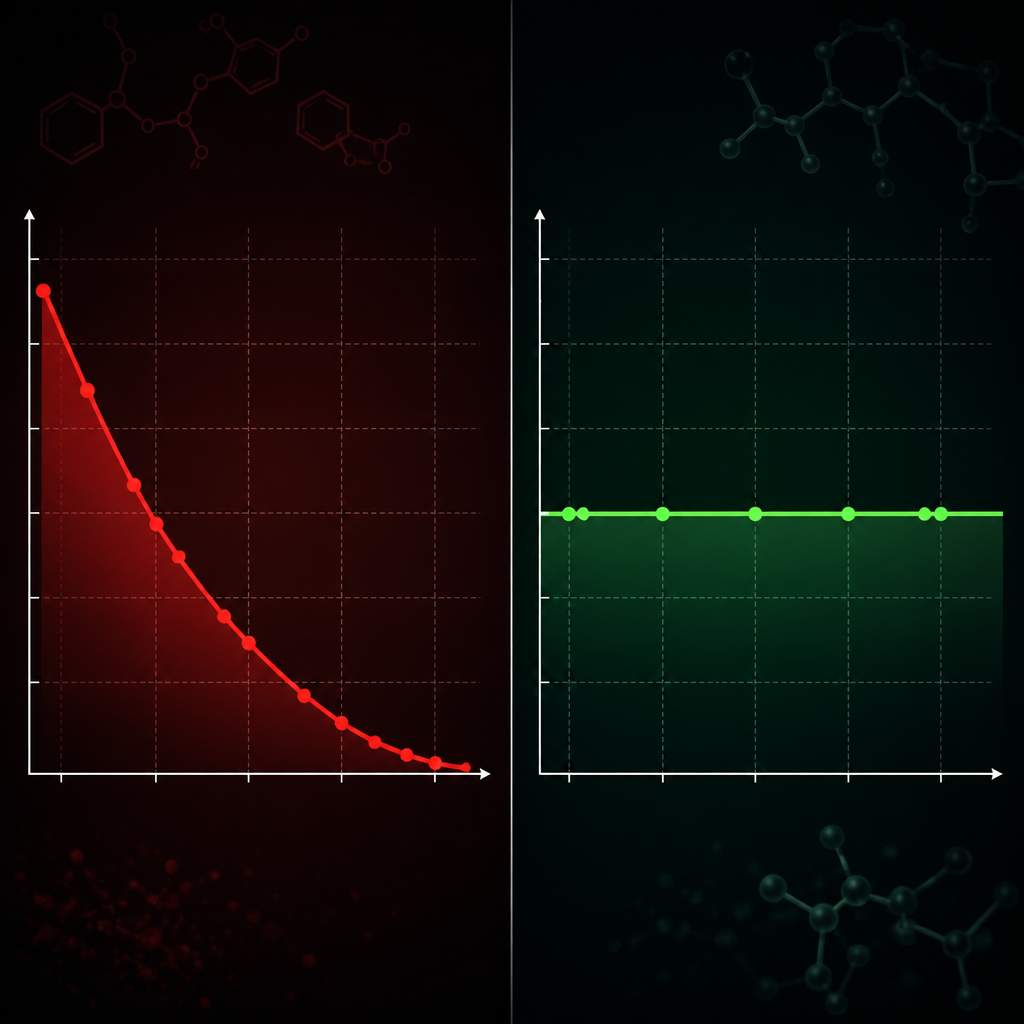
The degradation pathways active in liquid peptide formulations are well-documented. Understanding them is essential for any researcher evaluating format choice, because these are not theoretical risks. They occur continuously once a peptide is in solution, at rates that depend on pH, temperature, amino acid sequence, and exposure to oxygen and light.
Hydrolysis
Hydrolysis is particularly problematic for peptides containing Asp (D) residues. In solution, Asp is susceptible to dehydration to form a cyclic imide intermediate, which then cleaves the peptide chain. The Asp-Pro bond is especially vulnerable to acid-catalyzed hydrolysis. A liquid formulation at the wrong pH accelerates this reaction substantially. In lyophilized form, without free water to drive the reaction, hydrolysis rates drop sharply.
Oxidation
Peptides containing Cys, Met, or Trp residues are prone to oxidation in solution and require anaerobic conditions to maintain stability. In a liquid formulation, dissolved oxygen and environmental exposure make oxidation difficult to fully prevent without specialized packaging. Lyophilized peptides stored under vacuum or inert gas do not face the same constant oxidative pressure.
Deamidation and Aggregation
Peptides containing Asp, Glu, Lys, Arg, or His are prone to moisture absorption from air, a process called deliquescence. In solution, these residues also participate in deamidation reactions that alter the compound's charge state and biological activity. Water further acts as a molecular plasticizer that promotes irreversible aggregation, permanently compromising purity and activity. These effects are substantially reduced in the solid lyophilized state.
Pro tip: If your assay requires a peptide containing Cys, Met, or Trp, always start with a lyophilized stock and reconstitute under anaerobic conditions using degassed solvent. Preparing a liquid pre-stock and storing it introduces oxidation risk at every subsequent use.
Storage Conditions and Shelf Life Compared
Shelf life is where the format difference becomes most operationally significant. The numbers below reflect general guidance supported by published peptide handling literature, not manufacturer claims. Actual shelf life depends on sequence composition, reconstitution solvent, storage conditions, and packaging quality.
Lyophilized peptides stored unopened at 2 to 8 degrees Celsius (refrigerator) remain stable for up to 12 to 24 months. At -20 degrees Celsius (freezer), they are generally stable for two or more years. These figures assume original vacuum or inert-gas packaging remains intact. Reconstituted peptide solutions, by contrast, should be refrigerated at 2 to 8 degrees Celsius and used within 28 to 60 days, depending on the specific compound and the solvent used. Bacteriostatic water extends reconstituted shelf life relative to sterile water, but neither approach approaches the stability of the lyophilized stock.
The Four Degradation Factors for Both Formats
Heat fluctuation, light and UV exposure, repeated freeze-thaw cycles, and contamination from non-sterile technique are the four conditions that degrade peptides regardless of format. For lyophilized peptides, the risks are lower and more manageable. For liquid peptides, all four risks are constantly present and compounding. A researcher who reconstitutes a full vial, stores it in solution for six weeks, and then queries why their dose-response curve shifted has found the answer: the compound at week six is not the compound at week one.
Pro tip: For any lyophilized peptide that will be used across multiple experiments, pre-determine your per-experiment dose and aliquot the powder into separate vials before initial reconstitution. Each aliquot becomes a single-use reconstitution. This eliminates freeze-thaw cycling of your working solution entirely.
Format Comparison for Research Applications
The table below compares the three practical storage and delivery formats you will encounter in research-grade peptide sourcing: lyophilized powder, liquid in aqueous buffer, and liquid in organic solvent. Each has a defined use case, but the differences in stability and suitability for extended research programs are significant.
| Format | Stability and Shelf Life | Best Research Application |
|---|---|---|
| Lyophilized powder | 2+ years at -20°C unopened; 12-24 months at 2-8°C; moisture content 1-3% when properly produced | Multi-week and multi-month in vitro studies, long-term compound banking, shipping without dry ice, batch-consistent work requiring audit-ready documentation |
| Liquid in aqueous buffer | 28-60 days at 2-8°C; degradation actively ongoing from day one via hydrolysis and oxidation | High-throughput screening within a narrow time window; assays where immediate use is guaranteed; short-run experiments with no requirement for cross-batch reproducibility |
| Liquid in organic solvent (e.g., DMSO) | Somewhat better than aqueous for oxidation-sensitive peptides; still subject to hydrolysis if water is present; concentration must be confirmed at time of use | Peptides with poor aqueous solubility; cell-free biochemical assays; cases where DMSO concentration in the final assay is controlled and acceptable |
For research-grade peptides like Retatrutide, where purity must be independently verified at 99% or higher and batch traceability is required for publication-ready data, the lyophilized format is the only one that reliably supports that standard across an extended research program. A liquid supply delivered without verification of concentration at the time of preparation introduces an unknown variable into every downstream experiment.
Reconstituting Lyophilized Peptides Correctly
Lyophilization protects your peptide until the moment you dissolve it. Reconstitution is where researchers most commonly introduce avoidable damage. The process is not complicated, but it requires deliberate technique. Getting it wrong at this stage defeats the entire stability advantage of the lyophilized format.
Solvent Selection
The first decision is solvent. Peptides containing hydrophobic residues often require an initial dissolution in a small volume of organic co-solvent (acetonitrile, DMSO, or dilute acetic acid) before dilution with aqueous buffer. Peptides that are strongly basic typically dissolve well in dilute acetic acid. Strongly acidic peptides often require dilute ammonium hydroxide. Using the wrong solvent forces you to agitate or heat the sample to dissolve it, both of which introduce degradation at the point of reconstitution. Review the specific residue composition of your peptide before choosing a solvent, not after.
Aliquoting and Concentration Verification
After reconstitution, verify your working concentration by absorbance measurement if the peptide contains a UV-active residue (Trp, Tyr, or Phe at sufficient quantity), or by another quantitation method appropriate to your assay system. Never assume the nominal concentration on the vial label represents what is in your working solution, particularly if the vial has been through any temperature excursion during shipping. This is where batch certificates with independent HPLC verification become operationally essential rather than administratively optional.
Aliquot reconstituted peptide immediately into single-use volumes. Place unused aliquots at -20°C. Do not thaw and refreeze. The shelf-life clock on a reconstituted peptide solution starts from the moment solvent contacts the powder, and it does not pause during freezer storage, it only slows.
Documentation for Reproducible Research
Every reconstitution event should be logged with the date, lot number, solvent used, final concentration, and storage location. If you are using Retatrutide or any other research-grade compound for in vitro work that will eventually support a publication or regulatory submission, this log becomes part of your experimental record. Chain of custody documentation from your supplier, combined with your reconstitution record, gives you the full traceability required for that kind of work.
What to Demand from Your Supplier
The format debate is only half the picture. A perfectly lyophilized peptide from a supplier with inadequate quality controls is still a problem. Research-grade sourcing requires specific documentation that goes beyond a nominal purity claim on a product page.
Independent Third-Party Verification
Self-reported purity from a supplier's in-house testing is not the same as third-party verification. For research applications where compound identity and purity are experimental variables, you need analytical data from a laboratory that has no commercial relationship with the supplier. This typically means HPLC purity data and mass spectrometry identity confirmation from an independent certified lab. Some Canadian suppliers, including Pepura Labs, provide this level of documentation with batch-specific certificates of analysis, rather than generic specification sheets that apply to a product line rather than your specific vial.
Batch Traceability and Chain of Custody
Batch traceability means that every vial you receive can be traced back to the specific production lot, with records of its synthesis, purification, quality testing, and shipping conditions. Chain of Custody documentation extends this traceability through the logistics chain. If a temperature excursion occurred during shipping, batch traceability combined with chain of custody records tells you whether your compound was affected and when. Without this documentation, any anomaly in your experimental results that might have an external cause (shipping, storage) cannot be distinguished from a true biological signal.
Pro tip: When evaluating peptide suppliers, ask specifically for the independent lab name on their certificate of analysis, not just the certificate itself. A COA that lists only the supplier's internal QC department is not independently verified. The verification needs to come from a third party, and that third party should be named and auditable.
Shipping and Packaging Considerations for Canadian Researchers
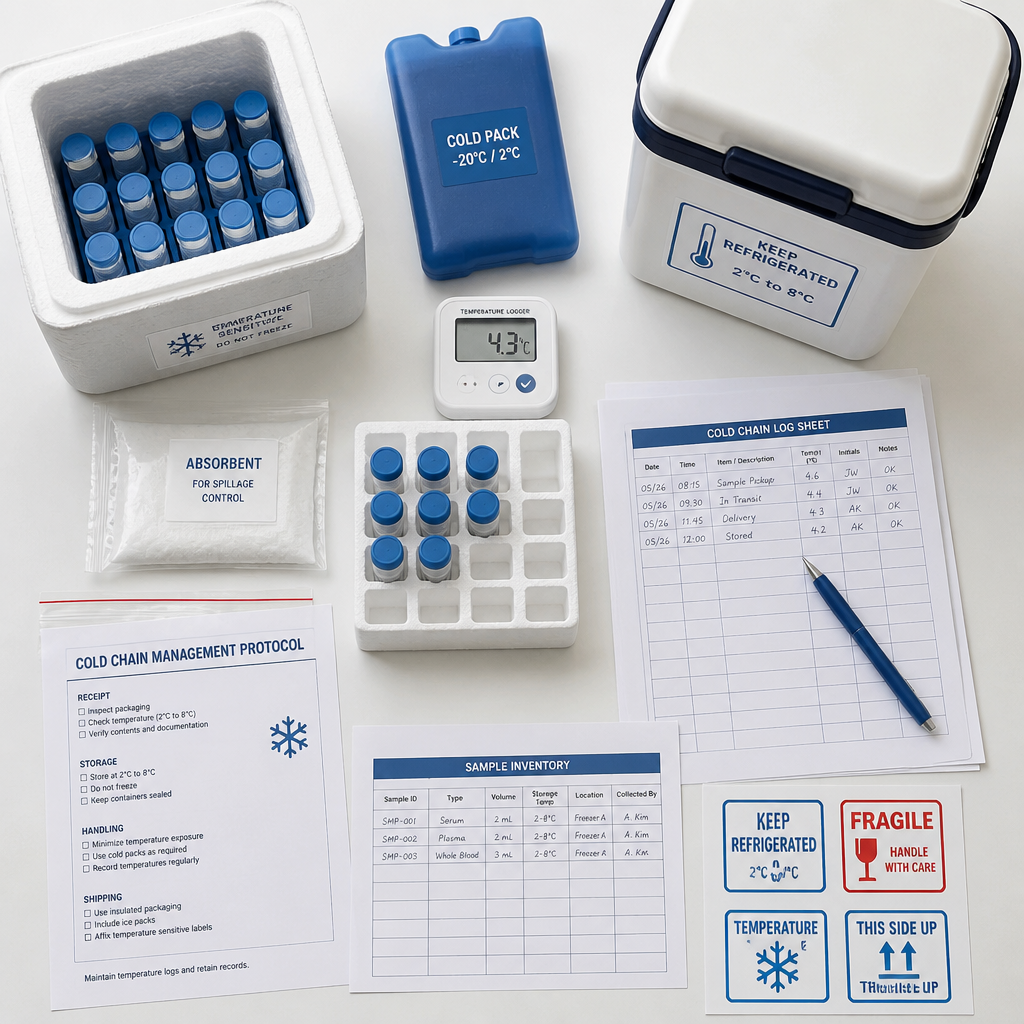
Canadian research institutions have a specific logistical concern: cross-Canada shipping times can range from overnight in major centers to several business days in more remote locations. For lyophilized peptides, this is a manageable challenge. The format is stable during shipping at ambient or refrigerated temperatures without requiring dry ice, provided packaging is appropriate. Liquid peptide formulations face much higher risk during shipping, particularly if a temperature excursion occurs during transit. For Canadian researchers, the lyophilized format is not just a stability preference. It is a practical shipping requirement. Pepura Labs addresses this directly through Xpresspost delivery with appropriate cold packaging, and by supplying compounds exclusively in lyophilized form with full batch documentation, so researchers receive a compound with a documented condition history from production to delivery.
Frequently Asked Questions
Can lyophilized peptides be used directly in cell-based assays without reconstitution?
No. Lyophilized peptide powder must be reconstituted in an appropriate solvent before use in any cell-based or biochemical assay. The reconstitution step is required to bring the compound into solution at a defined, measurable concentration. Adding dry powder directly to a culture well or reaction vessel introduces an uncontrolled and non-uniform dose, which undermines any quantitative interpretation of results.
How long is a reconstituted Retatrutide solution stable at -20°C?
There is no single universally applicable figure, because stability after reconstitution depends on the solvent used, the starting purity of the lyophilized material, and how strictly freezing conditions were maintained. As a general reference point, most reconstituted peptide solutions are considered reliably stable for 28 to 60 days under refrigeration. Freezing a reconstituted solution extends this window, but introduces freeze-thaw degradation risk each time the vial is opened. Pre-aliquoting before freezing is the correct approach to minimize that risk.
Does lyophilization itself cause any peptide degradation?
When executed correctly, lyophilization causes minimal degradation. The low-temperature, low-pressure process is specifically designed to preserve temperature-sensitive compounds. However, poorly controlled lyophilization, particularly if the freezing step is too rapid or the drying cycle is inadequate, can leave residual moisture above the 1 to 3% target range, which then drives the same hydrolytic reactions that liquid formulations face. This is why the quality of the lyophilization process, not just the final format, matters. A properly lyophilized peptide from a controlled manufacturing process will show no meaningful purity loss during the freeze-drying step.
What is the difference between bacteriostatic water and sterile water for reconstitution?
Bacteriostatic water contains benzyl alcohol at 0.9% concentration, which inhibits microbial growth in the reconstituted solution. This extends the usable window of the solution relative to sterile water, which contains no preservative. For research-grade in vitro applications, the choice between them depends on whether benzyl alcohol will interfere with your assay system. If your cell line or biochemical assay is sensitive to alcohol at that concentration, sterile water is the appropriate choice, and you accept the shorter usable window. For most biochemical assays this is not a concern, but confirm before committing to a reconstitution protocol.
Why do suppliers list purity as 99%+ and what does that actually mean for my research?
A 99%+ purity specification means that at least 99% of the material in the vial, by HPLC analysis, corresponds to the target peptide sequence. The remaining material consists of truncated sequences, oxidized variants, or other synthesis byproducts. For in vitro research where you are measuring dose-dependent responses, a compound at 95% purity behaves differently from one at 99%+ because the 5% impurity fraction is not inert. It may compete for the same receptor, activate off-target pathways, or simply dilute your effective concentration in ways that are not reflected in your nominal dose calculations. For research-grade applications, 99%+ independently verified purity is the correct standard, and the verification must come from a third-party lab, not the supplier's own QC.
Is lyophilized peptide harder to work with than liquid format in daily lab use?
The reconstitution step adds a few minutes to your workflow and requires attention to solvent selection and concentration verification. That is the full practical overhead of lyophilized format relative to liquid. Against that, you get a compound that remains stable across your entire research program, can be aliquoted to eliminate freeze-thaw cycling, and arrives with verifiable purity intact from production to your bench. The minor workflow addition is worth the stability, reproducibility, and documentation advantages in every research context except narrow-window high-throughput screening where the liquid format's convenience temporarily outweighs its instability.
Have you switched from liquid to lyophilized peptide formats in your research, or are you still working through the format decision for a specific compound? Share what you found most challenging or most useful about the transition in the comments.
References
- Sigma-Aldrich technical guide on peptide degradation pathways and lyophilized versus solution stability
- GenScript peptide storage and handling guidelines covering lyophilized shelf life and reconstitution best practices
- Breakdown of lyophilized and reconstituted peptide storage conditions, degradation factors, and refrigeration timelines
- Patent documentation detailing lyophilization process advantages including moisture content, oxidation resistance, and long-distance storage properties
- Technical background on freeze-drying as a preservation method for pharmaceutical and biomedical compounds