
Research
GIP Receptor Agonist Role in Retatrutide Research
September 2, 2026

Most researchers approaching Retatrutide for the first time focus almost exclusively on its GLP-1 receptor component. That is understandable, GLP-1 receptor agonism is the most clinically familiar mechanism in this class. But doing so means missing the part of Retatrutide's pharmacological profile that most distinguishes it from earlier incretin-based compounds: its GIP receptor agonist activity. Glucose-dependent insulinotropic polypeptide receptor engagement is not decorative here. It shapes how this triple agonist interacts with adipose tissue, regulates circulating lipids, and drives metabolic reprogramming that GLP-1 or glucagon signaling alone cannot replicate. For researchers working with this compound in vitro, understanding what GIPR activation actually does, and why it matters, is prerequisite knowledge.
Table of Contents
- What Is GIP and Why Does the Receptor Matter?
- How GIPR Activation Operates in Adipose Tissue
- Retatrutide GIP Mechanism: The Triple Agonist Context
- Lipid Metabolism Peptide Research: What the Data Show
- GIPR Desensitization: A Research Variable You Cannot Ignore
- Comparing GIPR Engagement Across Incretin-Based Compounds
- In Vitro Research Design Considerations for GIPR Studies
- Frequently Asked Questions
- References
What Is GIP and Why Does the Receptor Matter?
Glucose-dependent insulinotropic polypeptide is a gut-derived incretin hormone secreted from intestinal K-cells in response to nutrient ingestion. Its primary, historically recognized function is insulinotropic: it potentiates glucose-stimulated insulin secretion from pancreatic beta cells in a glucose-dependent manner. For years, that narrow framing dominated the literature, and GIPR was considered a secondary actor compared to GLP-1 receptor in terms of therapeutic interest.
That framing is outdated. The GIP receptor is broadly expressed, and its distribution outside the pancreas, particularly in adipose tissue and the central nervous system, points to a far more expansive functional role. GIPR is found in white adipose tissue (WAT), brown adipose tissue (BAT), and specific hypothalamic regions. When this receptor is engaged, downstream effects on lipid partitioning, energy substrate utilization, and adipokine secretion emerge that are mechanistically distinct from GLP-1 receptor activity.
For Retatrutide research specifically, this matters because the compound was engineered to activate GIP, GLP-1, and glucagon receptors simultaneously. Treating GIPR as a background player mischaracterizes the compound's mechanism and can lead to flawed experimental design when studying its metabolic profile in vitro.
How GIPR Activation Operates in Adipose Tissue
The GIP receptor's role in adipose tissue is one of the most actively researched and debated areas in incretin biology. The receptor is expressed in whole adipose tissue, a distinction worth noting because the GLP-1 receptor is not detectably expressed there in the same way. This makes adipose tissue a site where GIP acts directly and where GLP-1 does not, at least not through the same receptor-mediated pathway.
LPL Upregulation and Triglyceride Clearance
One of the clearest mechanistic effects of GIPR agonism in adipose tissue is the upregulation of lipoprotein lipase (LPL). GIP binds GIPR in adipose tissue and activates a signaling cascade that increases LPL expression and secretion. LPL enhances triglyceride clearance from circulation and facilitates the transport of triglycerides to adipocytes. In the context of a lipid metabolism peptide research program, this is a key variable: GIPR engagement shifts where and how circulating lipids are processed.
GIP treatment in the presence of insulin has been shown to increase LPL activity in both murine-derived white adipose cells and subcutaneous human adipocytes, leading to increases in triglyceride stores. This lipogenic action sounds counterintuitive for a compound associated with favorable metabolic outcomes, but the picture is more complex when considered alongside GIP's concurrent effects on free fatty acid re-esterification and ectopic fat prevention.
cAMP Signaling and Lipolysis
GIPR activation drives intracellular cAMP production in adipocytes. This cAMP-mediated pathway is directly linked to lipolysis and free fatty acid re-esterification. In primary mouse and human adipocytes, GIP stimulates a dose-dependent increase in cAMP concentrations, and this GIPR-dependent cAMP elevation connects to lipolytic activity. The relationship between GIPR-driven lipolysis and concurrent lipid uptake via LPL creates a dynamic interplay, not a simple net lipogenic or net lipolytic effect, which is precisely why in vitro experimental conditions must be tightly controlled.
GIP also appears to increase adipose tissue blood flow, which amplifies substrate delivery and removal at the tissue level. These hemodynamic effects are rarely modeled in standard cell-based assays, representing a gap between cell culture findings and whole-tissue physiology that researchers should account for when interpreting in vitro data.
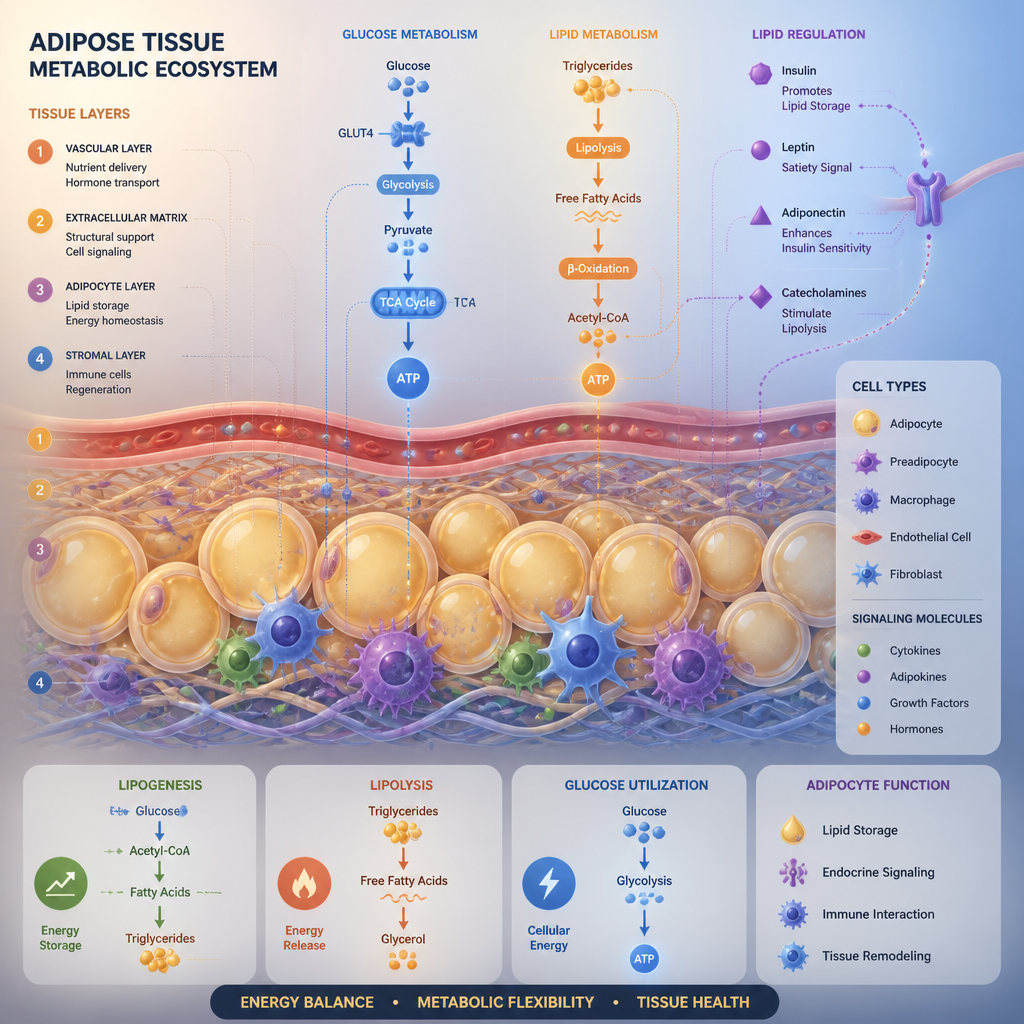
Pro tip: When designing in vitro assays to study GIPR-mediated lipid effects with Retatrutide, always include an insulin co-treatment condition. GIP's LPL-upregulating activity in adipocytes is potentiated by insulin, and omitting insulin from the culture conditions may substantially underestimate GIPR-dependent lipid uptake responses.
Retatrutide GIP Mechanism: The Triple Agonist Context
Retatrutide (LY3437943) is a single protein conjugated to a fatty diacid moiety that simultaneously activates human GIP, GLP-1, and glucagon receptors. Understanding the Retatrutide GIP mechanism requires placing it within this triple-agonist architecture, because no single receptor's contribution operates in isolation from the other two.
What GIPR Adds That GLP-1R Cannot
GLP-1 receptor agonism drives satiety signaling and slows gastric emptying but does not engage adipose tissue directly at the receptor level. GIPR activation fills a gap that GLP-1R engagement cannot: it directly modulates adipose tissue lipid handling and increases whole-body lipid oxidation. GIP also increases adiponectin secretion from adipocytes, an adipokine with insulin-sensitizing and anti-inflammatory properties that indirectly benefits hepatic fat metabolism and insulin signaling.
Additionally, GIP directly stimulates lipogenesis while also promoting free fatty acid re-esterification, collectively maintaining healthy adipocyte function and reducing ectopic fat distribution. This adipocyte quality maintenance is mechanistically separate from the weight-reduction pathways primarily driven by GLP-1R and glucagon receptor (GCGR) activation.
Brown Adipose Tissue and Lipid Tolerance
An emerging research area shows that GIPR signaling in brown adipose tissue (BAT) contributes independently to lipid handling. Acute GIPR agonism improves lipid tolerance in preclinical models, and this improvement is associated with increased BAT lipid uptake linked to increases in BAT lipoprotein lipase activity. When GIPR signaling in BAT is pharmacologically or genetically abolished, GIP-mediated improvements in lipid tolerance are completely lost, suggesting BAT is a critical effector tissue for GIP's lipid-modulating actions. This is a relatively underexplored angle for Retatrutide in vitro research using BAT cell models.
A key research insight: The GIP receptor is the primary mechanism through which Retatrutide engages adipose tissue directly. Characterizing a compound's adipose-tissue metabolic effects without accounting for GIPR activation means studying less than half the picture.
Lipid Metabolism Peptide Research: What the Data Show
The phase 2 clinical trial data on Retatrutide provide useful endpoints for researchers building in vitro models, because they identify what metabolic parameters shift and by how much, offering benchmarks for assay validation.
In a 48-week phase 2 obesity study, Retatrutide at 8 mg and 12 mg doses produced weight reductions of 22.8% and 24.2% respectively, with higher doses reducing biomarkers of insulin resistance including fasting insulin, fasting C-peptide, and HOMA2-IR by up to 50% or more from baseline. Retatrutide also improved fasting lipid profiles including triglycerides, very low-density lipoprotein cholesterol, and non-high-density lipoprotein cholesterol.
In a separate phase 2a substudy focused on metabolic dysfunction-associated steatotic liver disease (MASLD), LF reductions at 24 weeks were significantly related to changes in body weight, abdominal fat, and metabolic measures associated with improved insulin sensitivity and lipid metabolism. Activation of both GIP and GLP-1 receptors by Retatrutide is understood to have contributed to the observed changes in circulating triglycerides.
Adipose Tissue Remodeling at the Transcriptomic Level
A high-fat diet mouse model study using integrated physiological, histological, transcriptomic, and metabolomic analyses found that Retatrutide markedly reduced body weight and adiposity while improving glucose homeostasis and dyslipidemia. Importantly, the findings identified that Retatrutide transforms dysfunctional white adipose tissue into a metabolically competent organ by enhancing lipid oxidation, suppressing inflammation and fibrotic remodeling, and restoring endocrine function. This adipose tissue quality restoration, rather than mere mass reduction, is now being described as a new therapeutic paradigm, and it is one that GIPR activation is specifically credited with enabling.
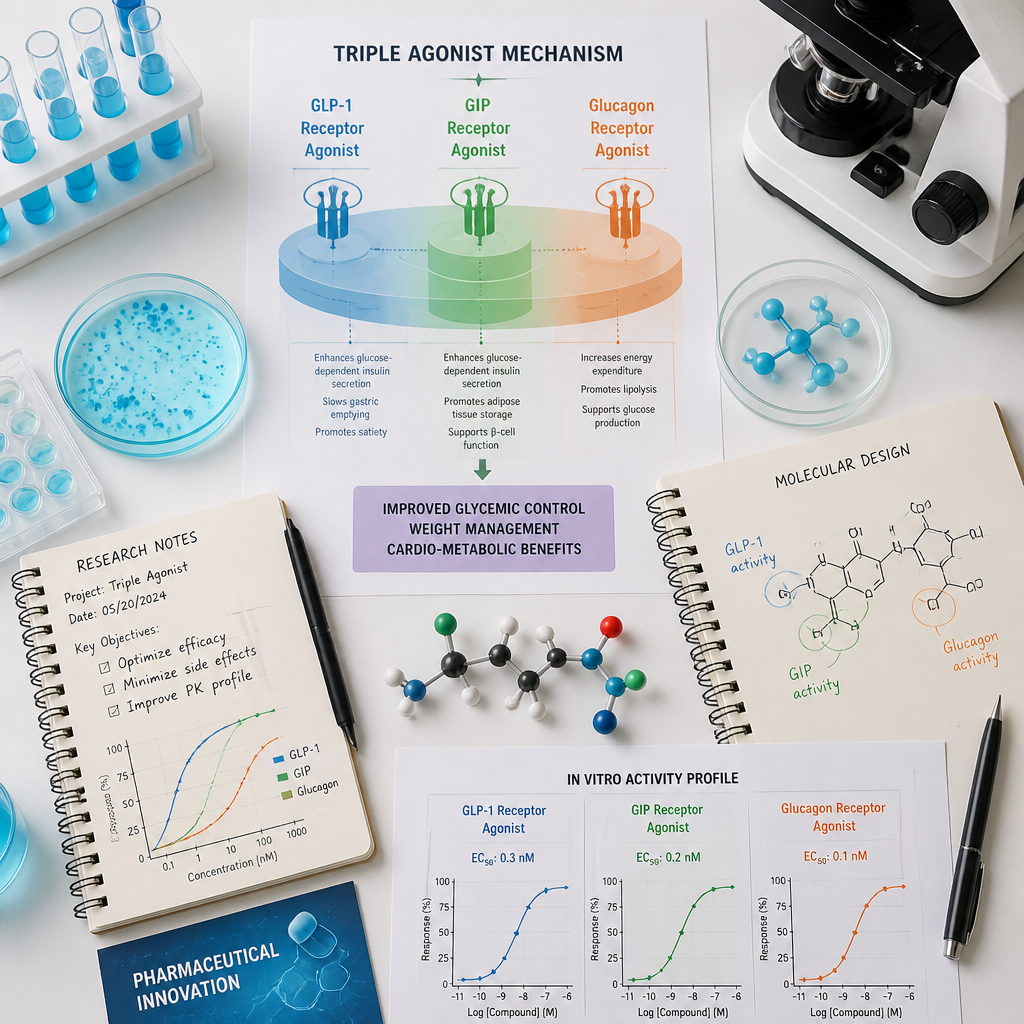
Pro tip: For lipid metabolism peptide research with Retatrutide, transcriptomic profiling of adipose tissue samples, rather than relying solely on circulating lipid markers, provides a more complete picture of GIPR-driven metabolic changes. Circulating triglycerides reflect the combined output of multiple tissues and may not resolve the GIPR-specific contribution without direct tissue analysis.
GIPR Desensitization: A Research Variable You Cannot Ignore
One of the most practically important phenomena for researchers running GIPR-related assays is receptor desensitization. Chronic GIPR agonism impairs the ability of cells to produce cAMP in response to subsequent GIP stimulation. In primary human adipocytes, pre-incubation with a long-acting GIP analog leads to significantly reduced cAMP concentrations upon subsequent GIP stimulation, even though the maximal cAMP response to a non-GIP stimulus like isoproterenol remains intact. This means the desensitization is receptor-specific, not a general impairment of the cAMP pathway.
This desensitization dynamic is particularly relevant for Retatrutide in vitro studies using repeated or sustained compound exposure. A single-dose acute protocol will produce different GIPR-mediated readouts than a chronic dosing protocol, and conflating the two is a common methodological error in incretin research. The direction of the effect, that sustained GIPR agonism functionally mimics GIPR antagonism at the receptor level, is counterintuitive and has generated significant debate in the literature about the net adipose-tissue effects of chronic GIP receptor engagement.
In practice, any study evaluating Retatrutide's lipid-metabolic effects over extended timeframes should include time-course sampling to detect when GIPR desensitization may be altering the response profile. This is especially relevant for researchers using Pepura Labs' lyophilized Retatrutide, where consistent reconstitution and dosing precision are necessary to generate reproducible exposure curves.
Comparing GIPR Engagement Across Incretin-Based Compounds
Retatrutide is not the only compound that engages the GIP receptor, but it is the most pharmacologically complex one currently available for research. Comparing its GIPR engagement approach to that of other compounds clarifies what is unique about its research profile.
| Compound | Receptor Targets | Research Relevance for GIPR Studies |
|---|---|---|
| Retatrutide (LY3437943) | GIP + GLP-1 + Glucagon receptors (triple agonist) | Simultaneous GIPR, GLP-1R, and GCGR activation creates compound metabolic effects; GIPR contribution must be isolated using selective antagonists or receptor-null models to be attributed independently |
| Tirzepatide | GIP + GLP-1 receptors (dual agonist) | Useful comparator for isolating GIPR effects from glucagon receptor effects; removes GCGR variable but retains dual incretin engagement; approved and clinically validated |
| Native GIP / Acyl-GIP analogs | GIP receptor only (monoagonist) | Gold standard for isolating pure GIPR signaling in adipocytes and BAT; essential reference condition for any in vitro study attributing specific effects to GIPR activation within Retatrutide's mechanism |
The comparison table above reflects a practical research approach: using native GIP or mono-selective GIP analogs as reference conditions alongside Retatrutide allows researchers to attribute specific metabolic effects to GIPR engagement versus the other two receptor arms. This is not academic pedantry. Without such controls, the GIPR contribution to any observed lipid or glucose phenotype remains ambiguous.
In Vitro Research Design Considerations for GIPR Studies
Researchers working with Retatrutide to characterize GIPR-dependent metabolic effects face a specific design challenge: the compound activates three receptors simultaneously, meaning any measured outcome is the product of overlapping signaling inputs. Several design principles help resolve this.
Receptor Isolation Strategies
The most reliable approach to isolating GIPR-specific effects is to run parallel experimental arms using selective receptor antagonists. A GLP-1 receptor antagonist such as exendin-9-39 blocks GLP-1R signaling while leaving GIPR and GCGR active. A glucagon receptor antagonist such as adomeglivant blocks GCGR. Running Retatrutide against these antagonist conditions, and comparing to native GIP monoagonist controls, allows researchers to triangulate the GIPR-attributable fraction of any measured response, whether that is cAMP accumulation, LPL activity, triglyceride uptake, or adiponectin secretion.
Cell Model Selection for GIPR Research
GIPR is expressed in whole adipose tissue, but its expression profile varies by depot and differentiation state. Differentiated 3T3-L1 cells and primary human subcutaneous adipocytes are both validated models for GIPR-mediated lipid studies. Primary human adipocytes more accurately reflect the receptor density and sensitivity seen in human tissue, though they require a reliable, high-purity compound source to avoid confounding results from impurity-driven off-target effects. For researchers sourcing Retatrutide for these assays, peptide purity at 99% or above is not a preference; it is a methodological requirement when interpreting receptor-level signaling data.
Pepura Labs supplies lyophilized Retatrutide independently verified by Canadian laboratories, with full Chain of Custody documentation and batch traceability. For in vitro GIPR signaling studies where even minor contaminants can activate background signaling, that level of verification is not a marketing point but a functional necessity. Researchers can review the available formats and documentation directly on the Retatrutide product page.
Purity Requirements and Batch Consistency
A common mistake in GIPR in vitro research is underestimating the impact of batch-to-batch variability on receptor-level assays. cAMP assays for GIPR activation are sensitive enough that small differences in peptide concentration due to variable reconstitution or degradation can shift dose-response curves by an order of magnitude. Using independently verified peptide with documented batch traceability, and reconstituting consistently per the certificate of analysis, eliminates a variable that can otherwise make replicate experiments from the same laboratory report contradictory findings.
Frequently Asked Questions
What does GIP receptor agonist mean in the context of Retatrutide?
It means Retatrutide binds to and activates the glucose-dependent insulinotropic polypeptide receptor (GIPR), one of three receptors the compound engages simultaneously. GIPR activation contributes to the compound's effects on adipose tissue lipid handling, lipoprotein lipase activity, and adiponectin secretion, effects that are mechanistically distinct from what the GLP-1 or glucagon receptor arms produce on their own.
Is the GIP receptor expressed in adipose tissue?
Yes. The GIP receptor is found in whole adipose tissue, including white adipose tissue and brown adipose tissue, while the GLP-1 receptor is not detectably expressed in adipose tissue in the same way. This makes adipose tissue a site where Retatrutide's GIPR component acts directly, without requiring GLP-1R co-activation, which is an important distinction for experimental design.
How does GIPR activation affect lipid metabolism in vitro?
GIPR activation stimulates intracellular cAMP production in adipocytes, upregulates lipoprotein lipase (LPL) expression and secretion, enhances triglyceride clearance from circulation, and promotes free fatty acid re-esterification. In brown adipose tissue, acute GIPR agonism increases fatty acid uptake and LPL activity, improving lipid tolerance in preclinical models. These effects are most clearly observed when insulin is present in the assay environment, as GIP and insulin act synergistically on LPL upregulation.
What is GIPR desensitization and how does it affect Retatrutide research?
GIPR desensitization is the functional downregulation of receptor responsiveness that occurs after chronic or sustained GIPR agonism. After prolonged exposure to a GIP agonist, adipocytes show significantly reduced cAMP production in response to subsequent GIP stimulation, effectively mimicking GIPR antagonism. This matters for Retatrutide in vitro studies because protocols using prolonged compound exposure may underestimate peak GIPR-mediated responses or produce findings that appear inconsistent with acute-dose experiments. Time-course sampling is essential in any chronic exposure design.
Why is compound purity important for GIPR in vitro studies specifically?
GIPR signaling assays, particularly cAMP-based assays, are highly sensitive and can respond to trace amounts of off-target peptide impurities that inadvertently activate or suppress adjacent receptors. At sub-maximal compound concentrations, impurities present even at the 1-2% level can meaningfully distort dose-response relationships. This is why independent third-party purity verification and batch documentation are functionally necessary for in vitro work, not just supplier quality claims made on a product page.
How does Retatrutide's GIP component compare to tirzepatide's?
Both compounds engage GIPR, but Retatrutide adds glucagon receptor (GCGR) activation that tirzepatide does not. The GCGR component increases hepatic fat oxidation and energy expenditure in ways that are not replicated by GIPR or GLP-1R activation alone. For researchers specifically studying GIPR biology, tirzepatide is a useful comparator because it allows isolation of GIP plus GLP-1 receptor effects without the GCGR variable, making it easier to attribute specific outcomes to the GIP arm.
Where can Canadian research labs source high-purity Retatrutide for in vitro studies?
Pepura Labs is a Canadian supplier offering research-grade Retatrutide at 99% purity, supplied as lyophilized peptide with independent Canadian laboratory verification and full Chain of Custody documentation. Their Xpresspost delivery serves laboratories across Canada, with batch traceability that supports the documentation requirements of institutional research programs. For procurement details and current availability, the Pepura Labs website is the primary contact point.
If you work with Retatrutide or other incretin-based peptides in your research, we want to hear what receptor isolation strategies have proven most reliable in your lab's in vitro GIPR assays.
We would love your feedback and any insights you would share with others. What perspective would you add?
References
- Retatrutide phase 2a trial results for MASLD: liver fat, insulin sensitivity, and lipid metabolism outcomes published in Nature Medicine
- Full text of the randomized Retatrutide MASLD substudy including liver fat and metabolic biomarker data on PubMed Central
- Mechanisms of action for GLP-1 and dual GIP/GLP-1 receptor agonists covering LPL, adipose tissue, and lipid metabolism in Frontiers in Endocrinology
- Review of GIP receptor interplay in adipose tissue covering lipolysis, lipid uptake, and GIPR expression in the Journal of Endocrinology
- Multi-omic profiling of Retatrutide effects on adipose tissue fibrosis, lipid oxidation, and metabolic reprogramming in a high-fat diet mouse model