
Research
Glucagon Receptor Agonist: How Retatrutide Drives Energy Expenditure
September 3, 2026

Most incretin-based research compounds stop at two receptors. Retatrutide does not. As a glucagon receptor agonist that simultaneously engages GIP and GLP-1 receptors, Retatrutide (LY3437943) introduces a third mechanistic axis that the dual-agonist class simply cannot replicate: a direct, hepatic-driven increase in energy expenditure and fat oxidation. For research scientists probing energy homeostasis, adiposity, or MASLD-related metabolic dysfunction, understanding what GCGR activation contributes, and what it does not, is not an optional detail. It is the entire point of reaching for a triple agonist over a dual one.
Table of Contents
- Quick Takeaways
- What GCGR Activation Actually Does in Research Models
- Retatrutide's Triple Agonist Profile: Receptor Binding and Potency Hierarchy
- Hepatic Fat Oxidation: The Molecular Chain from GCGR to Beta-Oxidation
- Energy Expenditure Research Evidence in Preclinical Models
- GCGR, GLP-1R, and Dual Agonism: What Each Mechanism Contributes
- Designing Experiments Around GCGR-Mediated Endpoints
- Frequently Asked Questions
- References
Quick Takeaways
| Key Insight | Explanation |
|---|---|
| GCGR agonism is the differentiating mechanism in Retatrutide | GLP-1R and GIPR reduce appetite and improve incretin signaling. The glucagon receptor component is what drives thermogenesis and hepatic fat oxidation independent of caloric intake suppression. |
| Retatrutide's GCGR EC50 is approximately 5.79 nM for human receptor | This potency, lower than its GIPR activity, is intentional. Balanced GCGR activation avoids the hyperglycemic risk of pure glucagon agonism while preserving the energy expenditure signal. |
| Hepatic CPT1 upregulation is a core GCGR-mediated mechanism | Glucagon receptor signaling increases carnitine palmitoyltransferase 1 (CPT1) expression, which is the rate-limiting step for transporting fatty acids into mitochondria for beta-oxidation. |
| GCGR knockout models confirm the mechanism is receptor-specific | Research in GCGR-null mice shows impaired beta-oxidation in both fed and fasted states, directly confirming that glucagon signaling, not coincidental hormonal changes, drives this oxidative effect. |
| Phase 2 data showed up to 82% liver fat reduction with Retatrutide | In a randomized Phase 2a trial, the 8 mg and 12 mg doses produced mean relative liver fat reductions of 81.4% and 82.4% respectively at 24 weeks, outcomes tied directly to the GCGR component. |
| GCGR agonism reduces hepatosteatosis even when weight loss is modest | GCGR-null mice develop hepatosteatosis on high-fat diets despite weighing less than wildtype counterparts, showing GCGR's lipid-clearing role operates beyond simple body weight reduction. |
| Lyophilized Retatrutide peptide purity matters for GCGR binding assays | Sub-99% purity introduces degradation fragments that occupy receptor binding sites without activating downstream cAMP cascades, corrupting EC50 measurements in cell-based GCGR assays. |
What GCGR Activation Actually Does in Research Models
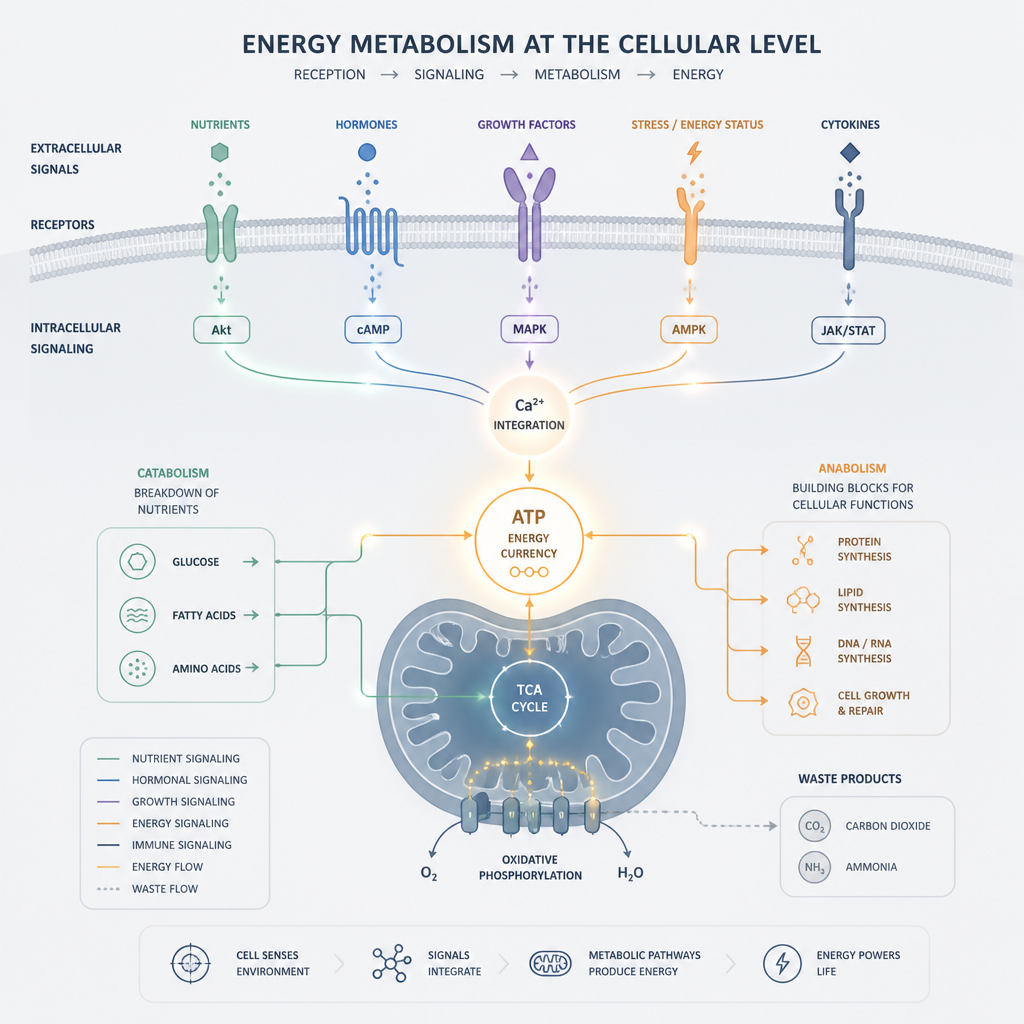
Glucagon's primary reputation in metabolic physiology is glycogenolytic: it raises blood glucose. This is accurate but incomplete, and it is the incomplete part that makes a glucagon receptor agonist scientifically interesting beyond diabetes research. When GCGR is activated in the liver, it simultaneously initiates a program of lipid mobilization, mitochondrial fatty acid transport, and increased energy substrate utilization that is distinct from anything the incretin receptors produce.
In practice, GCGR signaling activates hepatic adipose triglyceride lipase, increasing intrahepatic lipolysis. The free fatty acids released are then directed toward mitochondrial beta-oxidation rather than re-esterification, a shift that elevates circulating ketone bodies as a measurable downstream marker. Research using long-acting glucagon analogues in diet-induced obese mouse models has confirmed that this energy expenditure increase is driven by hepatic, not adipose, GCGR signaling specifically.
The mechanistic evidence from GCGR-null models is unambiguous. Mice lacking the glucagon receptor show impaired beta-oxidation in both fed and fasted states, indicated by altered CPT1 gene expression patterns and abnormal circulating fatty acid concentrations. These animals also develop enhanced susceptibility to hepatosteatosis on high-fat diets despite lower body weight, a dissociation that makes a critical point for researchers: GCGR's lipid-clearing function is not a downstream consequence of weight loss. It operates as an independent metabolic axis.
Pro tip: When designing cell-based energy expenditure assays with Retatrutide, include a GCGR-selective antagonist arm alongside your vehicle control. This lets you isolate the glucagon receptor contribution to cAMP accumulation and downstream lipid oxidation markers without redesigning the entire protocol around receptor knockout constructs.
Retatrutide's Triple Agonist Profile: Receptor Binding and Potency Hierarchy
Retatrutide (CAS 2381089-83-2, PubChem CID 163322498) is a single protein conjugated to a fatty diacid moiety. The fatty acid tail extends its half-life through albumin binding, which is what makes once-weekly dosing viable in preclinical protocols. But the more important structural consequence is how the molecule achieves balanced, non-competing receptor engagement across three pharmacologically distinct targets.
The Potency Hierarchy and Why It Is Deliberately Asymmetric
Confirmed in vitro data shows Retatrutide's EC50 values for human receptors are approximately 0.0643 nM at GIPR, 0.775 nM at GLP-1R, and 5.79 nM at GCGR. This ordering is not an accident of synthesis, it is a design feature. GIPR is the most potently activated receptor, which contributes incretin synergy and facilitates adipose tissue fat utilization during caloric restriction. GLP-1R activation suppresses appetite through CNS and gut signaling. GCGR sits at the lowest potency tier but is the receptor that drives thermogenic and hepatic lipolytic effects that neither GIPR nor GLP-1R can produce.
The same potency hierarchy holds for mouse receptors, with EC50 values of approximately 0.191 nM (GIPR), 0.794 nM (GLP-1R), and 2.32 nM (GCGR). This cross-species consistency matters for translational research: the mechanistic ranking observed in murine DIO models maps predictably to the human receptor pharmacology, reducing the interpretive gap when comparing in vitro cAMP data to whole-animal energy expenditure outcomes.
What Balanced GCGR Activity Avoids
A pure glucagon receptor agonist would produce hepatic glucose dumping that counteracts any glycemic benefit from GLP-1R activation. Retatrutide avoids this by pairing lower-potency GCGR activation with robust GLP-1R engagement. The GLP-1 component suppresses glucagon-stimulated hepatic glucose production through pancreatic and central mechanisms, while the GCGR component retains its lipid-oxidizing and thermogenic effects. In research settings, this means the compound serves as a cleaner tool for studying metabolic energy flux than any monoagonist glucagon analogue.
The scientific rationale for combining GLP-1R, GIPR, and GCGR activation is that each receptor regulates distinct but overlapping aspects of metabolic physiology: satiety signaling, incretin-mediated insulin secretion, and hepatic glucose and fat metabolism. A triple agonist is not redundancy, it is system-level intervention.
Hepatic Fat Oxidation: The Molecular Chain from GCGR to Beta-Oxidation
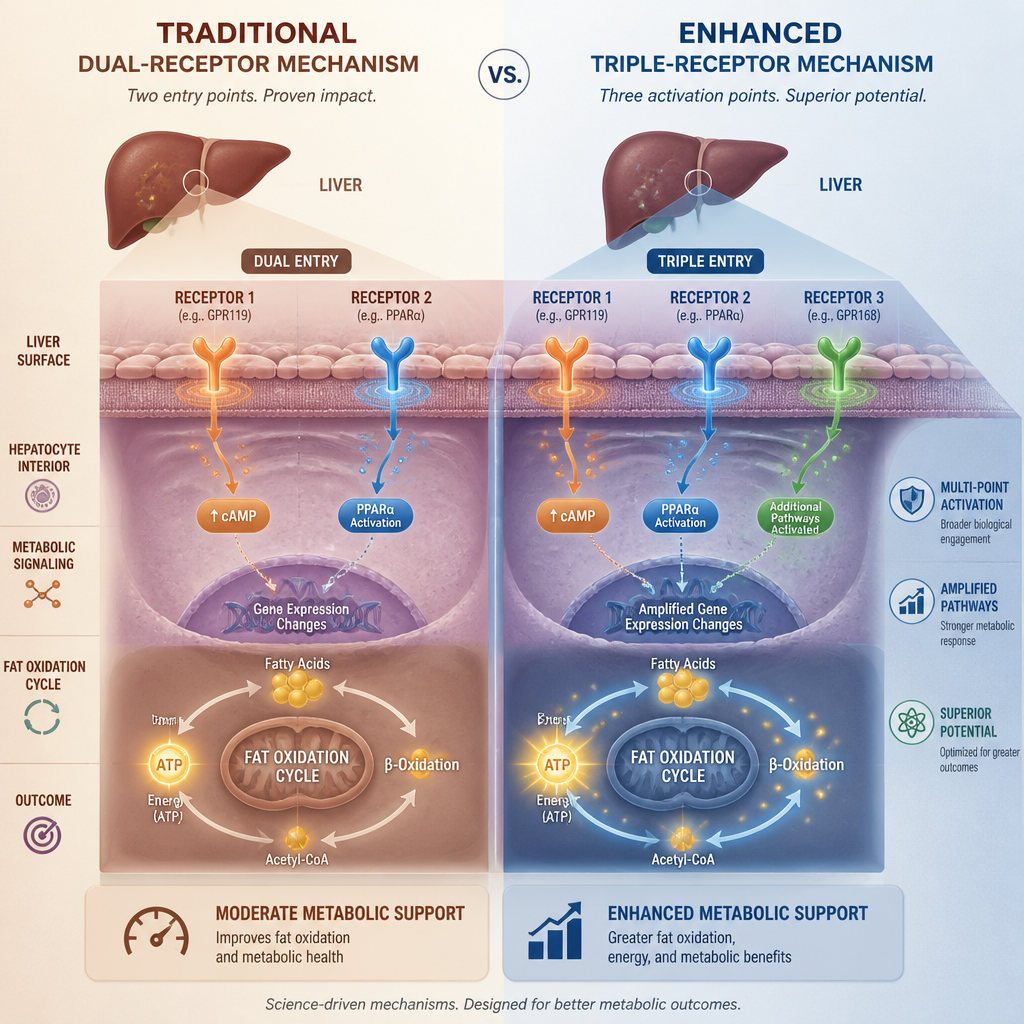
Understanding how glucagon receptor agonism translates into measurable fat oxidation requires tracing the intracellular signal past the initial cAMP burst. GCGR is a G protein-coupled receptor. Upon activation, it drives adenylyl cyclase-dependent cAMP production, which activates protein kinase A (PKA). PKA phosphorylates multiple downstream substrates, but the most relevant for energy expenditure research are those governing mitochondrial fatty acid entry and lipolytic enzyme activity.
The CPT1 Connection
CPT1 (carnitine palmitoyltransferase 1) is the rate-limiting enzyme for long-chain fatty acid transport into the mitochondrial matrix for beta-oxidation. GCGR signaling upregulates CPT1 expression in hepatocytes, and the functional consequence is direct: more fatty acids enter the mitochondria, and more acetyl-CoA is generated for the TCA cycle. This is one reason why hepatic ketone production rises with GCGR activation even in the absence of dietary carbohydrate restriction.
Additionally, GCGR activation stimulates inositol triphosphate receptor 1 (InsP3R1)-mediated calcium release from the endoplasmic reticulum. This calcium signal activates calmodulin-dependent kinase II (CaMKII), which feeds into gluconeogenic enzyme activation and further potentiates the shift toward oxidative lipid metabolism. Research using InsP3R1 knockout models has confirmed this pathway is necessary for glucagon-induced increases in mitochondrial fat oxidation, making InsP3R1 a mechanistically important readout in GCGR-focused assay panels.
Hepatosteatosis Reversal in MASLD Research Contexts
Phase 2 clinical data has demonstrated that Retatrutide produces mean relative liver fat reductions of 81.4% at 8 mg and 82.4% at 12 mg at 24 weeks in participants with MASLD, with hepatic steatosis resolving entirely (to below 5% liver fat) in 79% and 86% of participants in those dose groups respectively. The addition of glucagon agonist activity to GLP-1R agonism has been specifically identified in research settings as providing greater hepatic fat reduction than incretin-only approaches, pointing directly to the GCGR mechanism as the differentiating contributor for liver-specific endpoints.
Pro tip: When using Retatrutide in hepatocyte culture models to study fat oxidation endpoints, measure both CPT1 mRNA expression and ketone body output (beta-hydroxybutyrate) as paired readouts. CPT1 changes confirm transcriptional activation of the pathway, while ketone output validates that the enzyme activity increase is functionally driving through to complete fatty acid catabolism. Using only one of these measures misses the full picture of GCGR-mediated lipid flux.
Energy Expenditure Research Evidence in Preclinical Models
The preclinical pharmacology record for Retatrutide in energy expenditure models is specific enough to guide experimental design. Subcutaneous dosing at 10 mL/kg on a three-day cycle for 21 days in diet-induced obese male C57/Bl6 mice (24-25 weeks, 40-51 g) produced significant body weight loss and confirmed increases in energy expenditure attributed to glucagon receptor activation. Single-dose experiments at 47 mcg/kg demonstrated GCGR engagement in vivo through improved glucose tolerance in an intraperitoneal glucose tolerance test (ipGTT), an acute readout that precedes the longer-term fat oxidation and weight loss endpoints.
The broader preclinical literature on GLP-1R and GCGR dual agonism adds important mechanistic context. Dual agonist treatment in DIO mice elevated circulating ketone levels relative to GLP-1R-only treatment, confirming the incremental fat oxidation contribution of GCGR co-activation. The same models showed reduced VLDL secretion and decreased de novo palmitate synthesis, outcomes that track with increased diversion of intrahepatic lipid toward beta-oxidation rather than lipoprotein packaging. These are exactly the endpoints a research team studying MASLD pathophysiology or hepatic energy metabolism should be tracking when working with Retatrutide in preclinical models.
A common mistake in energy expenditure assay design is attributing all observed metabolic rate increase to a single mechanism when a triple agonist is in use. In Retatrutide studies, the GCGR component drives hepatic fat oxidation and thermogenesis, while GIPR and GLP-1R contribute to reduced caloric intake, improved insulin sensitivity, and adipose tissue lipid turnover. Indirect calorimetry paired with receptor-selective blockade is the most rigorous approach for isolating GCGR's energy expenditure contribution from the other two receptor arms.
GCGR, GLP-1R, and Dual Agonism: What Each Mechanism Contributes
For research teams deciding which compound class best fits their experimental question, the distinctions between mono, dual, and triple agonist profiles translate directly into which metabolic endpoints will be affected and through which pathways. The table below compares these three pharmacological profiles across the endpoints most relevant to energy expenditure and fat oxidation research.
| Receptor Profile | Primary Metabolic Effects in Research Models | Limitations for Energy Expenditure Studies |
|---|---|---|
| GLP-1R Mono-Agonist (e.g., GLP-1 analogues) | Appetite suppression via CNS and gut, insulin secretion enhancement, modest body weight reduction in DIO models, some BAT thermogenesis through central sympathetic activation | No direct hepatic fat oxidation drive; thermogenic effects are indirect and central. Does not increase CPT1 or drive mitochondrial fatty acid entry independently. Liver fat reduction is secondary to weight loss. |
| GLP-1R/GIPR Dual Agonist (e.g., tirzepatide structure) | Enhanced incretin synergy, greater body weight reduction than GLP-1R alone, adipose tissue lipid utilization facilitated by GIPR, improved insulin sensitivity, some hepatic fat improvement as a downstream weight-loss effect | Still lacks direct GCGR-mediated thermogenesis and CPT1 upregulation. Hepatic steatosis reduction is less pronounced than with GCGR-containing compounds at comparable weight loss levels. No independent hepatic lipolysis activation pathway. |
| GLP-1R/GIPR/GCGR Triple Agonist (Retatrutide) | All dual agonist effects plus direct GCGR-driven hepatic fat oxidation, CPT1 upregulation, InsP3R1-mediated calcium signaling, elevated ketogenesis, increased energy expenditure independent of food intake reduction, superior hepatic steatosis reversal | Greater mechanistic complexity requires more controlled experimental designs to isolate receptor-specific contributions. Higher purity standards (99%+) required for reliable receptor binding assays due to multiple simultaneous receptor targets. |
Designing Experiments Around GCGR-Mediated Endpoints
If your research question specifically concerns GCGR's contribution to energy expenditure, Retatrutide offers a tool that no monoagonist glucagon analogue can match: the ability to study GCGR activation in the context of concurrent incretin receptor engagement, which is how the receptor operates in physiologically relevant metabolic states. But this advantage requires deliberate experimental scaffolding to be informative.
Compound Purity Is a Non-Negotiable Variable
In cell-based GCGR activation assays measuring cAMP accumulation, peptide purity below 99% introduces degradation fragments that can occupy receptor binding sites competitively without triggering full agonist responses. This compresses the observed EC50 and produces artificially shallow dose-response curves that look like partial agonism when the actual cause is impurity occupancy. For multi-receptor binding studies, this problem compounds across three receptor targets simultaneously.
Pepura Labs supplies Retatrutide at confirmed 99%+ purity, independently verified by Canadian laboratories with full batch traceability and Chain of Custody documentation. For researchers running concentration-response curves across all three receptor axes, that verification is not marketing language. It is the difference between interpretable pharmacology data and three months of inexplicable curve anomalies. The lyophilized format also ensures storage stability across standard laboratory freezer conditions without requiring reconstitution buffers that can introduce peptide degradation artifacts.
Selecting the Right Endpoint Panel for GCGR Energy Expenditure Studies
A complete endpoint panel for GCGR-focused energy expenditure research with Retatrutide should include: cAMP accumulation (receptor activation confirmation), CPT1 mRNA and protein expression (mitochondrial fatty acid transport upregulation), beta-hydroxybutyrate output (functional fat oxidation readout), ATGL activity (hepatic intracellular lipolysis), and indirect calorimetry respiratory exchange ratio in whole-animal models. Measuring only body weight or fat mass obscures the mechanism and undervalues what GCGR agonism is actually doing in your system.
Researchers comparing Retatrutide against incretin-only compounds for hepatosteatosis endpoints should also include MRI-based liver fat quantification (or oil red O staining for in vitro hepatocyte models), alongside serum ALT and AST as hepatocellular stress markers. The Phase 2a MASLD trial demonstrated visceral adipose tissue reduction alongside liver fat reduction, so adding VAT quantification to in vivo DIO model protocols provides richer characterization of the compound's whole-body fat distribution effects.
Frequently Asked Questions
What makes Retatrutide a glucagon receptor agonist and not just an incretin compound?
Retatrutide binds to and activates the glucagon receptor (GCGR) in addition to GLP-1R and GIPR. The GCGR activation is what drives hepatic fat oxidation, CPT1 upregulation, and thermogenesis. Incretin compounds (GLP-1R and GIPR agonists) do not directly activate GCGR and therefore do not produce the same hepatic lipolytic drive. This third receptor arm is what differentiates the triple agonist class mechanistically from the dual and mono incretin-based compounds.
How does GCGR agonism increase energy expenditure without causing hyperglycemia?
In Retatrutide's balanced profile, GLP-1R activation suppresses the hepatic glucose output that would normally accompany glucagon receptor stimulation. The GCGR component retains its lipid-mobilizing and thermogenic effects while the GLP-1R component counteracts the glycogenolytic and gluconeogenic glucose-raising effects. This is why the potency hierarchy matters: lower GCGR potency combined with higher GLP-1R activity is the design mechanism that makes net energy expenditure increase achievable without net glucose elevation in balanced preclinical models.
What are the most informative in vitro readouts for GCGR-mediated fat oxidation with Retatrutide?
The most informative paired readouts in hepatocyte-based models are CPT1 expression (confirming mitochondrial fatty acid transport pathway activation) and beta-hydroxybutyrate secretion (confirming downstream completion of beta-oxidation). cAMP accumulation assays confirm receptor engagement. InsP3R1-dependent calcium flux can also be measured as an intermediate signal. For a complete picture, pairing intracellular lipid staining (oil red O or BODIPY) with fatty acid oxidation flux assays using radiolabeled or stable isotope-labeled substrates provides both structural and functional confirmation of GCGR-driven fat clearance.
Why does peptide purity matter specifically for GCGR binding assays with Retatrutide?
Retatrutide's three receptor targets each have different binding site geometries and pharmacophore requirements. Degradation fragments from sub-99% purity peptide preparations can occupy binding sites across any of the three receptors without producing full agonist cAMP responses. In a single-receptor assay this causes curve compression. In a triple-receptor study it introduces non-systematic artifacts across three assay dimensions simultaneously, making it very difficult to distinguish genuine pharmacological behavior from preparation quality issues. Verified 99%+ purity from an independently tested source, with batch traceability, is the baseline standard for reliable GCGR pharmacology work.
How does the hepatic GCGR energy expenditure mechanism differ from what brown adipose tissue thermogenesis research studies?
Brown adipose tissue thermogenesis is driven primarily by UCP1 activation uncoupling mitochondrial oxidative phosphorylation from ATP synthesis, a process primarily regulated by sympathetic innervation and adrenergic receptor activation. Hepatic GCGR-mediated energy expenditure operates through a fundamentally different pathway: CPT1 upregulation increases mitochondrial fatty acid entry and drives beta-oxidation, while InsP3R1 calcium signaling increases gluconeogenic substrate flux and pyruvate carboxylase activity. Both mechanisms increase total energy expenditure, but they operate in different tissues through different molecular effectors. For research teams studying metabolic energy balance, these are complementary rather than redundant mechanisms, and Retatrutide's GCGR component is specifically relevant to the hepatic pathway.
Is Retatrutide suitable for in vitro research protocols, or only whole-animal models?
Retatrutide is used in both in vitro and in vivo preclinical research settings. In vitro, it is applied in cell-based receptor activation assays measuring cAMP accumulation at human and mouse GCGR, GIPR, and GLP-1R, with confirmed EC50 values published for all six receptor-species combinations. In hepatocyte culture models it is used to study lipid metabolism, CPT1 induction, and intracellular lipolysis. In whole-animal DIO models it is administered subcutaneously for energy expenditure, body weight, and liver fat endpoints. The lyophilized powder format used by research-grade suppliers is compatible with both aqueous reconstitution for in vitro assays and subcutaneous injection formulation for in vivo protocols.
If you are currently working with GCGR-targeted compounds in your research program, we would be interested to hear which endpoints your team prioritizes for distinguishing receptor-specific energy expenditure contributions from whole-body metabolic effects.
We would love your feedback and any insights you would share with others. What perspective would you add?
References
- Physiological Reviews: Hepatic glucagon action beyond glucose mobilization, covering GCGR-mediated lipid oxidation and CPT1 mechanisms
- PubMed Central: Phase 2a randomized trial of Retatrutide in MASLD showing liver fat reduction data across dose groups
- PubMed Central: GLP-1R agonism, brown adipose tissue thermogenesis, and sympathetic outflow in lean and diet-induced obese mouse models
- Patsnap Synapse: Retatrutide mechanism of action including GCGR potency hierarchy and triagonist receptor binding profile
- MedChemExpress: Retatrutide in vitro EC50 values for human and mouse GCGR, GIPR, and GLP-1R receptors with preclinical dosing data