
Choosing the wrong peptide reconstitution solvent does not just waste an expensive vial. It can cause irreversible aggregation, skew dose-response curves, and invalidate entire experimental series before a single data point is collected. For research scientists working with lyophilized peptides, solvent selection is a technical decision that carries real consequences, and one that is frequently treated as an afterthought. This guide breaks down the three solvents researchers reach for most often, bacteriostatic water, dilute acetic acid, and DMSO, along with a specific section on Retatrutide reconstitution, so you can make the right call before opening the vial.
Table of Contents
- Quick Takeaways
- Why Solvent Choice Determines Data Quality
- Bacteriostatic Water: The Default for Good Reason
- Dilute Acetic Acid: When Aqueous Solvents Fail
- DMSO: The Last-Resort Solvent
- Solvent Comparison Table
- Retatrutide Reconstitution Guide
- Step-by-Step Solvent Selection Protocol
- Frequently Asked Questions
- References
Quick Takeaways
| Key Insight | Explanation |
|---|---|
| Bacteriostatic water is the default solvent for most research peptides | It contains 0.9% benzyl alcohol, supports multi-dose use over a 28-day in-use period, and is compatible with the majority of peptides used in aqueous research settings. |
| The 28-day clock starts at first puncture, not at reconstitution | After initial needle insertion into the vial, discard remaining solution at 28 days regardless of visual appearance. Aseptic technique is required at every access. |
| 0.1% acetic acid solves solubility problems for basic or hydrophobic peptides | When a peptide resists aqueous dissolution, dilute acetic acid lowers pH and introduces protons that improve solubility for positively charged or amphiphilic sequences. |
| DMSO is reserved for highly hydrophobic peptides only | DMSO concentrations above 0.5% in cell culture can induce cytotoxic effects. Always dilute the DMSO stock into aqueous buffer before use and include DMSO-only controls in your assay. |
| Retatrutide reconstitutes best in bacteriostatic or sterile water | As a lipidated peptide with a C20 diacid side chain, Retatrutide has amphipathic character that makes it compatible with aqueous solvents. Inject solvent gently against the vial wall and swirl, never shake. |
| Net charge at pH 7 is your first solubility predictor | Peptides with a net charge greater than +2 dissolve readily in bacteriostatic water; near-neutral peptides often need acetic acid or ammonium hydroxide depending on their isoelectric point. |
| Benzyl alcohol is incompatible with certain peptides | Copper-chelating peptides and a handful of other compounds degrade in the presence of benzyl alcohol. Always verify compound-preservative compatibility using your Certificate of Analysis before reconstitution. |
Why Solvent Choice Determines Data Quality
Peptides are not small molecules. Their solubility profiles are governed by amino acid sequence, net charge at working pH, and the distribution of hydrophobic and hydrophilic residues along the chain. A solvent mismatch does not simply produce a cloudy solution. It can cause irreversible aggregation or denaturation that no amount of warming or agitation will reverse, resulting in a dose that delivers far less active compound than intended.
In practice, the cost of this mistake is compounded by the value of research-grade peptide material. A lyophilized vial with verified purity documentation represents significant investment in both sourcing and quality control. Reconstituting it in an incompatible solvent is the fastest way to lose that investment before the experiment even starts.
The correct approach begins before the vial is opened: review the Certificate of Analysis for any reconstitution guidance provided by the supplier, assess the peptide's sequence properties, and select the solvent that matches those properties. Only then does technique matter.
Bacteriostatic Water: The Default for Good Reason
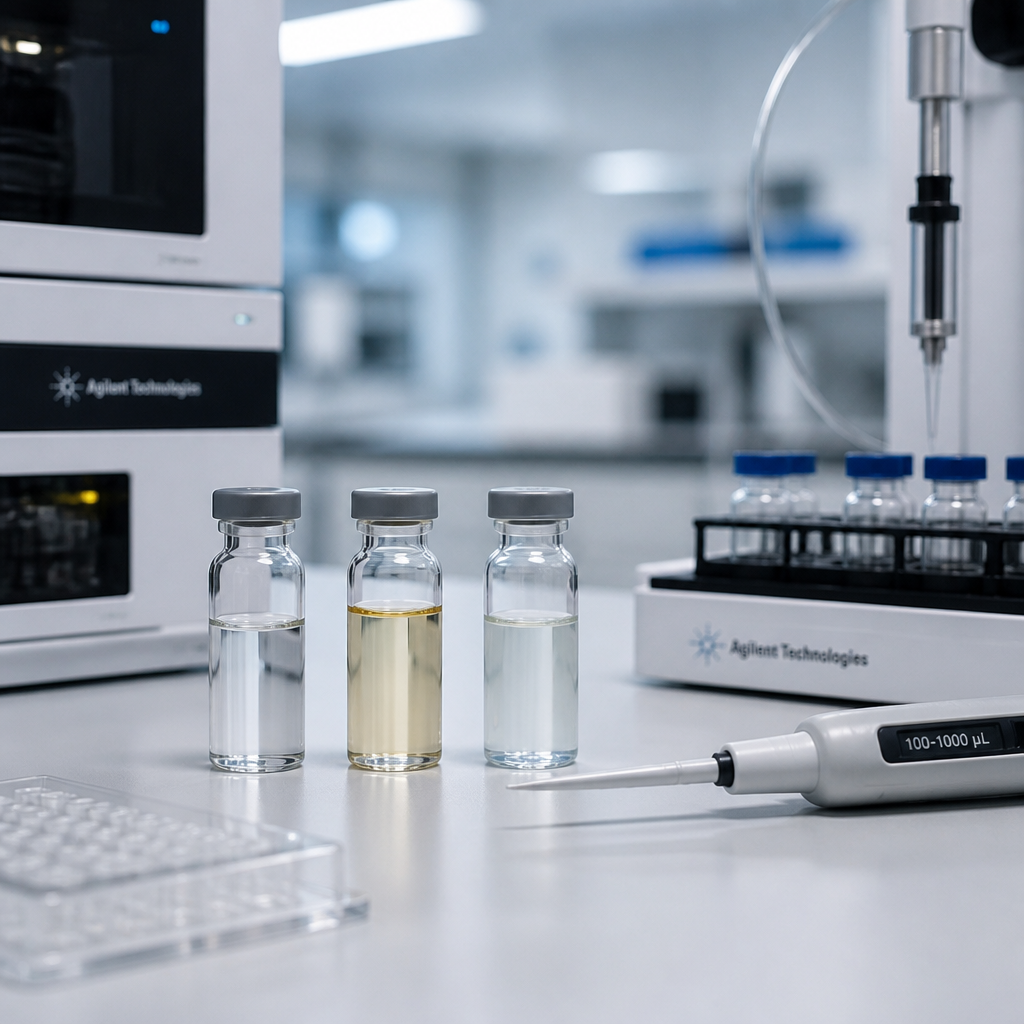
Bacteriostatic water containing 0.9% benzyl alcohol is the standard multi-dose diluent for peptide reconstitution in research settings. The benzyl alcohol concentration is not arbitrary. It reflects a deliberate formulation decision that balances antimicrobial efficacy against chemical compatibility with most peptide backbones.
What the 28-Day Rule Actually Means
The 28-day in-use shelf life begins at the first puncture of the septum. This is the point at which the preservative system must start earning its keep. Discard any remaining reconstituted solution at 28 days regardless of visual appearance, because benzyl alcohol degradation and microbial contamination can both occur without visible signals.
Bacteriostatic water supports repeated vial access, which makes it the practical choice for longitudinal in vitro protocols where a single peptide vial is sampled multiple times across a study. Sterile water, by contrast, offers no antimicrobial protection and is single-use only. Treating these two products as interchangeable is one of the most common errors in research peptide workflows.
When Bacteriostatic Water Is Not Appropriate
Certain compounds degrade in the presence of benzyl alcohol. Copper-chelating peptides are a well-documented example. If your peptide has known sensitivity to alcohols or preservatives, switch to preservative-free sterile water for injection and treat reconstituted aliquots as single-use. Check the supplier's Certificate of Analysis and batch documentation first. At Pepura Labs, every batch ships with full chain of custody documentation and Canadian laboratory verification, so researchers are not guessing about compatibility from a generic product sheet.
Pro tip: Never prepare your own bacteriostatic water by adding benzyl alcohol to sterile water. The concentration and sterility of the final product cannot be reliably controlled at bench scale, and deviations from the 0.9% standard introduce variables that conflict with every protocol designed around commercial-grade bacteriostatic water.
Dilute Acetic Acid: When Aqueous Solvents Fail
Dilute acetic acid, typically used at 0.1% v/v, is the first escalation when bacteriostatic or sterile water fails to dissolve a peptide. It works by lowering the solution pH, which protonates basic amino acid residues such as lysine, arginine, and histidine, introducing a net positive charge that improves aqueous solubility for peptides that are slightly basic or carry a near-neutral charge at physiological pH.
Peptide Profiles That Respond Well to Acetic Acid
If a peptide has a net charge close to zero at pH 7, it tends to sit at its isoelectric point in aqueous solution, reducing electrostatic repulsion between chains and promoting aggregation. Adding dilute acetic acid shifts that charge profile and disperses the aggregates. Hydrophobic peptides with more than 50% non-polar residues also respond to acetic acid, particularly when combined with gentle sonication to assist dissolution of larger hydrophobic clusters.
A practical starting point: prepare a 0.1% acetic acid solution using glacial acetic acid diluted in HPLC-grade water. Add the minimum volume needed to wet the lyophilized cake, allow it to stand briefly, then bring to final volume with sterile water or buffer. Avoid preparing acetic acid stocks at higher concentrations unless the peptide specifically requires it, since excess acid can promote hydrolysis of acid-labile bonds over time.
Stability Considerations for Acetic Acid Reconstitutions
Peptides reconstituted in dilute acetic acid should be aliquoted and stored at -20°C or colder immediately after dissolution. The acidic environment is useful for solubilization but is not ideal for long-term stability of peptides containing aspartate, glutamate, or asparagine residues, which are susceptible to hydrolysis or deamidation under sustained acidic conditions. Aliquoting minimizes freeze-thaw cycles, which are the fastest route to degradation in any solvent system.
Selecting the correct solvent for peptide reconstitution is as important as selecting the correct peptide for an experiment. An incompatible solvent can cause irreversible aggregation, denaturation, or incomplete dissolution, wasting expensive research material and producing unreliable experimental data.
DMSO: The Last-Resort Solvent
DMSO (dimethyl sulfoxide) is a polar, aprotic organic solvent with exceptional ability to dissolve highly hydrophobic compounds that resist aqueous solvents entirely. Its unique membrane-penetrating properties make it effective for peptides that no amount of pH adjustment will bring into aqueous solution. That same potency makes it the solvent with the narrowest window for safe use in cell-based research.
The 0.5% Ceiling in Cell Culture
DMSO concentrations exceeding 0.5% in cell culture can induce cytotoxic effects that jeopardize cell viability and confound experimental results. The practical implication: dissolve the hydrophobic peptide in neat DMSO to create a concentrated stock, then dilute that stock into aqueous buffer to bring the final DMSO concentration down to 0.1% or below. This keeps solubility gains while staying within a range compatible with almost all common cell lines.
Always include DMSO-only controls at the same concentration used in your experimental wells. DMSO alters membrane permeability and can affect gene expression at concentrations well below those needed to cause visible cytotoxicity. Without a matched DMSO control, you cannot distinguish between peptide-specific effects and solvent artifacts.
Freeze-Thaw Behavior of DMSO Stocks
DMSO stock solutions require specific handling. DMSO freezes at approximately 18°C, which means a stock stored at -20°C will be solid when retrieved. Allow it to thaw completely at room temperature before dispensing, and minimize the number of freeze-thaw cycles. Repeated freezing and thawing of DMSO stocks accelerates peptide degradation and can cause concentration shifts as the solvent composition changes during phase transitions. Prepare small aliquots at the time of initial dissolution to reduce cycle count.
Pro tip: When a peptide resists both bacteriostatic water and dilute acetic acid, try dissolving it in a small volume of DMSO first (enough to fully wet the lyophilized powder), then gradually add sterile buffer while mixing gently. This sequential dilution approach maintains solubility through the transition from organic to aqueous phase, rather than trying to force an aqueous-first dissolution of a hydrophobic compound.
Solvent Comparison Table
The table below summarizes the key properties of each solvent to guide selection based on peptide characteristics and research context.
| Property | Bacteriostatic Water (0.9% benzyl alcohol) | Dilute Acetic Acid (0.1% v/v) | DMSO |
|---|---|---|---|
| Best for | Hydrophilic peptides, net charge >+2 at pH 7, multi-dose protocols | Near-neutral or slightly basic peptides, amphiphilic sequences, mildly hydrophobic peptides | Highly hydrophobic peptides that fail to dissolve in aqueous or acidic solvents |
| Multi-dose support | Yes, up to 28 days after first puncture with aseptic technique | No, aliquot immediately and freeze | No, freeze in small aliquots, minimize freeze-thaw cycles |
| Cell culture compatibility | High, check benzyl alcohol sensitivity per compound | Moderate, dilute into neutral buffer before assay use | Low risk if final concentration kept at 0.1% or below; cytotoxic above 0.5% |
| Stability of reconstituted peptide | Good under refrigeration, discard at 28 days | Moderate, acid-labile bonds at risk over time; aliquot and freeze immediately | Variable, minimize freeze-thaw; avoid repeated temperature cycling |
| Key incompatibilities | Copper-chelating peptides and benzyl alcohol-sensitive compounds | Peptides with acid-labile bonds (Asp-Pro, Asn at low pH) | Any assay where membrane permeability artifacts are a concern; incompatible with some plasticizers |
| Typical starting concentration | USP-grade, commercially available | Prepare fresh from glacial acetic acid in HPLC-grade water | Use analytical or cell culture-grade DMSO; prepare concentrated stock then dilute |
Retatrutide Reconstitution Guide
Retatrutide is a 39-residue GIP/GLP-1/glucagon triple agonist supplied as a lyophilized powder. Its structural complexity includes a C20 diacid lipid side chain, which gives the molecule amphipathic character: the hydrophilic peptide chain provides aqueous compatibility while the lipophilic fatty acid tail influences behavior at the interface between solvents.
Recommended Solvent for Retatrutide
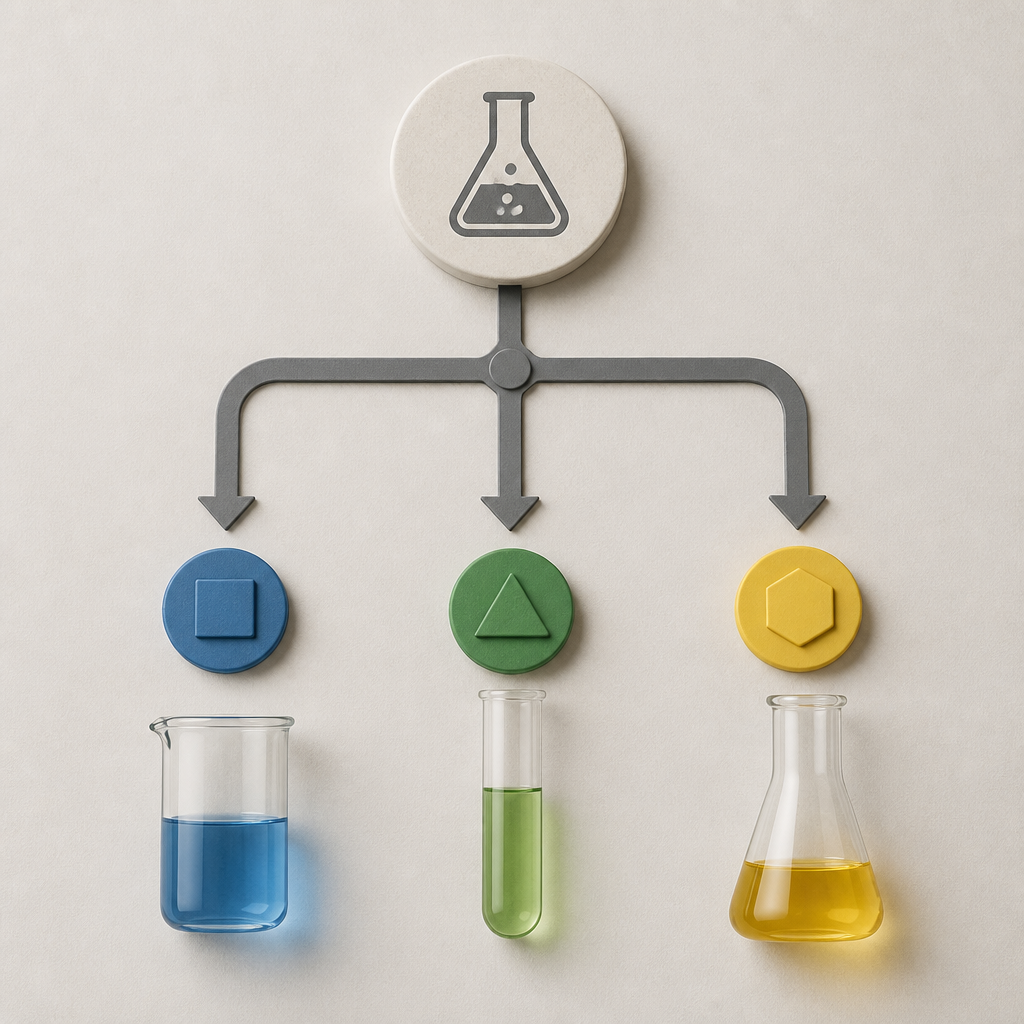
Bacteriostatic water or sterile water is the standard reconstitution solvent for Retatrutide in in vitro research settings. A small fraction of dilute basic buffer is sometimes used by researchers to assist dissolution of amphiphilic, fatty-acid-conjugated sequences, but for most applications bacteriostatic water performs well. DMSO is not required for Retatrutide under normal laboratory conditions given its water-compatible peptide backbone.
Reconstitution Technique for Retatrutide
Direct the reconstitution solvent gently against the interior wall of the vial rather than injecting it forcefully onto the lyophilized powder. Vigorous injection onto the cake causes foaming and introduces shear stress on the peptide backbone. Allow the solution to stand briefly, then swirl gently until the liquid is clear and free of visible particulates. Do not vortex or shake. Shaking is the single fastest way to generate irreversible aggregates in lipidated peptides.
Once reconstituted, transfer the solution to a low-binding container. Retatrutide should be stored frozen in its lyophilized form at -20°C or colder, protected from light and moisture. In reconstituted form, keep the vial refrigerated, protect it from repeated warming, and use it within your protocol's validated stability window. Pepura Labs supplies Retatrutide with full batch traceability and independent Canadian laboratory verification, so researchers working with Pepura Labs material have documented purity at 99%+ before the first drop of solvent is added. For more information on the compound itself, see the Pepura Labs product catalogue.
Step-by-Step Solvent Selection Protocol
A systematic approach to solvent selection saves material and avoids repeating failed reconstitution attempts. The following protocol applies to any lyophilized research peptide, not just Retatrutide.
Step 1: Check the Certificate of Analysis. If the supplier provides reconstitution instructions on the CoA, follow them. A quality supplier who has characterized the material already has the answer. Do not override CoA guidance without a documented reason.
Step 2: Assess net charge at pH 7. Peptides with a net charge greater than +2 should dissolve readily in bacteriostatic or sterile water. Peptides with a net charge less than -2 respond to sterile water first, then ammonium hydroxide if needed. Peptides with near-zero net charge are the difficult cases: slightly basic peptides typically respond to 0.1% acetic acid, while slightly acidic near-neutral peptides may need 0.1% ammonium hydroxide.
Step 3: Evaluate hydrophobicity. If the peptide sequence contains more than 50% hydrophobic residues (alanine, valine, leucine, isoleucine, proline, phenylalanine, tryptophan, methionine), begin with the acetic acid approach and consider adding a DMSO pre-dissolution step if aqueous approaches fail.
Step 4: Escalate deliberately. Try each solvent in sequence rather than mixing solvents from the outset. Document what fails and why. A failed reconstitution attempt produces useful data about peptide behavior that informs storage and assay design decisions downstream. Researchers working with Pepura Labs material can also consult the batch documentation provided with each order, since chain-of-custody records sometimes include solubility observations from laboratory verification steps.
Pro tip: When working with a new peptide for the first time, reconstitute a small pilot aliquot in each candidate solvent before committing the full vial. A failed full-vial reconstitution with an expensive, independently verified research compound is an avoidable loss.
Frequently Asked Questions
Can I use regular sterile water instead of bacteriostatic water for peptide reconstitution?
Yes, but with important limitations. Sterile water contains no preservative, so once the vial is punctured the solution is single-use only. It offers no protection against microbial contamination across multiple accesses. For single-use aliquots or when a peptide is incompatible with benzyl alcohol, sterile water is appropriate. For multi-dose research protocols, bacteriostatic water is the correct choice because its 0.9% benzyl alcohol preservative maintains sterility for up to 28 days after first puncture.
How do I know if my peptide needs acetic acid instead of bacteriostatic water?
The clearest sign is incomplete dissolution: the reconstituted solution remains cloudy or shows visible particulate matter after gentle swirling. At that point, try 0.1% acetic acid as a reconstitution solvent. Before you get there, evaluate the peptide sequence. Near-neutral net charge at pH 7, high hydrophobic residue content, and amphiphilic or lipidated structure are all predictors of poor aqueous solubility that point toward an acidic solvent as a first adjustment.
What is the maximum safe DMSO concentration in cell culture assays?
Keeping the final DMSO concentration at 0.1% is advisable to ensure compatibility with almost all cell lines. Concentrations up to 0.5% can be used for applications that require higher DMSO content, provided you have confirmed that cell viability is not compromised at that level for your specific cell type. Above 0.5%, cytotoxic effects become a serious risk, and any biological effect you observe may reflect DMSO toxicity rather than peptide activity. Always include DMSO-only control wells at the same concentration used in peptide-treated wells.
What is the best reconstitution approach for Retatrutide specifically?
Bacteriostatic water is the recommended starting solvent for Retatrutide in vitro research. As a lipidated peptide with a C20 diacid side chain and an otherwise hydrophilic 39-residue backbone, Retatrutide is generally compatible with aqueous reconstitution. Add solvent gently against the vial wall, swirl slowly, and allow the solution to clarify before use. Do not shake. Store reconstituted material refrigerated in a low-binding container and protect it from repeated warming cycles.
Does freeze-thaw cycling affect peptide quality after reconstitution?
Yes, significantly. Repeated freeze-thaw cycles accelerate peptide degradation in all solvent systems, but the effect is most pronounced with DMSO stocks (which undergo phase changes during freezing) and with peptides reconstituted in acidic solvents (where sustained exposure to low pH between thaw cycles promotes hydrolysis). The correct mitigation is to aliquot reconstituted peptide into single-use volumes immediately after dissolution, freeze those aliquots at -20°C or colder, and thaw only what is needed for each experiment session.
Why does my peptide CoA matter when choosing a reconstitution solvent?
The CoA contains batch-specific purity data and, in the case of quality suppliers, reconstitution guidance based on actual characterization of that material. A CoA from a laboratory that has independently verified the compound gives you a documented baseline: purity, expected behavior, and compatibility notes. When working with Pepura Labs material, the combination of Canadian laboratory verification and full chain of custody documentation means the CoA is not a generic document but a batch-specific record tied to that exact product. Starting there before touching a solvent prevents the most common reconstitution errors.
If you work with lyophilized research peptides, we'd like to hear which reconstitution protocol you find most reliable in practice and whether you've encountered solubility challenges that required an unconventional approach.
We would love your feedback and any insights you would share with others. What perspective would you add?
References
- Peptide solvent compatibility guide covering charge-based and hydrophobicity-based solvent selection
- Laboratory professional's guide to bacteriostatic water containing 0.9% benzyl alcohol
- Guide to optimizing peptide solubility in cell culture using DMSO safely
- Retatrutide physical chemistry, reconstitution, and handling reference material
- Overview of reconstitution solvent options including bacteriostatic water, acetic acid, and DMSO