
If you have ever received a peptide vial, transferred it to long-term storage, and then found your assay data drifting in ways your controls cannot explain, the shipping leg is worth interrogating first. Peptide shipping Canada decisions are not administrative details. They are scientific decisions that directly influence whether the compound arriving at your bench matches the certificate of analysis issued at synthesis. For research-grade compounds like Retatrutide, where purity verification at 99% or above is the baseline expectation, a single compromised transit event can silently invalidate weeks of downstream work. This guide covers what actually damages peptides in transit, why Xpresspost matters, and how to evaluate a supplier's cold-chain practices before you place an order.
Table of Contents
- Quick Takeaways
- Why Transit Is a Stability Event, Not a Logistics Event
- How Xpresspost Changes the Risk Profile for Canadian Researchers
- What Cold Chain Actually Means for Lyophilized Peptides
- Comparing Shipping Approaches: Domestic Xpresspost vs. International vs. Standard Domestic
- On-Arrival Inspection Protocol for Research Compound Vials
- How Pepura Labs Handles Cold-Chain for Retatrutide Shipments
- Frequently Asked Questions
- References
Quick Takeaways
| Key Insight | Explanation |
|---|---|
| Lyophilized peptides are transit-robust, but not invulnerable | The freeze-dried state significantly slows degradation, but heat excursions, humidity ingress, and seal failures can still compromise purity in ways the original COA will not detect. |
| Moisture is a greater transit risk than temperature for lyophilized compounds | Hydrolysis restarts the moment moisture contacts the peptide matrix. A compromised vial seal is more dangerous than a warm ambient temperature for most standard sequences. |
| Xpresspost typically delivers in 1-3 business days within Canada | Shorter transit windows shrink cumulative thermal load. A 1-day domestic Xpresspost shipment imposes a fundamentally different thermal history than a 10-14 day international parcel. |
| Same-day dispatch extends effective cold-chain coverage | Time spent sitting at the shipping origin before movement is time accumulating thermal stress. Suppliers that dispatch same-day materially improve transit integrity. |
| Chain of Custody documentation is not optional for reproducible research | Batch traceability from synthesis through third-party verification to delivery is the only way to confirm the compound's identity and purity history at the point of use. |
| International sourcing introduces customs exposure that domestic cannot | Cross-border shipments face inspection delays, temperature-uncontrolled holding, and regulatory risk. All of these extend the thermal history unpredictably. |
| Arrival inspection is part of cold-chain management, not an afterthought | Checking packaging integrity, vial appearance, and seal condition on arrival is the researcher's last line of defense before compounds enter storage. |
Why Transit Is a Stability Event, Not a Logistics Event
Most researchers evaluate peptide suppliers on synthesis purity, third-party verification methods, and price. Shipping gets treated as a checkbox. That framing is a mistake, and it produces a specific category of data quality problem: compounds that verified clean at synthesis but arrive subtly degraded, with no visible indicator of the damage.
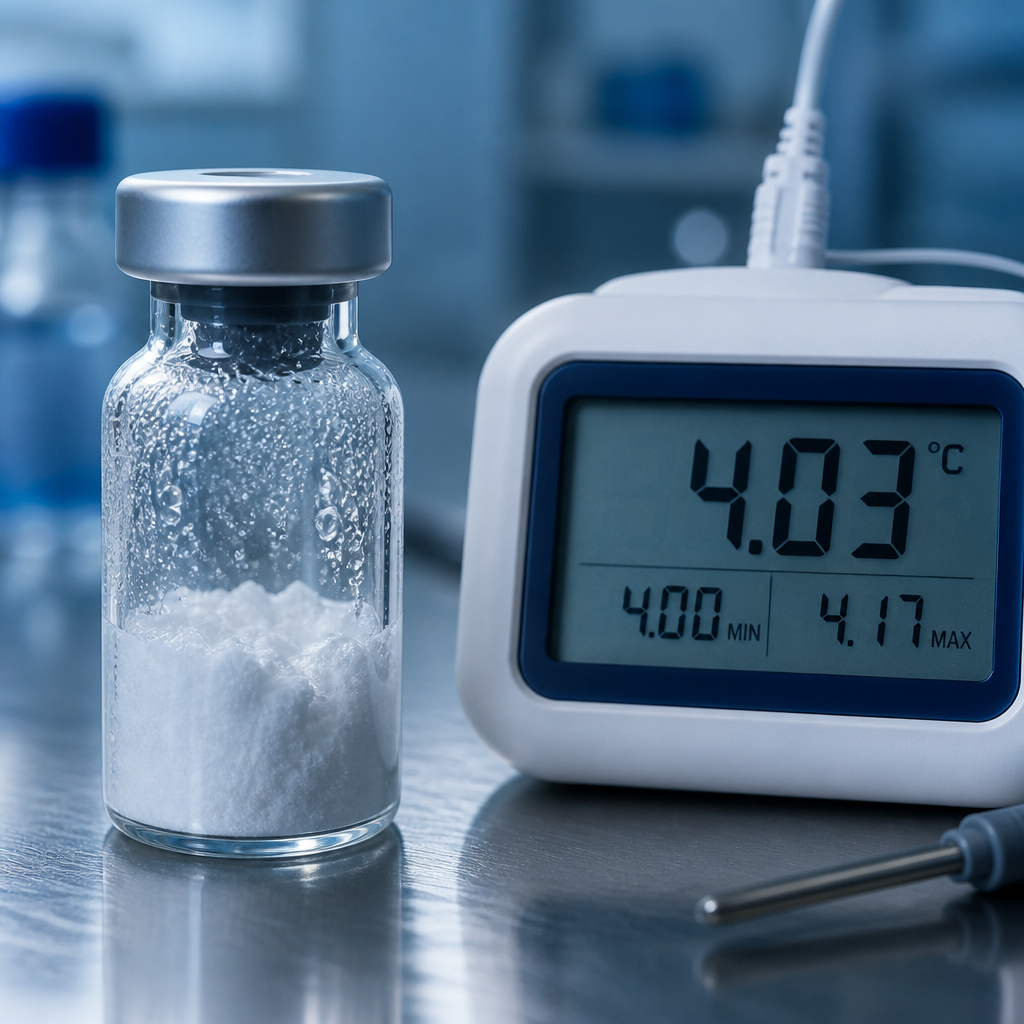
The mechanism is straightforward. Every shipment accumulates a cumulative thermal load, the sum of temperatures experienced over the entire transit window. A compound that sits at a regional distribution facility during a summer heatwave, then spends a night in an unheated regional depot, then sits in a postal vehicle for four hours before delivery has experienced a thermal history that no COA from synthesis day will reflect. The COA tells you what the compound was. It does not tell you what it is after transit.
For standard unmodified peptides in lyophilized form, this is a manageable risk with the right packaging and fast transit. For longer, more complex sequences, or for peptides with disulfide bonds or lipid modifications, the risk profile is meaningfully higher. Retatrutide, as a long-chain triple receptor agonist, benefits significantly from the fastest possible transit and proper moisture-barrier packaging.
A longer, faster transit means a smaller cumulative thermal load. A 24-hour domestic expedited shipment delivers a fundamentally different thermal history than a 10-14 day international parcel, and that difference shows up in your data, not in the packaging.
The practical implication is this: the supplier's shipping infrastructure is part of the compound's quality profile, not separate from it. When Pepura Labs cites independent Canadian laboratory verification with full Chain of Custody documentation, that documentation is meaningful precisely because the shipping leg is handled in a way that does not silently contradict the purity figures it reports.
How Xpresspost Changes the Risk Profile for Canadian Researchers
Canada Post Xpresspost is the domestic expedited service most Canadian research-grade peptide suppliers use for a specific reason: it compresses the transit window to approximately 1 to 3 business days for major Canadian destinations. That compression matters scientifically, not just operationally.
Transit Time as a Cold-Chain Variable
The relationship between transit time and peptide stability is not linear, but the principle is consistent: less time in transit means fewer opportunities for temperature excursions, handling stress, and seal failure. A domestic Xpresspost shipment from a Canadian supplier to a Toronto, Montreal, or Vancouver laboratory typically moves in one to two business days. An international shipment covering the same endpoint can take ten to fourteen days, during which the compound has no active cold-chain protection whatsoever.
For lyophilized peptides, transit up to moderate ambient temperatures is acceptable for most standard sequences. The real problem is extended exposure, particularly during Canadian summers when vehicle and facility temperatures can spike well above comfortable ambient levels. Xpresspost's tracked, predictable timeline also gives researchers visibility into when a shipment is delayed, allowing them to make a judgment call about compound integrity before reconstituting.
Same-Day Dispatch as an Underrated Advantage
Xpresspost transit time is only part of the equation. A supplier who batches orders and ships twice a week can ship via Xpresspost and still impose a multi-day pre-transit delay. Same-day dispatch, where orders confirmed before a defined cutoff ship the same business day, closes this gap. The compound spends zero additional time in a warehouse environment before the clock on the tracked transit window starts. Pepura Labs' rapid Xpresspost delivery model reflects this understanding: the transit window begins immediately, not at the supplier's convenience.
Pro tip: When evaluating Canadian peptide suppliers, ask specifically about the dispatch cutoff time, not just the courier used. "Ships via Xpresspost" and "ships same-day via Xpresspost" are meaningfully different cold-chain propositions for your compounds.
What Cold Chain Actually Means for Lyophilized Peptides
There is a persistent misconception in research purchasing that "cold chain" means frozen shipping for all peptides at all times. This is not accurate, and suppliers who market blanket dry-ice shipping for all lyophilized compounds are prioritizing the appearance of rigor over scientific appropriateness. Understanding the actual requirements protects both your budget and your research integrity.
What Lyophilization Does and Does Not Protect
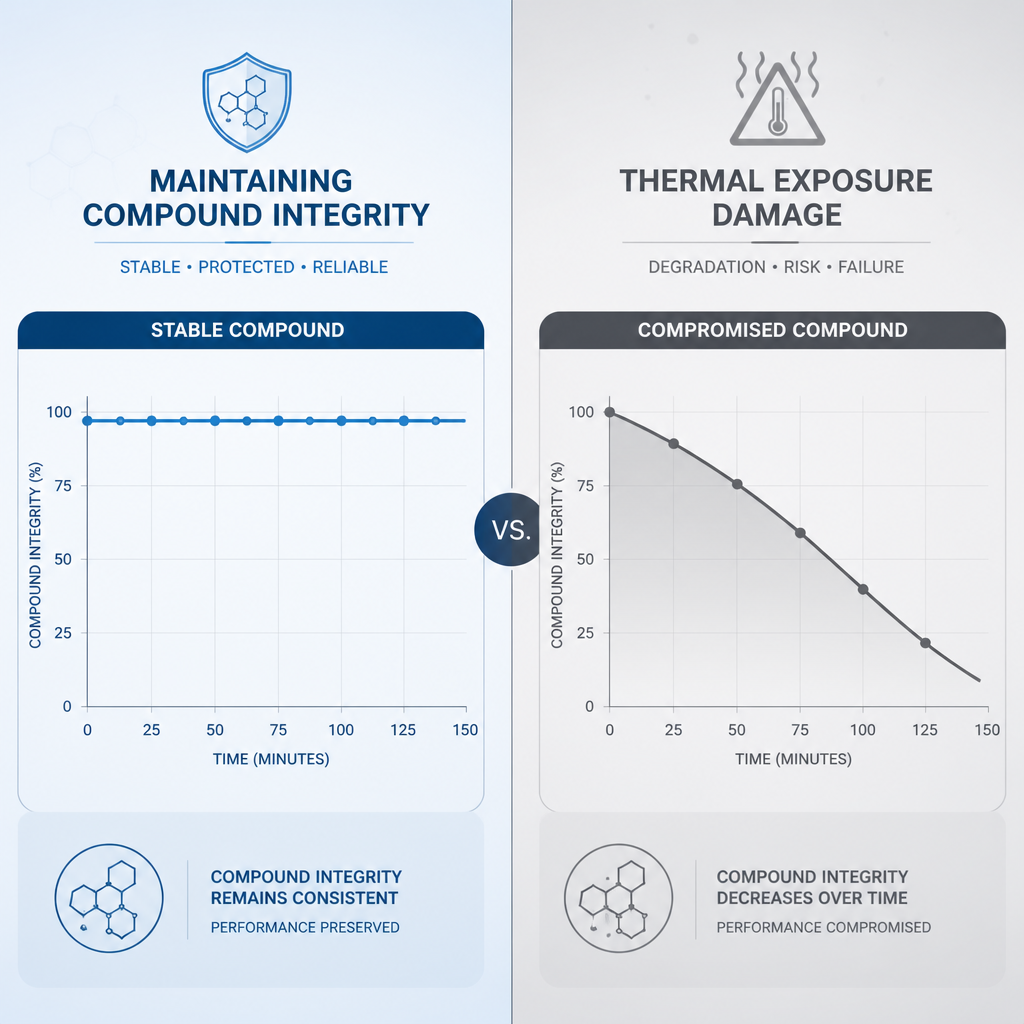
Lyophilization removes water from the peptide matrix, which dramatically slows hydrolytic degradation. A properly lyophilized peptide in a sealed, inert-headspace vial can tolerate transit at ambient temperatures for days without measurable loss of purity for most standard sequences. This is why most domestic Xpresspost shipments of lyophilized research peptides do not require dry ice.
What lyophilization does not protect against is moisture ingress. If a vial seal is compromised during transit, ambient humidity contacts the peptide matrix and hydrolysis resumes. The compound may look physically identical on arrival. The purity figure, however, is no longer what the COA states. This is the scenario that destroys data without leaving obvious evidence.
When Active Temperature Control Is Actually Warranted
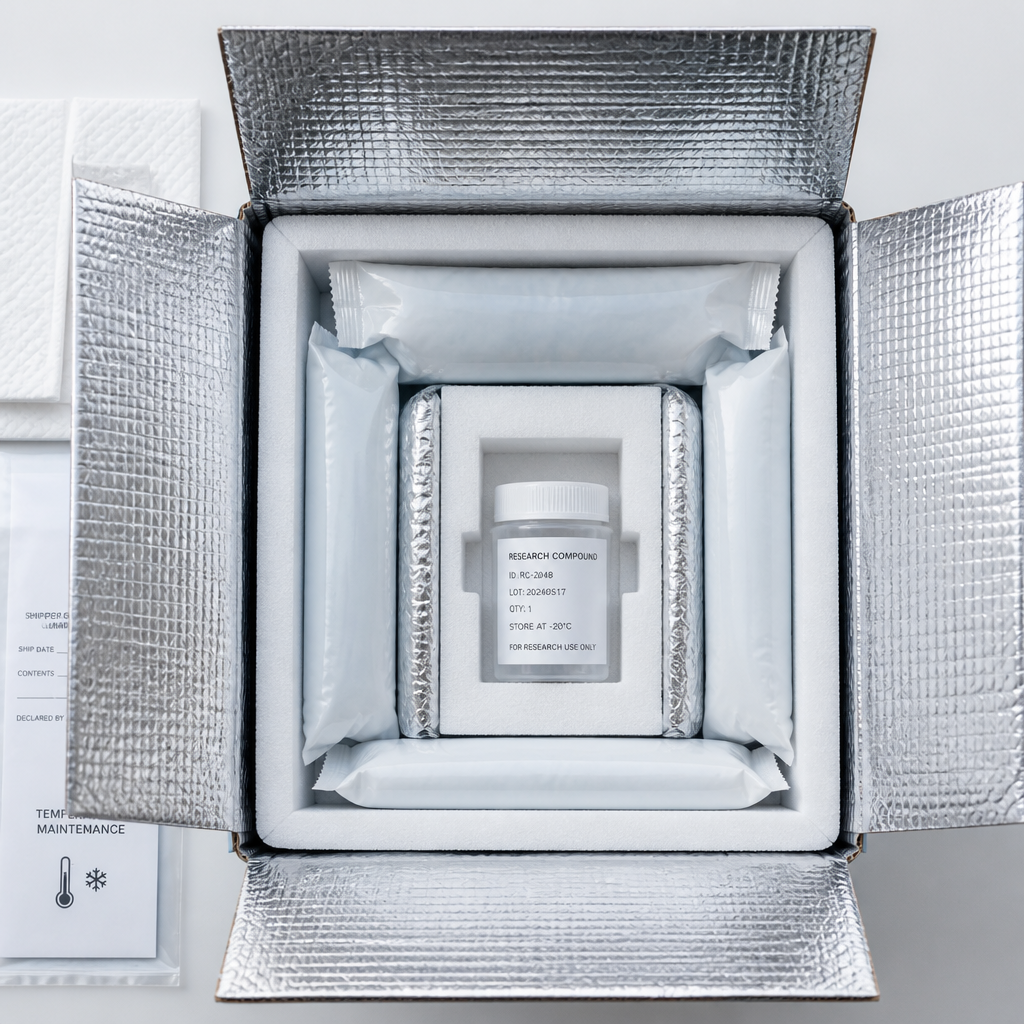
Active cold-chain packaging, gel packs, insulated shippers, or dry ice, adds genuine value in specific situations: oxidation-prone peptides with cysteine or methionine residues, compounds with fatty acid modifications such as C16 or C18 lipid attachments, reconstituted aqueous solutions (which should never be shipped at ambient temperature), and summer transit in regions where vehicle temperatures may spike significantly. For standard lyophilized peptides shipped via Xpresspost within Canada, insulated packaging with a moisture barrier is the scientifically appropriate intervention, not necessarily dry ice.
Pro tip: Before reconstituting any received vial, bring it to room temperature while still sealed. Opening a cold vial introduces condensation directly into the peptide matrix, which is exactly the moisture ingress scenario that degrades the compound. This single step costs nothing and protects your material.
Comparing Shipping Approaches: Domestic Xpresspost vs. International vs. Standard Domestic
Researchers sourcing research-grade peptides in Canada frequently weigh domestic suppliers against international options, often on the basis of price. The shipping comparison below reflects what the thermal and regulatory risk profile actually looks like across these approaches, not just the logistics cost.
| Shipping Approach | Typical Transit Window | Cold-Chain Risk Factors |
|---|---|---|
| Canadian Domestic Xpresspost (e.g., Pepura Labs) | 1-3 business days within Canada | Minimal: short tracked window, no customs exposure, moisture-barrier packaging sufficient for lyophilized compounds, full Chain of Custody maintained |
| International Parcel (overseas supplier) | 10-21+ days, variable | High: extended uncontrolled thermal history, customs inspection delays (temperature-uncontrolled holding), regulatory seizure risk invalidating entire shipment, no Canadian lab verification chain |
| Standard Canadian Domestic Parcel (non-expedited) | 5-10 business days, variable | Moderate: longer thermal exposure window than Xpresspost, no priority handling, less consistent transit temperature control, tracking less granular |
The research community tends to underweight the customs exposure risk when comparing international suppliers on price. An inspection delay of four to seven days in a non-temperature-controlled customs facility imposes a thermal history that no packaging can fully compensate for. Domestic Xpresspost removes this variable entirely.
On-Arrival Inspection Protocol for Research Compound Vials
Cold-chain management does not end when the parcel arrives. The on-arrival inspection is the researcher's last opportunity to identify transit damage before the compound enters storage or, worse, before it enters an assay.
External Packaging Assessment
Begin with the outer packaging. Check for signs of crushing, puncture, extended heat exposure (warped or discolored packaging materials), and moisture. If the outer packaging shows evidence of significant handling damage, document it before opening. If the shipper used cold packs, check whether they are still cool. A completely warm gel pack in a one-day Xpresspost delivery is a flag worth noting, though not necessarily a reason to reject the shipment for lyophilized compounds.
Vial-Level Inspection
Once the vial is in hand, examine the lyophilized cake or film. For most compounds, this is a white, intact powder or compressed disc. Discoloration, liquefaction, or collapse of the cake structure are red flags. Check the stopper and seal for any signs of compromise. A cracked vial or a stopper that moves under light pressure indicates a potential seal failure during transit. Do not reconstitute a vial with visible stopper compromise without first contacting the supplier.
Check the accompanying documentation. For research-grade compounds sourced from a supplier like Pepura Labs, this should include a batch-specific COA from an independent Canadian laboratory with HPLC and mass spectrometry data, plus Chain of Custody documentation linking the batch to the shipment you received. If the documentation is generic, a single COA covering multiple batches with no batch number on the vial, that is a provenance gap that affects your research record.
Pro tip: Photograph the vial, seal, and documentation immediately on arrival. This takes thirty seconds and creates a timestamped record that supports any supplier discussion if you later detect anomalies in your assay data that you cannot explain by protocol variables.
How Pepura Labs Handles Cold-Chain for Retatrutide Shipments
Pepura Labs operates as a Canadian research-grade supplier focused specifically on high-purity peptide compounds, including Retatrutide, at 99% purity or above. The cold-chain approach reflects the actual stability requirements of lyophilized research compounds shipped domestically, not a marketing narrative built around the appearance of rigor.
Shipments are dispatched via Xpresspost across Canada, compressing the transit window to the 1-3 business day range that materially limits cumulative thermal load. Every batch is independently verified by Canadian laboratories, which means the purity data on your COA reflects Canadian analytical standards and is not reliant on manufacturer self-reporting from an overseas source with no direct Canadian accountability.
The full Chain of Custody documentation Pepura Labs provides serves a specific scientific function: it links the batch identity, independent verification results, and shipment record into a traceable provenance chain. For researchers working in environments where data integrity and compound provenance must be documented, this chain is not a nice-to-have. It is the minimum standard for defensible research records.
Compared to sourcing from international suppliers such as those operating from outside Canada, where transit windows are long, customs exposure is real, and third-party verification may involve non-Canadian laboratories with different analytical standards, the domestic Pepura Labs model removes the largest variables that silently corrupt peptide quality between supplier and bench. Competing domestic suppliers may offer similar courier options, but the combination of independent Canadian laboratory verification, batch-level COA documentation, and rapid Xpresspost dispatch is the differentiator that matters for research that needs to stand up to scrutiny.
Frequently Asked Questions
Do lyophilized peptides need dry ice for Xpresspost shipping within Canada?
For most standard lyophilized peptide sequences shipped via Xpresspost with a 1-3 business day transit window, dry ice is not scientifically required. The lyophilized state significantly slows degradation, and the short transit window limits cumulative thermal load. Proper moisture-barrier packaging and a sealed, inert-headspace vial are the critical controls. Dry ice is warranted for reconstituted solutions, oxidation-prone sequences, or compounds with lipid modifications where the stability profile is more temperature-sensitive.
How does Xpresspost transit time affect peptide purity compared to international shipping?
Transit time is directly relevant to the cumulative thermal load a compound experiences. A 1-3 business day Xpresspost shipment within Canada exposes the compound to a fraction of the thermal history of a 10-21 day international parcel. For lyophilized peptides, this difference is most significant during high-temperature seasons and for peptides with sequences prone to oxidation or aggregation under extended thermal stress. The shorter the transit, the closer the compound's condition on arrival is to its condition at dispatch.
What documentation should accompany a research-grade peptide shipment in Canada?
At minimum: a batch-specific certificate of analysis (COA) from an independent third-party laboratory, showing HPLC purity data and mass spectrometry confirmation of the correct molecular weight, with the batch number matching the vial label. For research environments requiring documented provenance, Chain of Custody records linking the batch from synthesis through verification to the specific shipment are necessary. Generic COAs not tied to the specific batch you received are not adequate for defensible research records.
Can customs delays during international shipping damage peptide compounds?
Yes. Customs inspection facilities are not temperature-controlled storage environments. A shipment held for inspection for three to seven days may spend that time in a facility with no active thermal management. Combined with the baseline international transit window, this can push the compound's total uncontrolled thermal exposure well beyond what expedited domestic shipping imposes. Additionally, international shipments face the risk of seizure, which means no delivery at all, not merely compromised compound quality.
What should I check when a Retatrutide vial arrives via Xpresspost?
Check the outer packaging for physical damage and heat exposure signs. Open and inspect the vial for an intact lyophilized cake (typically a white, compact powder or disc), no discoloration or liquefaction, and a secure, uncompromised stopper and seal. Review the accompanying COA to confirm the batch number matches the vial, the purity figure meets your research standard (99% or above for research-grade Retatrutide), and the analytical method is HPLC with mass spectrometry confirmation. If anything is inconsistent, document it photographically and contact the supplier before reconstituting.
Is domestic peptide shipping in Canada always better than international sourcing?
For research-grade compounds where compound integrity, provenance documentation, and transit reliability are requirements, domestic Canadian sourcing with Xpresspost is consistently superior to international alternatives. The advantages are not marginal: shorter transit, no customs exposure, Canadian laboratory verification, and an unbroken Chain of Custody from supplier to bench. Price differences between international and domestic suppliers can appear meaningful until you factor in the cost of repeating experiments with compromised material.
Have you encountered unexpected assay variability that you later traced back to a shipping or cold-chain issue? Share your experience in the comments, as practitioner accounts help the entire research community make better sourcing decisions.
References
- Overview of cold-chain considerations for lyophilized research peptide shipments within Canada
- Analysis of lyophilized peptide stability during transit and when cold-chain controls are scientifically warranted
- Breakdown of temperature thresholds and packaging requirements for different peptide compound types during shipping
- Complete guide to research peptide shipping logistics and Xpresspost delivery within Canada