
Purity is not a marketing claim. In peptide research, it is the single variable that determines whether your experimental results are reproducible, your receptor binding data is meaningful, and your in vitro assay is worth the hours you spent running it. Yet a significant portion of the research-grade peptide market operates on self-reported purity numbers, no independent verification, and no real chain of custody. Pepura Labs was built precisely to address that gap for Canadian researchers who need Retatrutide compounds they can actually trust. This article explains what research-grade purity means in practice, how Pepura's quality assurance system works end to end, and why those standards matter specifically for Retatrutide research.
Table of Contents
- Quick Takeaways
- What Is Retatrutide and Why Does Purity Matter for This Compound
- Defining Research-Grade Purity: The 99% Benchmark Explained
- The Pepura Quality Assurance System: From Synthesis to Shipment
- Chain of Custody and COA Documentation: What You Are Actually Buying
- Retatrutide Dosage Formats Available from Pepura Labs
- Comparison: Quality Tiers in Research Peptide Supply
- Common Sourcing Mistakes That Compromise Research Integrity
- Frequently Asked Questions
- References
Quick Takeaways
| Key Insight | Explanation |
|---|---|
| 99%+ purity is the research-grade benchmark | Anything below 98% HPLC purity is considered substandard for in vitro research applications. Pepura Labs supplies Retatrutide at verified 99%+ purity confirmed by independent Canadian laboratories. |
| Self-reported purity means nothing without independent verification | Only third-party laboratory verification with documented batch traceability provides the level of confidence required for reproducible research outcomes. |
| Lyophilized form is the correct format for research-grade Retatrutide | Lyophilized powder preserves compound integrity during storage and shipping. Pepura supplies all Retatrutide compounds in lyophilized form, paired with Bacteriostatic Water for reconstitution. |
| Chain of Custody documentation protects your lab | Full Chain of Custody records allow researchers to trace the compound from synthesis through Canadian laboratory testing to delivery, which is essential for research accountability. |
| Retatrutide is a 39-amino-acid tri-agonist with a demanding synthesis profile | Its complexity means synthesis errors and impurity accumulation are more likely than with simpler peptides. Higher synthesis complexity demands stricter analytical verification, not looser standards. |
| Multiple dosage formats support different research protocols | Pepura offers 10mg, 20mg, 40mg, 60mg, and 84mg formats so researchers can match compound quantity to actual experimental need without over-ordering or compromising stock integrity. |
| Xpresspost delivery across Canada preserves compound condition | Rapid shipping reduces the time a lyophilized compound spends in transit, minimizing any temperature exposure risk before it reaches your laboratory freezer. |
What Is Retatrutide and Why Does Purity Matter for This Compound
Retatrutide, catalogued in the scientific literature as LY3437943, is a synthetic 39-amino-acid peptide designed as a triple agonist targeting the glucagon-like peptide-1 receptor (GLP-1R), the glucose-dependent insulinotropic polypeptide receptor (GIPR), and the glucagon receptor (GCGR). That triple-receptor profile is precisely what makes Retatrutide one of the most scientifically interesting research compounds in metabolic biology right now.
The 2023 Phase 2 trial published in the New England Journal of Medicine reported that participants in the highest-dose retatrutide cohort achieved a least-squares mean body weight reduction of 17.5% at 24 weeks and up to 24.2% at 48 weeks, compared to 1.6% and 2.1% respectively in the placebo group. Those numbers drove enormous scientific interest in the compound as a research subject, and they also created a problem: demand for Retatrutide compounds shot up faster than rigorous supply chains could keep pace.
A 39-amino-acid sequence is not a simple peptide to synthesize. Each additional amino acid in a chain introduces new coupling steps, new opportunities for sequence error, and new potential impurities including truncated sequences, racemized residues, and deletion peptides. The biological activity of Retatrutide depends on its precise conformational behavior at three distinct receptor binding sites. An impurity at even a few percent of total compound mass is not a cosmetic problem. It is a source of noise in binding assays, a potential confounder in dose-response curves, and a reproducibility risk across batches.
This is why the 99% purity standard is not negotiable for serious in vitro Retatrutide research. It is also why the source of that purity claim matters as much as the number itself.

Defining Research-Grade Purity: The 99% Benchmark Explained
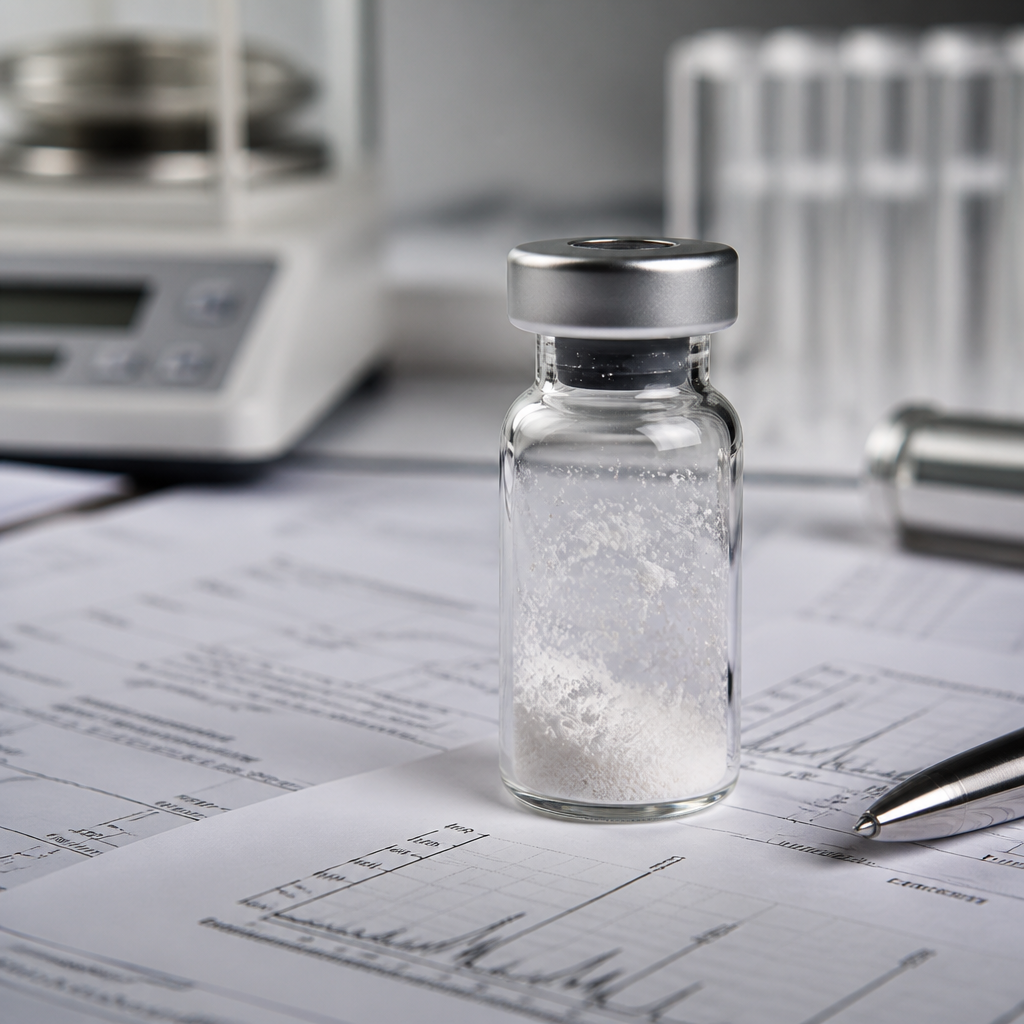
In peptide chemistry, purity is most commonly measured by reversed-phase high-performance liquid chromatography (RP-HPLC). The result is expressed as a percentage of the total peak area in the chromatogram that corresponds to the target compound. A result of 99.2% HPLC purity means that 99.2% of the detectable sample is the intended peptide, and the remaining 0.8% is accounted for by impurities such as synthesis byproducts, truncated fragments, or degradation products.
The established research-grade benchmark is 99% or higher HPLC purity. Compounds testing below 98% are generally considered substandard for research applications, and anything below 95% introduces impurity levels that actively compromise experimental data. For a structurally complex tri-agonist like Retatrutide, working below 99% purity is a methodological risk that invalidates the premise of controlled in vitro research.
HPLC Alone Is Not Enough
HPLC tells you how much of your sample is the target compound. It does not, on its own, confirm that the compound it is measuring is actually Retatrutide. That confirmation requires mass spectrometry, typically LC-MS (liquid chromatography-mass spectrometry), which verifies the molecular weight and fragmentation pattern of the compound against its known theoretical values.
A rigorous quality assurance process uses both methods together. HPLC establishes purity percentage. Mass spectrometry confirms identity. Both results should appear on the Certificate of Analysis (COA) for every batch. Any supplier that reports only HPLC purity without identity confirmation is providing incomplete analytical information.
Why Independent Verification Is Non-Negotiable
Internal quality testing by the supplier themselves creates an obvious conflict of interest. A supplier testing their own product with their own equipment, reporting their own results, and issuing their own COA is not providing independent verification. It is self-certification.
Independent laboratory verification means the analytical testing is performed by a separate, unaffiliated Canadian laboratory with no commercial stake in the result. Pepura Labs submits Retatrutide batches to independent Canadian laboratories and provides the resulting documentation with every order. That independence is what makes the purity number meaningful rather than promotional.
A purity number without an independent laboratory behind it is not a quality guarantee. It is a marketing claim wearing the clothes of science.
The Pepura Quality Assurance System: From Synthesis to Shipment
Pepura Labs operates as a Canadian research-grade supplier, which means the quality assurance system has to meet the standards of the research community it serves, not the lower bar set by the general supplement or wellness market. The distinction matters because those are fundamentally different customer bases with fundamentally different requirements for data integrity and compound reliability.
Batch Traceability as a Core Requirement
Every batch of Retatrutide supplied by Pepura Labs carries batch-specific traceability. This means each vial can be traced back to the specific synthesis batch, the specific analytical run that verified it, and the specific laboratory that produced the COA. Batch traceability is not about administrative tidiness. It is the mechanism that allows a researcher to respond credibly to peer review scrutiny, audit findings, or replication attempts by other laboratories.
Batch traceability also means that if a quality issue is ever identified in a specific batch, affected researchers can be identified quickly and precisely rather than through a broad and disruptive product recall. In practice, most research suppliers either do not maintain this level of batch documentation or do not make it available to customers. Pepura does both.
Lyophilization as a Quality Preservation Method
All Pepura Retatrutide compounds are supplied in lyophilized (freeze-dried) form. Lyophilization removes water from the peptide under vacuum after freezing, producing a dry powder that is far more stable during storage and shipping than a reconstituted solution would be. For a 39-amino-acid peptide like Retatrutide, maintaining structural integrity from the point of manufacture to the point of use in a laboratory depends on eliminating the hydrolytic degradation that occurs in aqueous environments over time.
Pepura pairs each Retatrutide compound with Bacteriostatic Water, which allows researchers to reconstitute the peptide under controlled conditions immediately before use, rather than receiving a pre-reconstituted solution of unknown age and storage history.
Pro tip: Always reconstitute lyophilized Retatrutide with the supplied Bacteriostatic Water using a slow, gentle swirling motion rather than vigorous shaking. Aggressive agitation can cause peptide aggregation and partial denaturation that will not be visible to the eye but will show up in your binding assay results as inconsistency.
Chain of Custody and COA Documentation: What You Are Actually Buying
When a Canadian research laboratory places an order for Retatrutide from Pepura Labs, they are not just purchasing a lyophilized peptide in a vial. They are purchasing a documented evidence trail that the compound in that vial meets the stated specifications. That documentation is what makes the compound usable in any research context that requires methodological accountability.
What a Legitimate COA Contains
A Certificate of Analysis for research-grade Retatrutide should include the compound name and catalog identifier, the batch number, the date of analysis, the analytical method used (HPLC conditions and instrument), the purity result as a percentage, the mass spectrometry data confirming molecular identity, the laboratory name and signature of the testing analyst, and any other relevant specification checks such as appearance, solubility, and water content.
COAs that contain only a purity number and a company logo are insufficient. The testing laboratory must be identifiable, the method must be specified, and the batch number must link the document to the specific physical product. Pepura Labs' COA documentation meets all of these requirements and is produced by independent Canadian laboratories rather than by the company itself.
Chain of Custody: The Full Document Trail
Chain of Custody (CoC) documentation records the movement and handling of a compound from the point of manufacture through all intermediate steps to delivery. For research purposes, this record answers the question: who handled this compound, under what conditions, and when? That answer matters because research integrity depends on being able to demonstrate that what arrived in the laboratory is what was ordered, unchanged, and uncontaminated.
Pepura Labs provides full Chain of Custody documentation with orders, which gives research teams a defensible record for internal quality management and any external audit or publication review process that requires provenance documentation for compounds used in experiments.
Pro tip: File your Pepura COA and Chain of Custody documents with your research batch records immediately upon receipt, not after you have started the experiment. Retroactive documentation assembly is a common audit failure point that no laboratory wants to deal with mid-study.
Retatrutide Dosage Formats Available from Pepura Labs
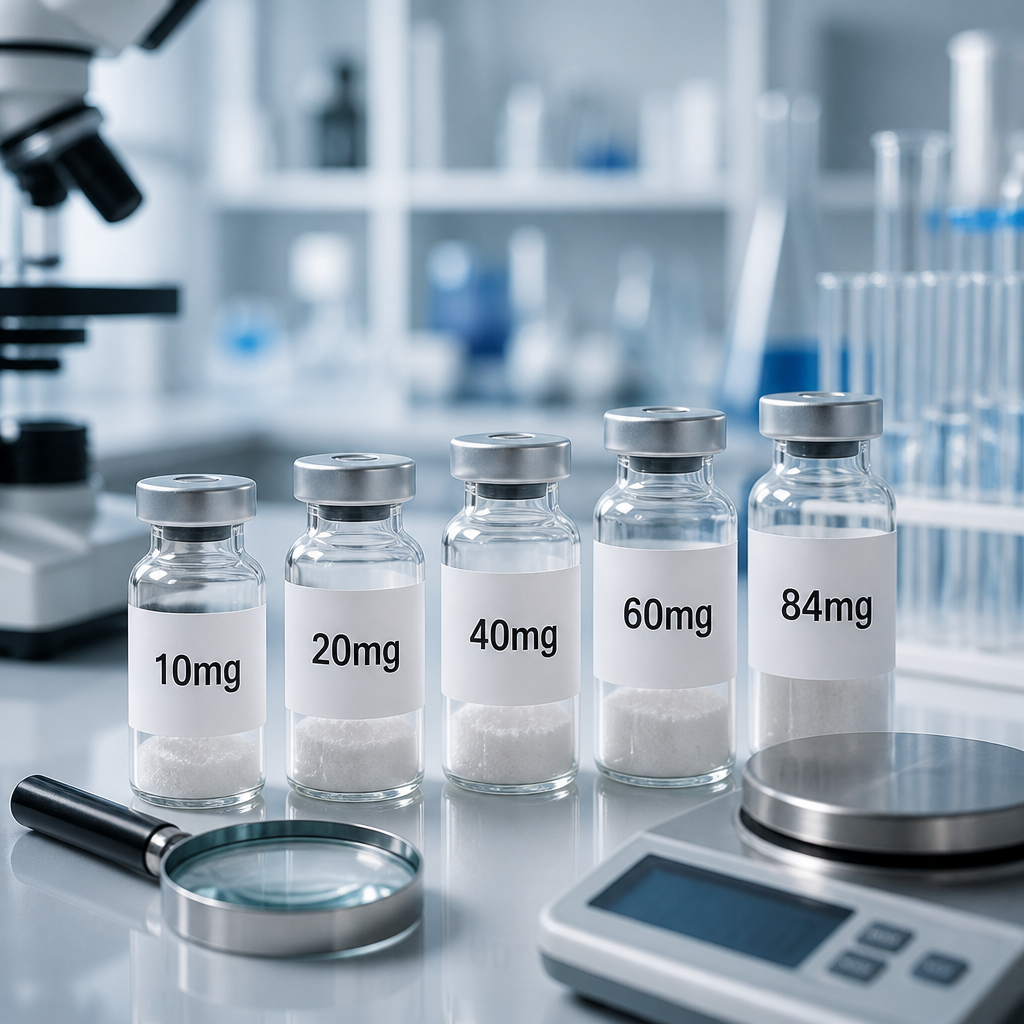
Pepura Labs offers Retatrutide in five compound formats: 10mg, 20mg, 40mg, 60mg, and 84mg. That range is deliberate. Different research protocols have different compound quantity requirements, and forcing researchers to purchase a standard format that does not match their actual protocol means they either over-order and compromise unused stock through repeated freeze-thaw cycles, or under-order and introduce batch-switching variables mid-experiment.
For laboratories running pilot receptor binding studies or dose-response mapping at small scale, the 10mg format is appropriate. For longer-running in vitro studies with multiple experimental arms, the 40mg or 60mg formats reduce the number of batch transitions. The 84mg format serves institutional research programs running parallel protocols that require consistent compound supply across extended timelines.
Selecting the right format for your experiment is not just a cost consideration. It is a quality decision. Every time you open a new batch during an ongoing experiment, you introduce a new variable: batch-to-batch variation in purity, slightly different reconstitution conditions, and a new COA that must be reconciled with the previous one. Matching your order size to your experimental need minimizes that variation.
Batch consistency across an experiment is not guaranteed by the supplier alone. It is also a function of how well the researcher matches order size to actual protocol requirements.
Comparison: Quality Tiers in Research Peptide Supply
Not all research peptide suppliers operate at the same quality level. The table below compares the three tiers commonly found in the Canadian research peptide market. Pepura Labs operates at the research-grade verified tier.
| Quality Tier | Characteristics | Suitability for Retatrutide Research |
|---|---|---|
| Research-Grade Verified (e.g., Pepura Labs) | 99%+ HPLC purity confirmed by independent Canadian laboratory, full COA with mass spectrometry identity confirmation, batch traceability, Chain of Custody documentation, lyophilized form, rapid Xpresspost delivery across Canada | Appropriate. Provides the methodological foundation required for reproducible in vitro results with a complex tri-agonist peptide. |
| Self-Certified Supplier | Purity claims from internal testing only, COA issued by the supplier without third-party verification, limited or no batch traceability, inconsistent dosage format availability | Risky. Self-certification introduces conflict of interest that undermines purity reliability. Experimental results cannot be defended against compound quality challenges. |
| Grey-Market or Unverified Source | No COA, no purity data, unknown synthesis origin, no batch identification, no chain of custody | Not appropriate. Introduces unquantifiable impurity risk into research. Data generated with unverified compounds is scientifically indefensible and potentially hazardous in laboratory settings. |
Common Sourcing Mistakes That Compromise Research Integrity
Having worked in the research compound supply space, the patterns of avoidable sourcing error are consistent and preventable. The most damaging ones are rarely about the compound itself. They are about documentation and procurement practice.
Accepting a COA Without Verifying the Testing Laboratory
A COA is only as credible as the laboratory that produced it. If the testing laboratory name on the COA is not independently identifiable and verifiable, the document provides no meaningful assurance. Before relying on any COA, confirm that the laboratory named on it is a real, operating Canadian laboratory with recognized analytical capabilities. Pepura Labs' COAs are produced by identifiable, independent Canadian laboratories. That is verifiable. Treat any COA that cannot be verified the same way you would treat no COA at all.
Ordering the Wrong Format for Your Protocol
A common mistake among researchers new to purchasing Retatrutide compounds is ordering the lowest-cost format regardless of experimental need. A 10mg vial spread across a multi-arm assay that actually requires 35mg total will require either mid-experiment batch switching or under-powering the study. Both outcomes are worse than paying slightly more for an appropriate format upfront.
Not Accounting for Shipping Conditions in Quality Assessment
Lyophilized peptides are resilient compared to reconstituted solutions, but they are not indestructible. Excessive heat or moisture during transit can degrade even a well-synthesized, high-purity compound before it reaches your lab. Pepura Labs uses rapid Xpresspost delivery across Canada specifically to minimize transit time and associated exposure risk. Choosing a slower, cheaper shipping option from any supplier to save a few dollars on a high-value research compound is a false economy that can invalidate the entire purchase.
Failing to Record the COA Before Starting Experiments
Research integrity reviews and publication peer review processes increasingly require compound provenance documentation. Researchers who start experiments before properly filing their COA and Chain of Custody documentation often find themselves scrambling to reconstruct a paper trail after the fact. Pepura's documentation is provided with every order, but it only protects your research if it is filed correctly at receipt.
Frequently Asked Questions
What purity level does Pepura Labs guarantee for Retatrutide compounds?
Pepura Labs supplies Retatrutide compounds at 99% or higher purity, verified by independent Canadian laboratories using HPLC analysis. This meets and exceeds the research-grade benchmark for in vitro peptide research applications.
Why does Pepura use independent Canadian laboratories rather than in-house testing?
Independent laboratory verification eliminates the conflict of interest inherent in self-certification. When a supplier tests their own product with their own equipment and reports their own results, there is no external check on accuracy or honesty. Pepura's use of unaffiliated Canadian laboratories means the purity and identity data on each COA comes from a party with no commercial stake in the outcome, which is the only form of quality verification that means anything to serious researchers.
What is Chain of Custody documentation and why should I care about it?
Chain of Custody documentation is a recorded trail of every point at which a compound was handled, by whom, and under what conditions, from manufacturing through to delivery. For research laboratories, this documentation provides defensible provenance for every compound used in an experiment. If your institution, funding body, or a journal peer reviewer asks you to demonstrate that your Retatrutide compound was what you say it was, Chain of Custody documentation is how you answer that question. Pepura Labs includes this documentation with every order.
What is the difference between a COA for research-grade Retatrutide and a basic product spec sheet?
A Certificate of Analysis is an analytical document produced by a laboratory that tested a specific batch of a compound. It reports actual measured results: the HPLC purity of that batch, the mass spectrometry confirmation of molecular identity, and other analytical parameters. A product spec sheet describes what a supplier claims their product should be in general terms. Specs are targets. A COA is evidence. For research accountability, only a COA from an independent laboratory qualifies as meaningful documentation.
How should I store Retatrutide compounds received from Pepura Labs?
Lyophilized Retatrutide should be stored in a sealed vial, protected from light and moisture, at freezer temperature until reconstitution. Once reconstituted with Bacteriostatic Water, the working solution should be kept refrigerated and used within a reasonable timeframe appropriate to your laboratory's standard operating procedures for peptide solutions. Avoid repeated freeze-thaw cycles on reconstituted solutions, as these degrade peptide integrity more rapidly than maintaining a consistently cold temperature.
Does Pepura Labs ship Retatrutide compounds to all of Canada?
Yes. Pepura Labs delivers Retatrutide compounds via Xpresspost across Canada, providing rapid transit times that preserve compound condition from the point of dispatch to the point of receipt at your laboratory. All five dosage formats, 10mg, 20mg, 40mg, 60mg, and 84mg, are available for delivery across Canada.
Why are there multiple dosage formats available, and how do I choose the right one?
Different research protocols have different compound quantity requirements. Offering five formats, from 10mg to 84mg, allows researchers to match their order to their actual experimental need. This matters because ordering significantly more compound than your protocol requires means managing unused reconstituted or opened stock, which introduces integrity risks. A good rule is to calculate your total compound need for a full experimental run, including controls and repeat assays, and order the format that most closely matches that number from a single batch.
If you are designing a Retatrutide research protocol and have questions about which format suits your assay design, or if you have sourced Retatrutide compounds before and ran into documentation or quality issues you want to avoid this time, share your experience below. Practical field knowledge from working researchers improves the whole community's sourcing decisions.
References
- Phase 2 clinical trial results for Retatrutide as a triple-hormone-receptor agonist for obesity, published in the New England Journal of Medicine
- PubMed Central review of Retatrutide pharmacology including GLP-1R, GIPR, and GCGR triple agonism and comparative potency data
- Official Eli Lilly press release on Phase 2 Retatrutide trial results and the TRIUMPH Phase 3 clinical program
- Overview of Retatrutide mechanism, clinical trial data, and research background including Phase 2 weight reduction findings