
Most reconstitution errors with high-purity peptides happen before the needle even touches the vial. Researchers working with lyophilized retatrutide face a deceptively simple-looking task: add liquid, dissolve, store. But the choice of diluent volume, injection angle, and post-reconstitution storage conditions directly determines whether a retatrutide 10mg vial delivers reproducible, publication-quality results or quietly degrades between study sessions. This protocol addresses the full workflow for Canadian research labs, with specific attention to selecting the right bac water 10ml format, calculating working concentrations, and maintaining chain of custody from receipt to final aliquot.
Table of Contents
- What Is Retatrutide and Why It Demands Precision Handling
- Bacteriostatic Water Explained: What the 0.9% Benzyl Alcohol Label Actually Means
- Step-by-Step Reconstitution Protocol for a 10mg Retatrutide Vial
- Concentration Calculator: Volumes, Units, and Draw Amounts
- Storage and Stability After Reconstitution
- Comparison of Diluent Approaches for Research-Grade Peptides
- Common Mistakes That Compromise Retatrutide Research
- Canadian Lab Compliance and Chain of Custody Considerations
- Frequently Asked Questions
- References
What Is Retatrutide and Why It Demands Precision Handling
Retatrutide is a synthetic peptide engineered as a triple receptor agonist, simultaneously targeting the GLP-1 receptor (GLP-1R), the glucose-dependent insulinotropic polypeptide receptor (GIPR), and the glucagon receptor (GCGR). Its structural design includes acylation with a fatty diacid moiety, which extends its pharmacokinetic half-life and contributes to a balanced potency profile across all three receptor targets. For researchers, this multi-receptor architecture is precisely what makes it a compelling subject of metabolic and endocrinological study.
Because of this structural complexity, retatrutide is notably sensitive to mechanical stress and pH variation during reconstitution. Aggressive agitation, direct-stream injection of diluent onto the lyophilized cake, or using a diluent with an incompatible pH can all cause peptide aggregation or structural degradation, rendering the reconstituted solution unsuitable for in vitro work. The term "third-generation GLP-1 compound" often appears in research literature to signal this advance beyond single and dual agonists, though researchers sometimes encounter the informal label 3rd generation Ozempic in general science media referring to this class of triple agonists.
Pepura Labs supplies retatrutide in lyophilized form at 99%+ purity, batch-verified by Canadian independent laboratories. Each vial arrives with full batch traceability documentation. This matters operationally: when you log your reconstitution date, diluent lot number, and storage temperature against a verified batch certificate, you have a defensible chain of evidence for any data derived from that vial.
Bacteriostatic Water Explained: What the 0.9% Benzyl Alcohol Label Actually Means
Not all water used in peptide reconstitution is equal. Bacteriostatic water (BAC water) is a sterile, non-pyrogenic aqueous solution containing 0.9% (9 mg/mL) benzyl alcohol as a preservative. That benzyl alcohol concentration is not incidental. It is the specific amount needed to inhibit bacterial proliferation over a multi-dose use period while remaining compatible with most research-grade peptide compounds.
The critical advantage of BAC water over plain sterile water for injection is the multi-use stability window. A vial of bacteriostatic water supports repeated withdrawals for up to 28 days after first puncture when handled with proper aseptic technique. For retatrutide studies that run over several weeks with multiple measurement points, this is operationally essential. Sterile water for injection, by contrast, carries no bacteriostatic preservative and should be treated as a single-use product once the septum is pierced.
The pH of properly manufactured bacteriostatic water falls within a range of approximately 4.5 to 7.0, with a common reference point near 5.7. This is compatible with the structural requirements of peptide compounds like retatrutide. However, any BAC water used for research-grade work should be USP-grade or equivalent, with verified benzyl alcohol concentration from the manufacturer.
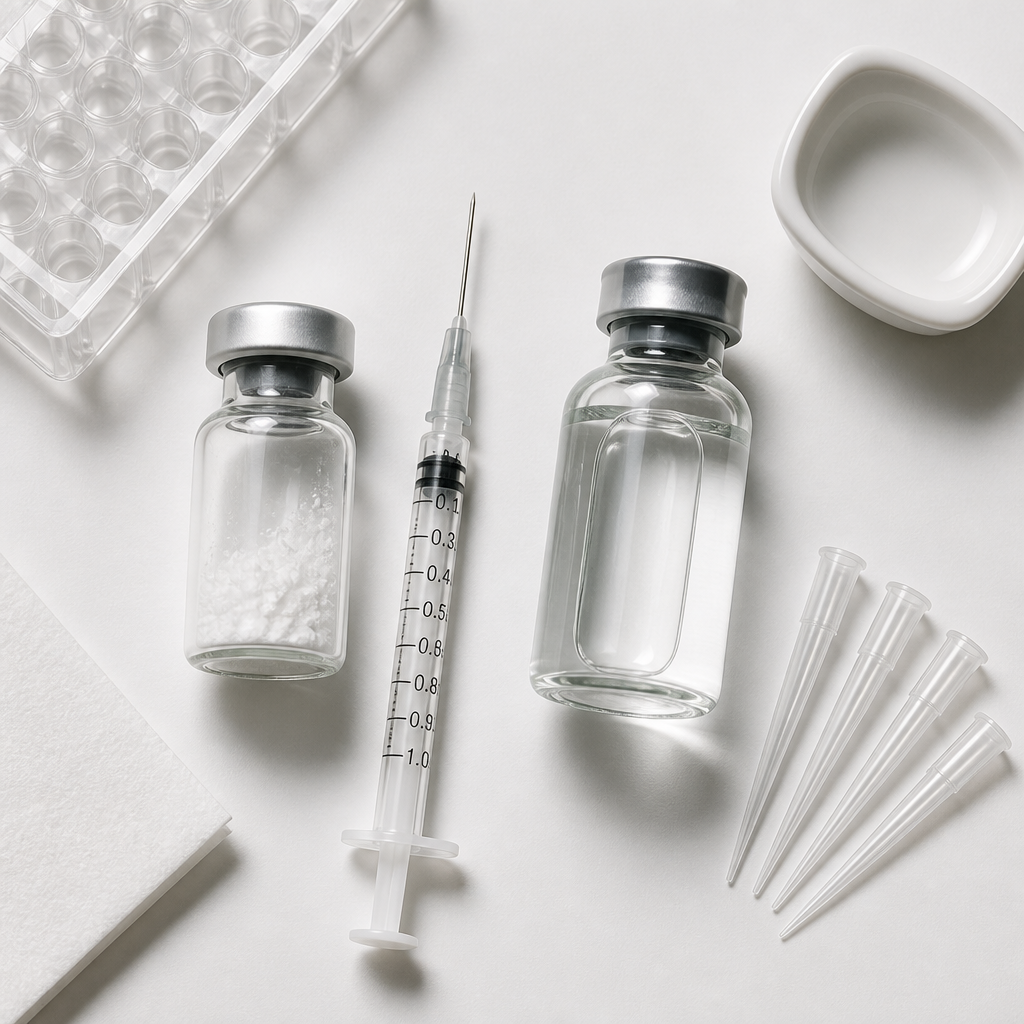
The format that matters most for a 10mg retatrutide vial is the bac water 10ml presentation. A 10 mL multi-dose vial gives you sufficient volume to reconstitute multiple peptide vials from the same lot without introducing the contamination risk that comes with reusing a small 2 mL vial across multiple reconstitutions. Order your BAC water in the same procurement run as your retatrutide to maintain lot-level traceability across both components.
The choice of diluent is not a minor logistical detail. Using a bacteriostatic water product with unverified benzyl alcohol concentration or compromised sterility can invalidate weeks of research data in a single reconstitution session.
Step-by-Step Reconstitution Protocol for a 10mg Retatrutide Vial
This protocol applies to lyophilized retatrutide supplied in standard research-grade vials. Follow every step in sequence. Skipping preparation steps is the leading source of preventable contamination and peptide degradation events in lab settings.
Materials Required Before You Begin
Gather all materials before opening anything. You will need: your retatrutide 10mg vial (stored per receipt instructions), a vial of BAC water (10ml format recommended), a 1 mL insulin syringe (U-100 calibration), sterile alcohol swabs (70% isopropyl), and a clean, non-porous work surface wiped with 70% IPA. Nitrile gloves are non-negotiable.
Workspace Preparation
Work in a laminar flow hood if available. If not, choose the cleanest, lowest-traffic area in the lab. Wipe the work surface with a fresh alcohol swab and allow it to dry fully before placing any vials down. Put on gloves before touching any sealed vials.
Vial Preparation
Allow the retatrutide vial to reach room temperature naturally. Do not warm it with hands, warm water, or any heat source. Inspect the lyophilized cake visually. It should appear as a dry, white to off-white solid. Any visible discoloration, clumping inconsistent with standard lyophilization, or damaged septum is grounds to reject the vial and contact your supplier.
Wipe the rubber septum of both the retatrutide vial and the BAC water vial with a fresh alcohol swab each. Allow both to air dry for 15 to 20 seconds. Do not blow on them or wipe them dry.
Drawing and Adding Bacteriostatic Water
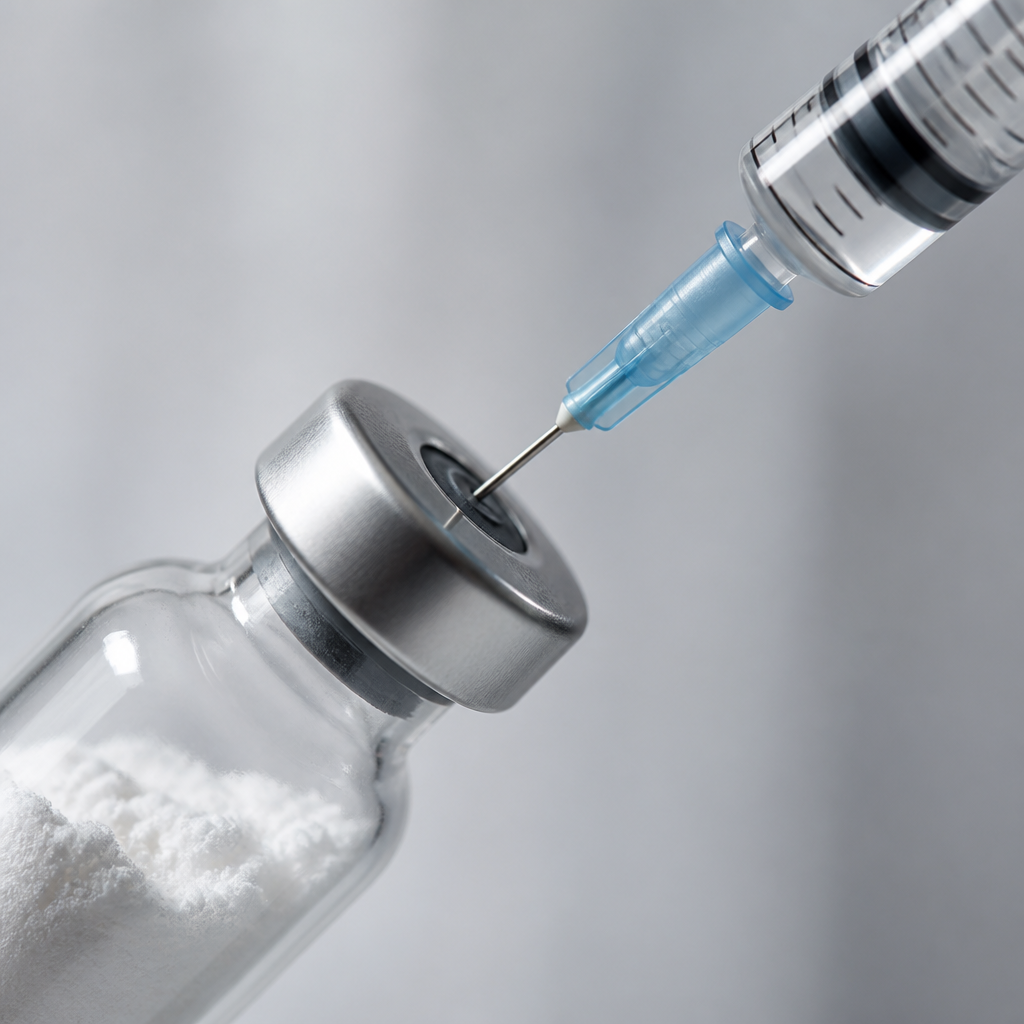
For a 10mg retatrutide vial, draw 2.0 mL of bacteriostatic water into the insulin syringe. This is the standard reconstitution volume and yields a working concentration of 5 mg/mL. Insert the needle into the retatrutide vial at a low angle and direct the stream of BAC water slowly down the inside glass wall of the vial. Do not inject directly onto the lyophilized powder. This side-wall technique prevents mechanical disruption of the peptide structure.
Add the full 2.0 mL in a slow, controlled delivery. Rapid injection creates foam and turbulence that can cause aggregation. If the vial has positive pressure, equalize it by allowing air displacement through the needle before withdrawing.
Dissolving the Peptide
Once the BAC water is fully added, gently swirl the vial in a slow circular motion. Do not shake, vortex, or invert the vial rapidly. For most research-grade lyophilized retatrutide at 99%+ purity, dissolution is complete within 60 to 90 seconds of gentle swirling. The final solution should appear clear and colorless. Any cloudiness, visible particulates, or persistent undissolved material indicates a problem with either the reconstitution technique or the vial itself.
Pro tip: If the lyophilized cake is slow to dissolve, allow the BAC water to sit in contact with it for 30 seconds before beginning to swirl. Patience at this stage prevents the over-agitation that degrades peptide structure.
Inspection and Labeling
Hold the vial up to light and inspect the solution from multiple angles. Confirm clarity and absence of particulates. Immediately label the vial with the reconstitution date, the diluent lot number, your initials, and the calculated concentration. This label is part of your chain of custody record and should be cross-referenced in your lab notebook against the supplier's batch certificate.
Concentration Calculator: Volumes, Units, and Draw Amounts
Getting the math right before the first draw prevents dosing errors that are invisible until the data fails to replicate. The table in the comparison section covers diluent approaches. Here is the arithmetic for the most common 10mg retatrutide scenarios using a U-100 insulin syringe (where 100 units equals 1 mL).
With the standard 2.0 mL reconstitution yielding 5 mg/mL, each 0.1 mL (10 units on a U-100 syringe) contains 0.5 mg. A 1 mg research aliquot requires drawing to the 20-unit mark. A 2 mg aliquot requires drawing to the 40-unit mark. This is a clean, integer-friendly ratio that minimizes draw errors during multi-week protocols.
If a more dilute working concentration is needed for specific assay requirements, adding 4.0 mL of BAC water to the 10mg vial yields 2.5 mg/mL, where every 10 units contains 0.25 mg. This lower concentration is sometimes preferable for titration studies requiring very precise sub-milligram draws. Use the BAC water 10ml format in either case, as the larger volume reservoir prevents cross-contamination between multiple reconstitution events from the same BAC water lot.
Pro tip: Record your calculated draw volumes in the protocol section of your lab notebook before you begin, not after. Calculating mid-reconstitution while holding a loaded syringe is how arithmetic errors enter your data.
Storage and Stability After Reconstitution
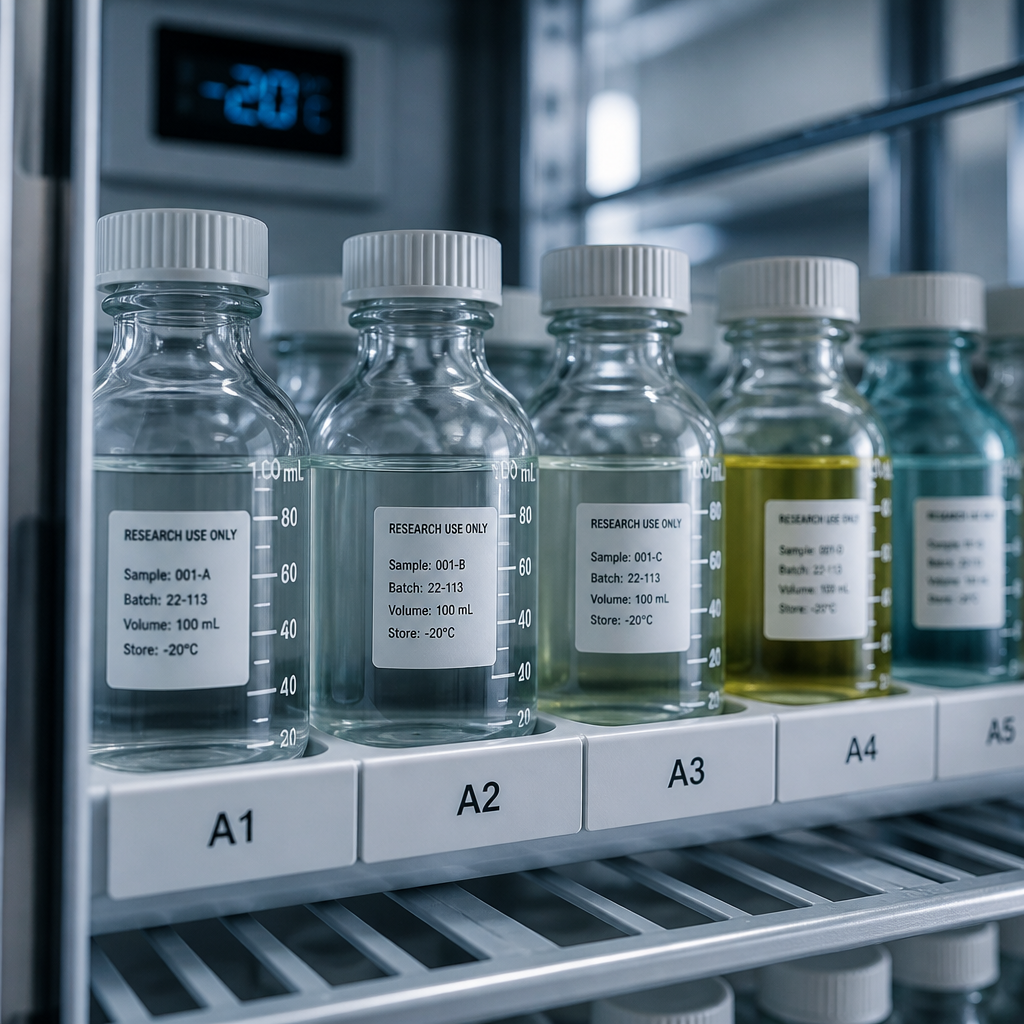
Reconstituted retatrutide in bacteriostatic water should be stored at 2 to 8 degrees Celsius (standard lab refrigerator temperature) immediately after the inspection and labeling step. Never freeze a reconstituted peptide solution. Freeze-thaw cycling destroys the structural integrity of peptide compounds and will produce results that are inconsistent and unreliable across experimental time points.
The 28-day multi-use window applies to the BAC water vial once punctured, provided aseptic technique is maintained throughout. For the reconstituted retatrutide solution itself, most standard guidance for research-grade peptides in bacteriostatic water recommends use within 28 days of reconstitution under refrigerated conditions, with protection from light. Mark the discard date on the vial label at the time of reconstitution.
The lyophilized, unreconstituted retatrutide vial has a substantially longer shelf life. Store unopened vials at 2 to 8 degrees Celsius, away from light and moisture. Do not reconstitute vials in advance of when you need them. Reconstitute one vial per active study arm and leave others sealed until the protocol requires them.
Comparison of Diluent Approaches for Research-Grade Peptides
Choosing the wrong diluent for a high-purity peptide like retatrutide is not a recoverable error once reconstitution is complete. The table below compares the three diluent options researchers might consider, based on practical use and published handling standards.
| Diluent Type | Multi-Dose Use Period | Suitability for Retatrutide Research |
|---|---|---|
| Bacteriostatic Water (0.9% Benzyl Alcohol) | Up to 28 days after first puncture with aseptic technique | Optimal. Preservative inhibits bacterial growth across multi-week protocols. USP-grade BAC water is the standard recommendation for research-grade peptide reconstitution. |
| Sterile Water for Injection (no preservative) | Single use only. Must be discarded after one withdrawal. | Inadequate for multi-week retatrutide studies. No bacterial inhibition after first puncture. Acceptable only for single-point assays where the full volume is used immediately. |
| Phosphate-Buffered Saline (PBS) | Varies. Usually single-use or short-term. | Conditionally acceptable for specific in vitro cell-based assays where PBS is the required vehicle. Not recommended as a general reconstitution diluent for retatrutide because salt concentration and pH must be verified for peptide compatibility. |
The case for bacteriostatic water is straightforward: it is the only diluent among these three that was specifically designed to support multi-dose withdrawal from a single vial over an extended research timeline. For any retatrutide protocol extending beyond a single measurement session, there is no practical alternative.
Common Mistakes That Compromise Retatrutide Research
After reviewing how reconstitution failures occur across research workflows, the same categories of error appear repeatedly. Recognizing them before they happen is worth more than any corrective measure after the fact.
Injecting Directly onto the Lyophilized Cake
Directing the diluent stream straight down onto the powder, rather than along the inside wall of the vial, creates localized high-shear zones that mechanically disrupt the peptide structure. The result can look like full dissolution while actually containing aggregated peptide fragments that will not perform as expected in downstream assays.
Shaking Instead of Swirling
Shaking a reconstituted peptide solution introduces air-liquid interface stress. Retatrutide, like other acylated peptides, is sensitive to this form of mechanical agitation. Always swirl gently. If you are working with a peptide that is slow to dissolve, waiting and swirling patiently produces a better outcome than shaking impatiently.
Using BAC Water Without Verifying the Benzyl Alcohol Concentration
Not all commercially available "bacteriostatic water" products are manufactured to the same standard. Some formulations marketed for research use contain benzyl alcohol concentrations outside the 0.9% norm. This matters for both bacteriostatic efficacy and peptide compatibility. Always source BAC water from a supplier that provides verified composition data, and check the certificate before use.
Reconstituting Too Far in Advance
Reconstituting a vial of retatrutide days or weeks before it is needed, then storing it through temperature fluctuations, is a reliability risk. Reconstitute on the day the protocol requires it, or as close to that point as operationally feasible.
Failing to Log the Reconstitution Event
In Canadian research environments where chain of custody documentation is part of compliance, an unlogged reconstitution creates a gap in traceability. Record the event immediately, including the lot numbers of both the peptide and the BAC water vial.
Canadian Lab Compliance and Chain of Custody Considerations
Research labs operating under Canadian institutional or regulatory frameworks increasingly require end-to-end documentation for biochemical compounds used in in vitro studies. This is not merely administrative overhead. Batch traceability, supplier verification, and documented handling records are the foundation of reproducible science and the basis for defensible research reporting.
When sourcing retatrutide and bacteriostatic water Canada-side, confirm that your supplier provides independent laboratory verification for each batch, not self-reported purity. The distinction matters when your institution's ethics board or granting agency reviews your methodology. Pepura Labs provides full chain of custody documentation and Canadian lab-verified purity certificates with every order, which integrates directly into standard institutional research management workflows.
Keep the following documents on file for every retatrutide vial used in a study: the supplier's certificate of analysis (CoA), the independent lab verification report, your internal receipt log with date and condition-of-receipt notes, and your reconstitution log with the fields described in the protocol above. This complete package satisfies the documentation expectations of most Canadian institutional research environments and provides clear audit material if a study is selected for review.
Rapid Xpresspost delivery means retatrutide ordered from a Canadian supplier like Pepura Labs typically arrives in condition-appropriate packaging within the same country, avoiding the customs-related temperature excursion and documentation gaps that can occur with cross-border peptide procurement. For any researcher operating under a tight experimental timeline, domestic sourcing is a practical advantage, not just a procurement preference.
Frequently Asked Questions
How much bacteriostatic water should I add to a 10mg retatrutide vial?
The standard reconstitution volume for a 10mg retatrutide vial is 2.0 mL of bacteriostatic water. This yields a working concentration of 5 mg/mL. On a U-100 insulin syringe, each 10-unit mark then corresponds to 0.5 mg of retatrutide. If your protocol requires a more dilute concentration, 4.0 mL of BAC water yields 2.5 mg/mL, where each 10-unit mark corresponds to 0.25 mg.
Why is bacteriostatic water preferred over sterile water for retatrutide reconstitution?
Bacteriostatic water contains 0.9% benzyl alcohol, which inhibits bacterial growth and allows the vial to be accessed multiple times over a period of up to 28 days without compromising sterility, provided aseptic technique is maintained. Sterile water carries no such preservative. Once the septum of a sterile water vial is punctured, bacterial contamination becomes a risk on any subsequent access. For multi-week retatrutide research protocols requiring repeated draws from the same reconstituted solution, bacteriostatic water is the only appropriate diluent.
What does "3rd generation Ozempic" mean in the context of retatrutide research?
The informal label "3rd generation Ozempic" or "third-generation GLP-1 compound" in general science media refers to the progression from single-target GLP-1 receptor agonists (first generation), to dual GLP-1/GIP agonists (second generation), to triple agonists like retatrutide that simultaneously target GLP-1R, GIPR, and the glucagon receptor (GCGR). Retatrutide is the most advanced triple agonist with published Phase 2 clinical data. In the research context, the correct framing is triple GLP-1/GIP/glucagon receptor agonist. The informal label sometimes appears in funding or public-facing documentation but should not appear in primary research outputs.
How long can I store reconstituted retatrutide in bacteriostatic water?
Reconstituted retatrutide in bacteriostatic water should be stored at 2 to 8 degrees Celsius and used within 28 days of reconstitution. Protect the vial from light and avoid any temperature cycling, including brief periods at room temperature during repeated access. Never freeze a reconstituted peptide solution in bacteriostatic water. Freeze-thaw cycling compromises structural integrity. Lyophilized, unreconstituted vials that remain sealed should also be stored at 2 to 8 degrees Celsius and have a longer shelf life than the reconstituted product.
Does the volume of the BAC water vial matter for research use?
Yes, it matters from both a contamination-risk and a practical-use standpoint. A bac water 10ml vial gives you sufficient volume to reconstitute multiple peptide vials across a study protocol from a single, documented BAC water lot, reducing the number of septum punctures on any single small-format vial and maintaining cleaner lot-level traceability. Repeated punctures of a very small vial over weeks introduce unnecessary contamination risk. The 10ml format is the practical standard for research labs running multi-vial or multi-week retatrutide protocols.
What should the reconstituted retatrutide solution look like?
A properly reconstituted retatrutide solution should be clear and colorless, free of any visible particulates, cloudiness, or unexpected color. If you observe turbidity, floating particles, or any discoloration, do not proceed with that vial. These findings indicate either a reconstitution technique error (such as excessive agitation or direct injection onto the powder) or a problem with the source material. Contact your supplier and reference the batch certificate before investigating further.
Can I use bacteriostatic water sourced outside Canada for retatrutide research conducted in Canadian labs?
You can, but it introduces traceability and documentation complications. Canadian research institutions increasingly expect diluents and reagents to come with verifiable composition documentation. Sourcing bacteriostatic water through Canadian suppliers simplifies the chain of custody, reduces the risk of temperature excursions during international shipping, and ensures that your documentation package references lot numbers from a consistent domestic supply chain. If your institution has specific procurement or compliance requirements, domestic sourcing eliminates most cross-border ambiguity.
Have you run into a reconstitution challenge specific to working with high-purity lyophilized peptides in a Canadian lab setting? Share your experience or questions in the comments below.
References
- Retatrutide and BAC Water reconstitution ratios, concentration calculations, and multi-vial protocol guidance
- Retatrutide researcher dosing guide: reconstitution procedures, storage guidelines, and Phase 2 clinical trial dose reference
- USP Bacteriostatic Water for Injection: official composition, benzyl alcohol concentration, pH range, and multi-dose use specifications
- Peer-reviewed synthesis of retatrutide preclinical and clinical data: mechanisms, Phase 2 efficacy, and receptor pharmacology
- Review of triple GLP-1/GIP/glucagon receptor agonists including retatrutide: clinical trial findings and next-generation incretin therapy rationale