
Most peptide compounds improve one metabolic variable and force trade-offs elsewhere. Retatrutide insulin sensitivity research tells a different story. Across preclinical animal models and two Phase 2 human trials, this triple receptor agonist has consistently reduced fasting insulin, lowered HOMA2-IR, cut HbA1c, and decreased hepatic fat, all at the same time. For research scientists studying the interplay between incretin signaling and insulin resistance, the retatrutide data set is one of the most mechanistically informative generated in the past decade. This article walks through what the preclinical and clinical evidence actually shows, where the gaps are, and why the compound's receptor architecture explains the metabolic breadth of these effects.
Table of Contents
- Quick Takeaways
- The Triple Receptor Architecture Behind the Insulin Response
- Preclinical Findings: Glucose Tolerance and Energy Expenditure Models
- Phase 2 Obesity Trial: Glycemic and Insulin Sensitivity Outcomes
- Phase 2 Type 2 Diabetes Trial: HbA1c and Weight Findings
- MASLD Substudy: HOMA2-IR, Fasting Insulin, and Hepatic Fat
- Comparison: Retatrutide vs. Dual and Single Agonists on Insulin Sensitivity Markers
- Research Implications for Insulin Resistance Peptide Studies
- Frequently Asked Questions
- References
Quick Takeaways
| Key Insight | Explanation |
|---|---|
| Triple receptor agonism drives broader insulin sensitivity improvements | Retatrutide activates GLP-1R, GIPR, and GCGR simultaneously, engaging incretin-mediated insulin secretion, hepatic fat oxidation, and energy expenditure in parallel rather than sequentially. |
| HOMA2-IR reduced by more than 50% at higher doses | The MASLD Phase 2a substudy published in Nature Medicine (2024) reported that higher doses of retatrutide reduced fasting insulin, fasting C-peptide, and HOMA2-IR by up to 50% or more from baseline. |
| Glucagon receptor agonism does not produce net hyperglycemia | The glucose-lowering effects of GLP-1R and GIPR engagement offset any glucagon-driven hepatic glucose elevation, leaving only the thermogenic and lipolytic effects on hepatic fat metabolism. |
| HbA1c reductions surpass established GLP-1 monotherapy in T2D trials | In the Lancet Phase 2 T2D trial (2023), retatrutide 12 mg reduced HbA1c by 2.02 percentage points versus 1.41 percentage points for dulaglutide, a well-established GLP-1 receptor agonist. |
| Preclinical glucose tolerance improvements held across receptor-null mouse models | Investigation of glucose tolerance in GLP-1R-null, GIPR-null, and wildtype mice exposed to retatrutide showed improved glucose use across all three models, pointing to mechanistic redundancy. |
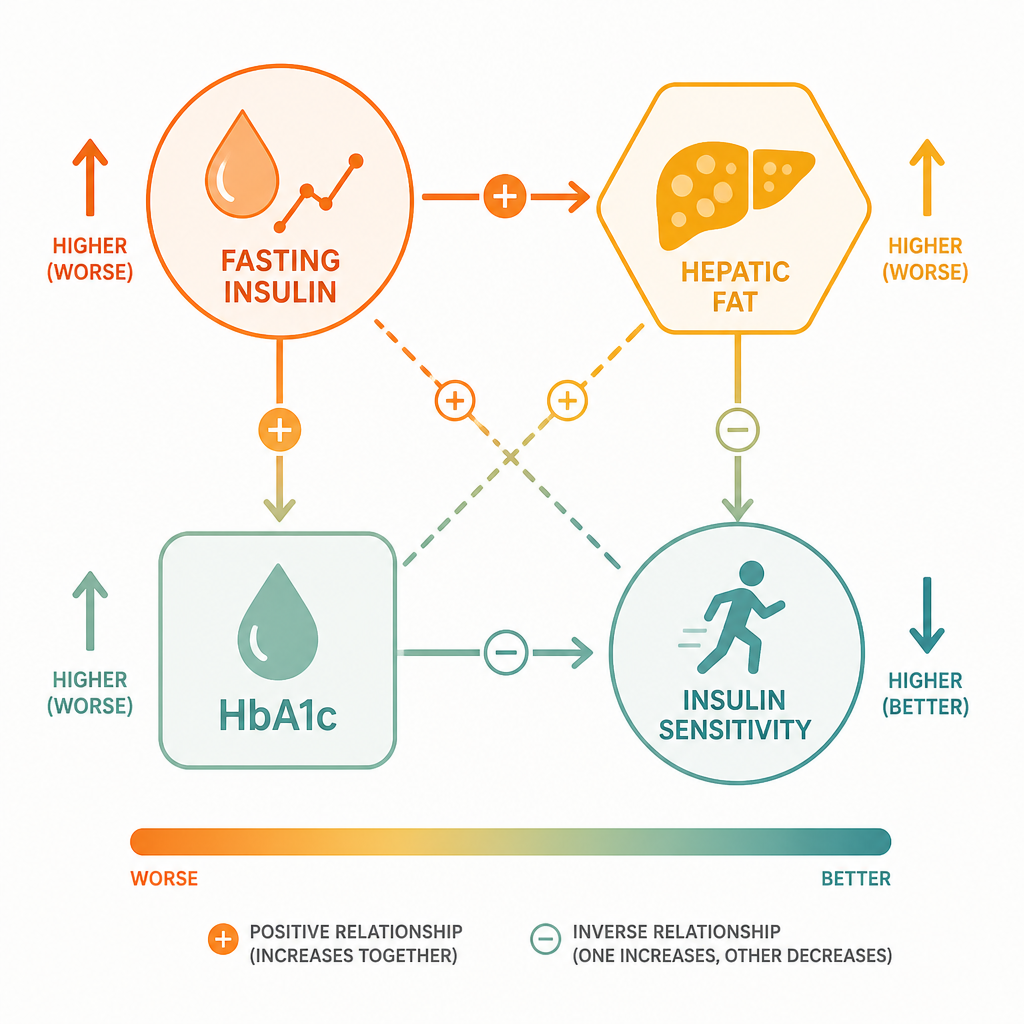
| Liver fat reduction co-occurs with insulin sensitivity gains | In the MASLD substudy, reductions in liver fat were strongly associated with improvements in markers of insulin sensitivity and lipid metabolism, suggesting these are not independent effects. |
| Insulin sensitivity improvements track closely with the timeline of body weight loss | The Nature Medicine (2024) MASLD data showed that time- and dose-related improvements in insulin sensitivity followed a temporal pattern similar to body weight loss, implying a shared upstream driver. |
The Triple Receptor Architecture Behind the Insulin Response
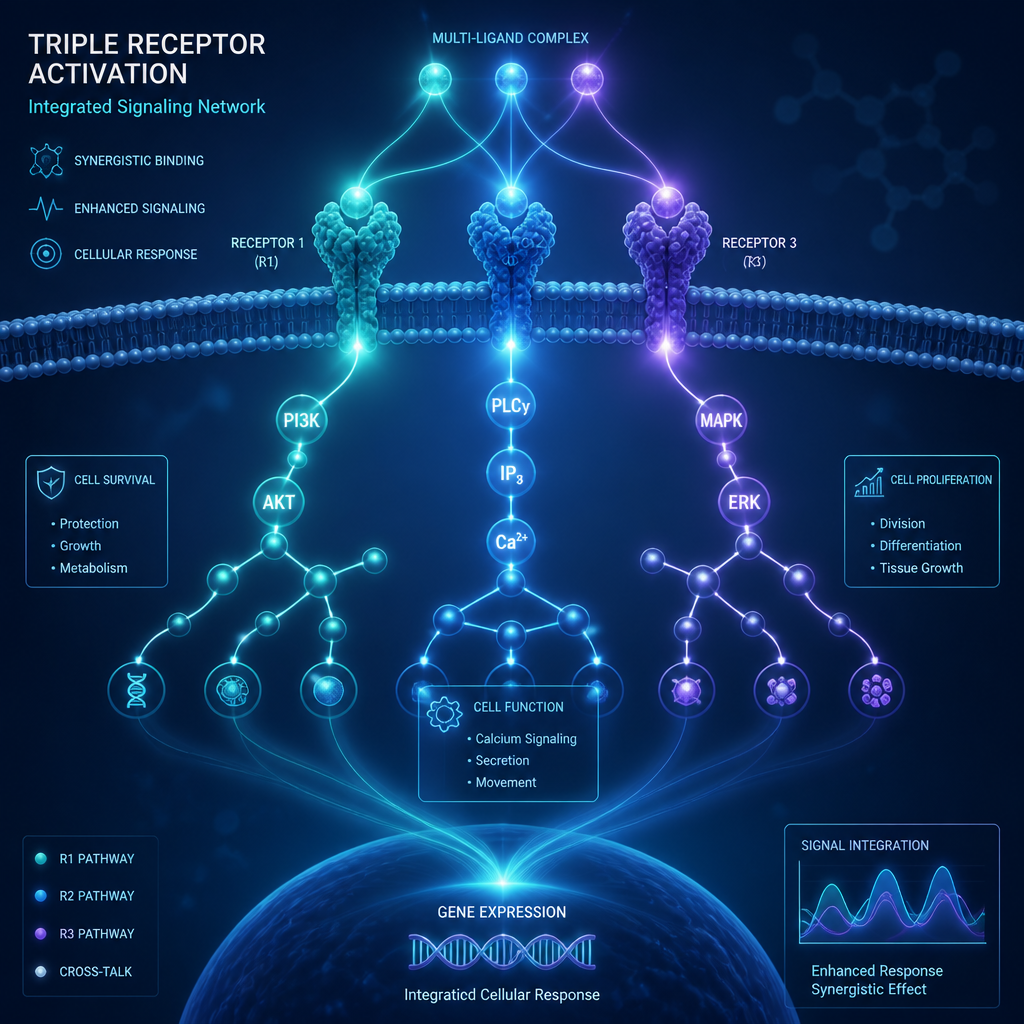
Retatrutide (development code LY3437943) is a synthetic peptide developed by Eli Lilly that acts as a simultaneous agonist at three receptors: the glucagon-like peptide-1 receptor (GLP-1R), the glucose-dependent insulinotropic polypeptide receptor (GIPR), and the glucagon receptor (GCGR). These three receptors regulate distinct but overlapping aspects of metabolic physiology, covering satiety signaling, incretin-mediated insulin secretion, and hepatic glucose and fat metabolism. The scientific rationale for combining all three targets is that each receptor contributes a different part of the metabolic response that no single-receptor or dual-receptor agonist fully replicates.
Structurally, retatrutide is a single peptide coupled to a fatty diacid moiety. This acylation extends its half-life to approximately six days, enabling once-weekly dosing. The compound has been engineered to exert a relatively stronger agonistic effect on the GIP receptor in humans while maintaining clinically useful but relatively attenuated activation of the GLP-1 and glucagon receptors. This receptor potency balance is not incidental; it is central to how the compound manages the tension between glucagon-driven hepatic glucose production and GLP-1R or GIPR-mediated glucose lowering.
For researchers studying GLP-1 GIP insulin response, the key mechanistic point is this: GLP-1R activation enhances glucose-stimulated insulin secretion and slows gastric emptying, while GIPR activation promotes glucose uptake and storage while inhibiting glucagon release. The glucagon receptor component then acts upstream on hepatic fat metabolism in ways that pure GLP-1 agents do not replicate. When all three are activated together, the net metabolic effect is broader than any additive model would predict.
Pro tip: When designing in vitro assays to isolate retatrutide's contribution to insulin signaling pathway activation, consider running parallel arms with selective receptor antagonists for each of the three targets. This lets you attribute specific downstream effects, such as GLUT4 translocation or IRS-1 phosphorylation, to the GLP-1R, GIPR, or GCGR component individually.

Preclinical Findings: Glucose Tolerance and Energy Expenditure Models
The first substantive preclinical characterization of retatrutide's receptor binding and in vivo metabolic profile came from Coskun and colleagues in a 2022 paper in Cell Metabolism. That work described LY3437943's receptor binding profile as showing balanced GCGR and GLP-1R activity with more prominent GIPR activity, and documented that in obese animal models, weight reduction was augmented by glucagon receptor-mediated increases in energy expenditure layered on top of GIPR- and GLP-1R-driven calorie intake reduction.
Body Weight and Energy Expenditure in Obese Mouse Models
In experiments conducted at thermoneutrality (27 degrees Celsius), Coskun et al. reported that retatrutide at 10 nmol/kg induced approximately 35% body weight loss within 10 days, compared to 20% in the calorie-intake matched group. Unlike the calorie-intake matched group, which showed reduced energy expenditure and gradual weight gain over time, retatrutide-treated mice maintained weight loss by sustaining energy expenditure levels. This distinction matters for insulin sensitivity research: weight loss achieved by caloric restriction alone typically reduces energy expenditure and can impair glucose homeostasis during the restriction phase, while retatrutide's mechanism prevents that compensatory metabolic slowdown.
Glucose Tolerance Across Receptor-Null Mouse Models
A separate preclinical investigation evaluated glucose tolerance in GLP-1R-null mice, GIPR-null mice, and wildtype mice following retatrutide exposure. Improved glucose utilization was observed across all three models. This finding has direct implications for the insulin resistance peptide research field: it suggests retatrutide does not depend on any single receptor pathway to drive glucose clearance. The mechanistic redundancy is notable and partly explains why the compound maintains glycemic effects even in metabolically compromised animal models where one receptor axis may be downregulated.
The first-in-human single ascending dose Phase 1 study by Coskun et al. (2022) included 47 healthy participants, with 45 receiving at least one dose of retatrutide or placebo. Pharmacokinetic analysis confirmed the approximately six-day half-life observed in animal models, and the findings supported progression to Phase 2 trials based on acceptable safety profile and substantial pharmacodynamic benefits in glucose and body weight reduction.
In a subsequent preclinical study by Urva et al. (2023), C57/B16 male obese mice were used to further evaluate the metabolic effects of retatrutide, providing additional mechanistic data that informed the design of the Phase 2 human trials. The preclinical body of evidence consistently pointed to a compound capable of addressing multiple drivers of insulin resistance simultaneously, rather than targeting glycemia through a single pathway.
The mechanistic advantage of triple receptor agonism is not simply additive. When GLP-1R, GIPR, and GCGR are activated together, the resulting metabolic reprogramming at the hepatic and adipose tissue level appears to exceed what any sequential combination of single-target interventions achieves.
Phase 2 Obesity Trial: Glycemic and Insulin Sensitivity Outcomes
The landmark Phase 2 obesity trial, published in the New England Journal of Medicine in June 2023 by Jastreboff and colleagues (REMD-003), enrolled 338 adults with obesity or overweight. Participants received retatrutide once weekly for 48 weeks at various doses or a placebo. The primary endpoint was percentage change in body weight from baseline to week 48. At the 12 mg dose, retatrutide produced a mean weight loss of 24.2%, compared to 2.1% for placebo.
Glycemic Markers in a Non-Diabetic Obesity Population
A consistent finding across the dose groups was reduction in fasting glucose and fasting insulin, suggesting improved insulin sensitivity even in participants who did not have diagnosed type 2 diabetes at enrollment. At the 12 mg dose, the study reported that the highest dose led to mean daily glucose decreases of approximately 2.8 to 3.1 mmol/L placebo-adjusted at the highest doses in the Phase 1b context. The REMD-003 data further showed HbA1c reductions at doses of 1 mg and above, with the 12 mg group achieving HbA1c reductions sufficient to move participants with elevated baseline values back into the normal range, without increasing hypoglycemia risk in non-diabetic participants.
The temporal pattern of glycemic improvement is particularly relevant for metabolic peptide research design. Fasting glucose improvements in the trial were detectable early in the dose escalation period, before maximum body weight loss was achieved, indicating that some portion of the insulin sensitization effect is weight-independent and likely reflects direct receptor-mediated changes in hepatic glucose output and incretin signaling.
Pro tip: When sourcing retatrutide for preclinical insulin sensitivity studies, confirm that your supplier provides batch-specific HPLC purity documentation and lyophilized format. Peptide degradation in solution can alter receptor binding kinetics and confound dose-response relationships in glucose tolerance assays. Pepura Labs provides independently verified Canadian laboratory COA documentation with full Chain of Custody for each batch, which is the minimum traceability standard for publishable in vitro work.
Phase 2 Type 2 Diabetes Trial: HbA1c and Weight Findings
A separate Phase 2 trial specifically in people with type 2 diabetes was reported by Rosenstock, Frias, Jastreboff, and colleagues in The Lancet in 2023. The trial enrolled 281 participants and was randomized, double-blind, placebo and active controlled (using dulaglutide 1.5 mg as comparator) with a 36-week treatment period. The study was conducted in the United States.
HbA1c Reductions Across Dose Groups
Least-squares mean changes in HbA1c from baseline to week 24 ranged from -0.43% in the 0.5 mg group to -2.02% in the 12 mg group, compared to essentially no change (-0.01%) in the placebo group. At the 12 mg dose, retatrutide produced mean HbA1c reductions of 2.02 percentage points compared to 1.41 percentage points for dulaglutide. This difference was statistically significant (p=0.0002). These HbA1c results substantially exceeded those produced by dulaglutide, an established GLP-1 receptor agonist with an established clinical track record in T2D.
Weight Loss as a Modifier of Insulin Sensitivity Outcomes
Body weight reductions at the 12 mg dose reached 16.94% versus 2.02% for dulaglutide (p less than 0.0001). Across the 8 mg dose groups (slow and fast escalation), body weight reductions ranged from 16.34% to 16.81%. The magnitude of weight reduction at these doses substantially exceeds what is typically seen with pure GLP-1 receptor agonists, and the concurrent improvement in glycemic markers suggests that the additional GIPR and GCGR engagement is contributing to insulin sensitivity gains that go beyond what can be attributed to weight loss alone. Mild to moderate gastrointestinal adverse events were the most common side effects, consistent with GLP-1 receptor agonist class effects.
MASLD Substudy: HOMA2-IR, Fasting Insulin, and Hepatic Fat
The most mechanistically detailed insulin sensitivity data from the retatrutide clinical program comes from the MASLD Phase 2a substudy, published in Nature Medicine in July 2024, with Sanyal and colleagues as authors. This was a randomized, double-blind, placebo-controlled trial in 98 participants with metabolic dysfunction-associated steatotic liver disease (MASLD, previously termed NAFLD or NASH). Participants received once-weekly subcutaneous retatrutide at 1, 4, 8, or 12 mg or placebo for 48 weeks.
Liver Fat Reductions and Their Relationship to Insulin Sensitivity
The primary outcome was mean relative change from baseline in liver fat at 24 weeks. Results showed reductions of -42.9% (1 mg), -57.0% (4 mg), -81.4% (8 mg), and -82.4% (12 mg), compared to +0.3% in the placebo group (all doses p less than 0.001 versus placebo). At 24 weeks, 86% of participants in the 12 mg group achieved normal liver fat content (below 5%), compared to 0% in the placebo group. Most of the reduction in liver fat occurred within the first 24 weeks.
Critically for insulin sensitivity research, these liver fat reductions were strongly associated with improvements in markers of insulin sensitivity and lipid metabolism. Higher doses of retatrutide reduced biomarkers of insulin resistance, including fasting insulin, fasting C-peptide, and HOMA2-IR, by up to 50% or more from baseline. The time- and dose-related improvements in insulin sensitivity followed a temporal pattern similar to the body weight loss curve, suggesting that hepatic fat clearance, body weight reduction, and insulin sensitization share overlapping upstream mechanisms when triple receptor agonism is the driver.
Significance for Hepatic Insulin Resistance Research
The MASLD data is particularly relevant for researchers focused on hepatic insulin resistance, because ectopic liver fat is one of the primary drivers of impaired hepatic insulin signaling and elevated fasting glucose. The fact that retatrutide reduced liver fat by up to 82% while simultaneously improving HOMA2-IR by more than 50% provides a model system for studying how rapid reduction in intrahepatic lipid content translates into downstream improvements in insulin receptor sensitivity at the hepatocyte level. This connection is difficult to establish with agents that affect only one of these variables.
Comparison: Retatrutide vs. Dual and Single Agonists on Insulin Sensitivity Markers
Positioning retatrutide within the broader landscape of incretin-based therapies requires looking at how it compares to dual and single agonists on the specific endpoints most relevant to insulin sensitivity research. The table below draws on Phase 2 trial data and preclinical findings to show where retatrutide's triple agonism provides measurable differentiation.
| Compound Type | Insulin Sensitivity Mechanisms Engaged | Key Limitations in Insulin Resistance Research Context |
|---|---|---|
| Retatrutide (GLP-1R + GIPR + GCGR triple agonist) | Incretin-mediated insulin secretion (GLP-1R + GIPR), hepatic glucose output modulation (GCGR), hepatic fat oxidation and lipolysis (GCGR), fasting insulin and HOMA2-IR reduction by up to 50%+ in MASLD Phase 2a data | Still in Phase 2 or 3 development; long-term insulin sensitivity maintenance data not yet available; no head-to-head comparative insulin clamp studies published as of writing |
| Tirzepatide (GLP-1R + GIPR dual agonist) | Robust incretin-mediated insulin secretion, body weight-driven insulin sensitization; strong HbA1c reduction data in T2D; a 2025 systematic review found tirzepatide was most effective at lowering fasting blood glucose and HbA1c among agents evaluated | Lacks glucagon receptor component; no direct hepatic thermogenic or lipolytic effect from GCGR; liver fat reductions are secondary to weight loss rather than a direct receptor-mediated mechanism |
| Semaglutide (GLP-1R mono-agonist) | Glucose-stimulated insulin secretion enhancement, gastric emptying delay, modest fasting glucose reduction; established Phase 3 MASH trial underway | No GIPR or GCGR engagement; incretin-mediated insulin secretion improvements are narrower; weight loss at approved doses is lower than dual or triple agonists, limiting weight-dependent insulin sensitization effects |
A 2025 systematic review and network meta-analysis by Yan and colleagues in Acta Diabetologica reached a nuanced conclusion: retatrutide achieved the greatest weight reduction among the agents evaluated, while tirzepatide was most effective at lowering fasting blood glucose and HbA1c, suggesting the two compounds may have different optimal profiles depending on whether the primary research target is body weight or direct glycemic control. This is a useful framing for researchers deciding which compound to use as a model agent in insulin resistance studies.
Research Implications for Insulin Resistance Peptide Studies
The retatrutide data set creates several productive directions for researchers working on insulin sensitivity mechanisms. The most immediate is using the compound as a pharmacological tool to dissect the relative contributions of GLP-1R, GIPR, and GCGR signaling to insulin sensitization in isolated cell or tissue systems. Because retatrutide engages all three simultaneously, pairing it with selective receptor antagonists allows controlled attribution of downstream signaling effects.
In Vitro Applications and Compound Quality Requirements
For in vitro insulin sensitivity research, the compound quality requirements are stringent. Glucose tolerance assays, GLUT4 translocation experiments, and insulin receptor substrate phosphorylation studies all require consistent receptor binding kinetics across replicates. Any degradation or impurity in the peptide preparation introduces variability that can obscure dose-response relationships. Research-grade retatrutide used for these applications should carry independent third-party purity verification at 99% or higher, with batch-specific documentation. Pepura Labs supplies lyophilized retatrutide independently verified by Canadian laboratories with full Chain of Custody documentation, meeting the traceability standards that peer-reviewed publications increasingly require for biochemical reagents.
Key Biomarkers for Insulin Sensitivity Assay Design
Based on what the Phase 2 clinical data shows, the most informative biomarkers for translational insulin sensitivity assay design with retatrutide are fasting insulin, fasting C-peptide, HOMA2-IR, and fasting glucose. These markers showed the clearest dose-dependent responses in the MASLD substudy. HbA1c is the correct primary endpoint for longer-duration or in vivo models with T2D-relevant conditions. Researchers designing shorter in vitro experiments should focus on acute insulin secretion assays and receptor phosphorylation cascades, since HbA1c reflects a 2-3 month glycation average that does not apply to acute cell studies.
The fasting glucose endpoint is particularly informative for isolating the GCGR component's contribution. Retatrutide's glucagon receptor component directly modulates hepatic glucose production, and fasting glucose tracks this mechanism in ways that postprandial glucose measurements do not. Separating this from GLP-1R and GIPR-mediated effects requires careful experimental design, and the preclinical receptor-null mouse models described above provide a template for that approach.
Frequently Asked Questions
How does retatrutide improve insulin sensitivity compared to a GLP-1 receptor agonist alone?
Retatrutide adds GIPR and GCGR activation to GLP-1R signaling. GLP-1R alone enhances glucose-stimulated insulin secretion and slows gastric emptying. Adding GIPR engagement further reinforces incretin-mediated insulin secretion and promotes glucose uptake. The GCGR component adds hepatic fat oxidation and increased energy expenditure, which reduces ectopic liver fat. Since hepatic lipid accumulation is a major driver of insulin resistance at the hepatocyte level, this third mechanism produces insulin sensitivity improvements that extend beyond what GLP-1R agonism alone can generate.
What does HOMA2-IR reduction by 50% or more from baseline mean in practice for researchers?
HOMA2-IR is a widely used surrogate marker for insulin resistance derived from fasting glucose and fasting insulin concentrations. A reduction of 50% or more from baseline, as observed in the MASLD Phase 2a substudy with higher doses of retatrutide, indicates a substantial improvement in the balance between hepatic glucose output and peripheral insulin action. For researchers, this magnitude of change is sufficient to shift participants from a high insulin resistance range into a near-normal range, making it a meaningful endpoint for studies that use HOMA2-IR as a functional readout of metabolic state.
Is retatrutide's effect on insulin sensitivity primarily mediated through weight loss or through direct receptor signaling?
The evidence suggests both mechanisms contribute, but they cannot be fully separated in current trial data. The temporal pattern of insulin sensitivity improvements in the MASLD substudy closely tracked body weight loss, suggesting that weight reduction is an important driver. However, early improvements in fasting glucose detectable during the dose escalation phase before peak weight loss occur suggest that direct receptor-mediated effects on hepatic glucose production and incretin signaling also contribute independently. Preclinical data from receptor-null mouse models further supports a degree of weight-independent glucose tolerance improvement.
What preclinical evidence supports retatrutide's use as a research tool for studying insulin resistance peptide mechanisms?
The Coskun et al. (2022) Cell Metabolism paper characterized receptor binding profiles and documented sustained energy expenditure maintenance in obese animal models. The Urva et al. (2023) study in C57/B16 male obese mice provided additional pharmacodynamic data. Glucose tolerance testing in GLP-1R-null, GIPR-null, and wildtype mice all showed improved glucose utilization, demonstrating that retatrutide's insulin-sensitizing effects are robust across multiple receptor knockout conditions. These models provide a validated preclinical foundation for designing mechanistic insulin resistance studies.
How does retatrutide compare to tirzepatide for insulin sensitivity research purposes?
A 2025 systematic review and network meta-analysis published in Acta Diabetologica found that tirzepatide was most effective at lowering fasting blood glucose and HbA1c among the agents evaluated, while retatrutide achieved the greatest weight reduction. From a research design standpoint, this means tirzepatide may be a better model compound for studies focused narrowly on glycemic control endpoints, while retatrutide is the more appropriate tool for studying the intersection of weight-dependent and weight-independent insulin sensitization, especially in MASLD-relevant hepatic fat models.
What purity standards are required for retatrutide used in insulin sensitivity in vitro assays?
For publishable in vitro work, research-grade retatrutide should carry independent third-party purity verification at 99% or higher, delivered in lyophilized format to prevent degradation during storage. Batch-specific certificates of analysis with mass spectrometry confirmation are the minimum documentation standard that most peer-reviewed journals now expect for biochemical reagents. Full Chain of Custody records allow reviewers and replication teams to trace exactly which batch was used, at what concentration, and under what storage conditions. Any departure from this standard introduces confounding variables into receptor binding kinetics and dose-response measurements.
If you are currently designing a preclinical or in vitro study using retatrutide as a model compound for insulin resistance research, share your experimental design challenges below. We read every comment and the specifics of your assay setup often reveal details that are worth addressing directly.
References
- Nature Medicine Phase 2a MASLD trial: retatrutide effects on liver fat, insulin sensitivity, and metabolic markers
- European Journal of Pharmacology 2024 review: retatrutide mechanism of action, preclinical and clinical evidence summary
- ScienceDirect: preclinical receptor-null mouse model glucose tolerance findings and first-in-human pharmacokinetic data
- HCPLive: Phase 2 T2D trial HbA1c and weight reduction results from Rosenstock, Frias, and Jastreboff et al.
- Current Cardiovascular Risk Reports: retatrutide insulin sensitivity, weight loss, and metabolic outcomes review