
When the TRIUMPH-1 topline results arrived, researchers studying metabolic peptides had to pause and re-read the numbers. Participants on retatrutide 12 mg lost an average of 70.3 lbs (28.3% of body weight) over 80 weeks, a figure that crosses into territory previously associated only with bariatric surgery. For scientists engaged in retatrutide obesity research, these phase 3 data are not just clinically significant; they reframe what pharmacological triple agonism can accomplish at the mechanistic level. This article unpacks the TRIUMPH-1 80-week results dose by dose, examines what the comorbidity basket trials revealed, and puts the safety profile into honest context for the research community.
Table of Contents
- What Is the TRIUMPH-1 Trial
- 80-Week Weight Loss Outcomes by Dose
- The Triple Agonist Mechanism Behind the Numbers
- BMI Reclassification and Cardiometabolic Implications
- Comorbidity Basket Trials: Sleep Apnea and Knee Osteoarthritis
- Safety Profile and Tolerability in TRIUMPH-1
- Retatrutide vs. Semaglutide vs. Tirzepatide: Research Comparison
- Implications for In Vitro and Preclinical Research
- Frequently Asked Questions
- References
What Is the TRIUMPH-1 Trial
TRIUMPH-1 (NCT05929066) is a phase 3, randomized, double-blind, placebo-controlled master trial designed to evaluate retatrutide's safety and efficacy in adults with obesity or overweight and at least one weight-related comorbidity, but without type 2 diabetes. The trial randomized 2,339 adults in a 1:1:1:1 ratio to retatrutide 4 mg, 9 mg, 12 mg, or placebo, with stepwise dose titration starting from 2 mg every four weeks until reaching the target dose.
The 80-week endpoint was the primary analysis window. What separates TRIUMPH-1 from earlier phase 2 work is its scale, its comorbidity basket design, and its duration. Unlike shorter trials that can miss plateau effects or tolerability signals, 80 weeks provides a meaningful picture of sustained efficacy and the dose-response relationship researchers need to interpret the compound's biological behavior.
Eli Lilly sponsored the trial. Additional findings from TRIUMPH-1 were presented at the American Diabetes Association Scientific Sessions alongside results from the TRANSCEND-T2D-1 trial in the type 2 diabetes population.

80-Week Weight Loss Outcomes by Dose
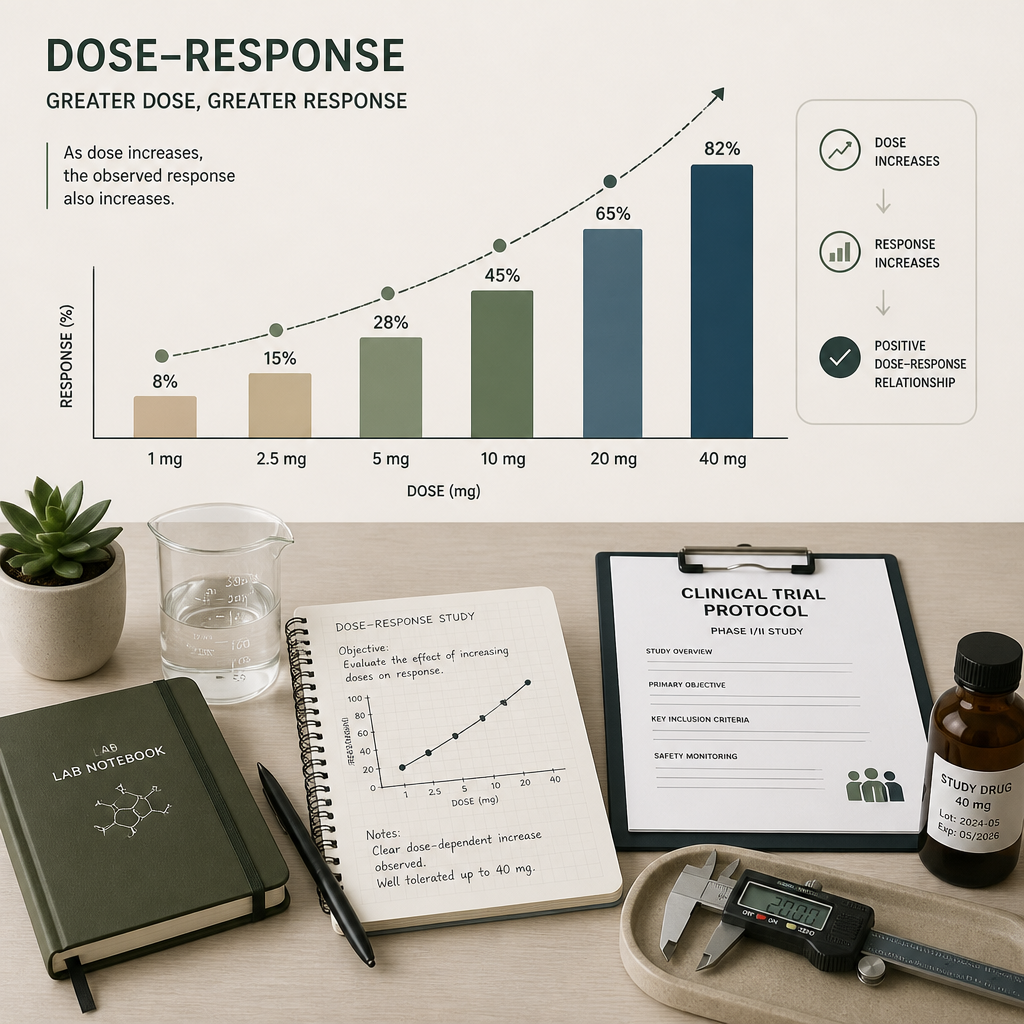
All three doses of retatrutide (4 mg, 9 mg, and 12 mg) met both the primary and key secondary endpoints at week 80. The dose-response relationship is steep and consistent, which is precisely what researchers want to see when studying a novel receptor agonist.
Dose-Response Breakdown
Participants on the 4 mg dose achieved a mean weight loss of 19.0%, translating to approximately 47.2 lbs. Those on the 9 mg dose lost an average of 25.9%, or 64.4 lbs. The 12 mg dose delivered an average of 28.3%, equivalent to 70.3 lbs. The placebo group lost only 2.2% over the same period, confirming that the weight reductions are drug-mediated rather than lifestyle-driven.
Among participants with a baseline BMI of 35 or higher who received the 12 mg dose, average weight loss reached approximately 30.3%, or around 85 lbs. At 104 weeks, the trajectory extended to 30.3% average weight loss in the overall 12 mg group, indicating the compound had not yet plateaued by the primary endpoint. Separately, 45.3% of participants on the 12 mg dose achieved 30% or greater weight loss, a threshold historically associated with bariatric surgery outcomes.
Pro tip: When designing in vitro assays using retatrutide, the dose-response data from TRIUMPH-1 provide a useful anchor for selecting pharmacologically relevant concentration ranges. The steep relationship between dose and receptor engagement observed clinically can inform your EC50 modeling in GIP, GLP-1, and glucagon receptor cell systems.
Comparison With Phase 2 Benchmarks
The phase 2 trial published in the New England Journal of Medicine (n=338, 48 weeks) showed mean weight loss of 24.2% at the 12 mg dose versus 2.1% for placebo. The TRIUMPH-1 80-week data at 28.3% confirm that the effect continues to build with extended exposure, which is mechanistically consistent with sustained receptor engagement rather than a rapid-then-plateau curve. For the weight loss peptide research community, that trajectory is a significant differentiating feature compared to shorter-acting molecules.
The Triple Agonist Mechanism Behind the Numbers
Retatrutide is a first-in-class investigational compound that simultaneously activates three hormone receptors: GLP-1 (glucagon-like peptide-1), GIP (glucose-dependent insulinotropic polypeptide), and glucagon. Each receptor contributes distinct but complementary metabolic effects.
GLP-1 Receptor Engagement
GLP-1 receptor agonism provides the foundational appetite-suppression and gastric-emptying effects familiar from semaglutide. This component reduces hunger signaling in the hypothalamus and contributes to the caloric deficit that drives initial weight loss. It is the most characterized of the three axes.
GIP Receptor Engagement
GIP receptor co-activation improves incretin signaling and may enhance the tolerability and metabolic breadth of the compound. Current understanding suggests GIPR engagement complements GLP-1R activity rather than duplicating it, contributing to improved lipid metabolism and adipose tissue remodeling in preclinical models.
Glucagon Receptor Engagement
The glucagon receptor component is the feature that most clearly separates retatrutide from dual agonists like tirzepatide. Glucagon receptor activation increases energy expenditure and promotes hepatic fat mobilization. This additional axis is mechanistically implicated in the superior weight loss magnitude seen in TRIUMPH-1, particularly in the high-dose group. Research teams studying glucagon receptor biology now have a validated clinical context against which to benchmark their in vitro findings.
The simultaneous activation of three metabolic axes by a single compound creates additive and complementary effects that neither dual nor single agonism can fully replicate, and the TRIUMPH-1 data at 80 weeks reflect exactly that layered biology.
BMI Reclassification and Cardiometabolic Implications
One of the most striking secondary endpoints in TRIUMPH-1 is the rate of BMI reclassification. Among participants receiving the 12 mg dose, 65.3% achieved a BMI below 30, moving from the clinical obesity range into the overweight or normal range. Furthermore, 33.3% achieved a BMI below 25, crossing into the normal weight classification entirely.
These reclassification rates matter for research framing. They confirm that the weight reduction is not marginal cosmetic improvement but a pharmacologically driven shift in adiposity category for a majority of treated participants. For researchers modeling cardiometabolic risk or studying adipokine signaling, these numbers signal that retatrutide creates a fundamentally different metabolic state in subjects, not merely a modest reduction on an existing continuum.
Cardiometabolic risk markers beyond BMI also improved across the trial. Improvements were observed in glycemic parameters and other metabolic indices, consistent with what would be expected from the degree of weight reduction achieved and the direct receptor-mediated metabolic effects of the compound.

Comorbidity Basket Trials: Sleep Apnea and Knee Osteoarthritis
Embedded within TRIUMPH-1 were two basket trials targeting specific obesity-related comorbidities. The inclusion of these sub-studies reflects a sophisticated recognition that obesity's downstream pathology is the real research target, not simply adipose mass.
Obstructive Sleep Apnea Results
In participants with moderate-to-severe obstructive sleep apnea (OSA), the apnea-hypopnea index (AHI) was reduced by up to 36.1 events per hour, representing a 60.6% reduction from baseline (baseline AHI: 58.6 events per hour). For a condition that is chronic, difficult to treat without CPAP compliance, and directly linked to cardiometabolic risk, a 60.6% reduction in AHI is a clinically meaningful signal that warrants focused mechanistic study.
Knee Osteoarthritis Pain Results
In the knee osteoarthritis basket cohort, the Western Ontario and McMaster Universities Osteoarthritis Index (WOMAC) pain subscale scores were reduced by up to 4.3 points, representing a 73.1% reduction from a baseline score of 6. Whether this effect is primarily mediated by weight reduction offloading joint stress, or whether there is a direct anti-inflammatory component tied to GLP-1 or glucagon receptor signaling, is an open question that makes retatrutide a compelling target for musculoskeletal and inflammatory biology researchers.
Pro tip: Researchers studying the intersection of metabolic and inflammatory pathways should note that the magnitude of WOMAC improvement in TRIUMPH-1 substantially exceeds what would be predicted from weight loss alone in some models, which opens a mechanistic hypothesis worth testing in synovial cell and chondrocyte in vitro systems using research-grade retatrutide peptide.
Safety Profile and Tolerability in TRIUMPH-1
The safety data from TRIUMPH-1 are broadly consistent with the incretin therapy class, but several dose-specific signals deserve close attention from anyone planning studies that model adverse effect mechanisms.
Gastrointestinal Adverse Events
The most common adverse events in the 12 mg group were nausea (42.4%), diarrhea (32.0%), constipation (26.1%), and vomiting (25.3%). These rates were lower in the 4 mg group (nausea 28.8%, diarrhea 25.2%), demonstrating the expected dose-dependent GI burden. Placebo rates for nausea sat at 14.8%. The events were generally mild to moderate in severity.
Discontinuation Rates
Discontinuation due to adverse events rose with dose: 4.1% at 4 mg, 6.9% at 9 mg, and 11.3% at 12 mg, compared with 4.9% in the placebo group. Importantly, even at the highest dose, overall treatment discontinuation rates were broadly similar across arms. The 4 mg tolerability profile stands out as particularly favorable for real-world applicability.
Dysesthesia Signal
A sensory disturbance called dysesthesia was reported in a subset of participants and is typically characterized as mild. This adverse event, which is not commonly associated with GLP-1 or GIP single-target agents, may be related to the glucagon receptor component. It represents a distinct mechanistic signal worth investigating in neuronal cell systems to understand the receptor-mediated sensory pathway involved.
Retatrutide vs. Semaglutide vs. Tirzepatide: Research Comparison
Understanding how retatrutide sits relative to established comparators is essential for any research team contextualizing their work or designing competitive mechanism studies.
| Attribute | Retatrutide (12 mg, TRIUMPH-1) | Tirzepatide (dual GIP/GLP-1) | Semaglutide 2.4 mg (GLP-1 only) |
|---|---|---|---|
| Receptor Targets | GLP-1R + GIPR + Glucagon R (triple) | GLP-1R + GIPR (dual) | GLP-1R only (single) |
| Mean Weight Loss (longest available trial) | ~28.3% at 80 weeks (TRIUMPH-1) | ~20-22% at 72 weeks (SURMOUNT-1) | ~14.9% at 68 weeks (STEP 1) |
| Proportion Achieving 30%+ Weight Loss | 45.3% of 12 mg group | ~18% at highest dose | Not reported at this threshold |
| Unique Mechanistic Feature for Researchers | Glucagon receptor activation increases energy expenditure and hepatic fat mobilization | GIP receptor amplifies incretin effect with reduced GI burden vs. GLP-1 alone | Most characterized safety and PK database across all three agents |
| Regulatory Status (as of 2025) | Investigational, Phase 3 ongoing | FDA-approved (Mounjaro for T2D, Zepbound for obesity) | FDA-approved (Wegovy for obesity, Ozempic for T2D) |
Implications for In Vitro and Preclinical Research
The TRIUMPH-1 80-week data do more than validate a clinical drug candidate. They generate a precise mechanistic roadmap for laboratory researchers. Each data point, whether the 60.6% AHI reduction, the 73.1% WOMAC improvement, or the 65.3% BMI-below-30 rate, represents a downstream outcome that can be traced back to receptor-level biology.
For research scientists sourcing retatrutide for in vitro applications, the clinical data now provide validated outcome benchmarks. If your cell-based assay on GLP-1R or glucagon receptor activation produces a response that is mechanistically inconsistent with TRIUMPH-1's dose-response data, that is meaningful information. The clinical trial functions as a biological reference standard for compound activity.
Working with research-grade, high-purity retatrutide is non-negotiable in this context. Impurities in peptide preparations introduce confounding signals in receptor binding assays, metabolic activity screens, and cytotoxicity evaluations. A batch with 95% purity is not a minor compromise; it is a different compound from the perspective of receptor specificity modeling. Pepura Labs supplies lyophilized retatrutide at 99%+ purity, verified by independent Canadian laboratory analysis with full chain of custody documentation, so your experimental results can actually be tied back to the TRIUMPH-1 benchmark biology rather than attributed to a contaminant artifact.
The investigational status of retatrutide also means the research community has an active role to play. Phase 3 basket trial sub-studies on OSA and knee OA have opened mechanistic questions that clinical trials cannot answer alone. Well-designed in vitro studies using verified compounds are the bridge between clinical observation and mechanistic explanation.
Frequently Asked Questions
What were the primary endpoints of TRIUMPH-1, and did retatrutide meet them?
All three doses of retatrutide (4 mg, 9 mg, and 12 mg) met both the primary and key secondary endpoints at 80 weeks. The primary endpoint was percent change in body weight from baseline, with the 12 mg dose achieving a mean reduction of 28.3% versus 2.2% for placebo. Key secondary endpoints included proportion of participants achieving clinically meaningful weight loss thresholds.
How does the 70 lbs weight loss trial result compare to bariatric surgery outcomes?
The 70.3 lb average weight loss (28.3% of body weight) at 80 weeks in the retatrutide 12 mg group places it in territory historically associated with surgical intervention. Furthermore, 45.3% of participants in that dose group achieved 30% or greater weight loss, a threshold long associated with bariatric surgery benchmarks. These results are widely described in the research literature as surgical-level outcomes achieved pharmacologically.
What is unique about retatrutide's mechanism compared to tirzepatide?
Tirzepatide is a dual agonist targeting GLP-1 and GIP receptors. Retatrutide adds a third axis: glucagon receptor activation. This glucagon component promotes increased energy expenditure and hepatic fat mobilization, which are distinct physiological effects beyond appetite suppression and incretin signaling. This mechanistic addition is widely understood to be the primary driver of the superior weight loss magnitude observed in TRIUMPH-1 versus dual-agonist benchmarks.
What were the most common adverse events in TRIUMPH-1 at the 12 mg dose?
The most commonly reported adverse events in participants taking retatrutide 12 mg were nausea (42.4%), diarrhea (32.0%), constipation (26.1%), and vomiting (25.3%). A sensory disturbance called dysesthesia was also reported in a subset of participants and was generally mild to moderate. Discontinuation due to adverse events in the 12 mg group was 11.3%, compared with 4.9% in the placebo arm.
What did the TRIUMPH-1 basket trials find about obesity-related comorbidities?
The embedded basket trials demonstrated significant improvements in two obesity-related comorbidities. In participants with obstructive sleep apnea, the apnea-hypopnea index was reduced by up to 60.6% from baseline. In participants with knee osteoarthritis, WOMAC pain subscale scores were reduced by up to 73.1% from baseline. These results suggest that retatrutide's effects extend well beyond weight reduction to meaningful disease modification in downstream conditions.
Is retatrutide currently available for research use?
Retatrutide remains investigational and is not FDA-approved for clinical prescription. However, high-purity retatrutide peptide is available for legitimate in vitro research applications from qualified research-grade suppliers. Canadian researchers can source lyophilized retatrutide verified by independent laboratory analysis, with full batch documentation, for preclinical and mechanistic research purposes.
What does the 104-week data point indicate about retatrutide's weight loss trajectory?
Data extending to 104 weeks showed that average weight loss in the 12 mg group reached approximately 30.3%, up from 28.3% at the 80-week primary endpoint. This trajectory indicates that the compound's effect had not fully plateaued by week 80. For research scientists modeling receptor engagement kinetics, this sustained accumulation of effect over time is an important biological feature distinguishing retatrutide from agents with earlier plateau curves.
If you are actively studying triple agonist peptides or designing receptor-level assays informed by TRIUMPH-1 findings, we would be glad to hear how your research questions are evolving as the clinical data matures.
References
- TRIUMPH-1 full results: weight loss, BMI reclassification, and comorbidity outcomes at 80 weeks on HCP Live
- AJMC analysis of retatrutide phase 3 results including 104-week weight loss data
- Pharmacy Times coverage of retatrutide bariatric-level weight loss in TRIUMPH-1 including adverse event discontinuation rates
- Eli Lilly investor press release on TRIUMPH-1 and TRANSCEND-T2D-1 comorbidity improvement data
- Phase 2 retatrutide obesity trial published in the New England Journal of Medicine (48-week data)