Weak peptide documentation is one of the easiest problems for a reviewer to spot. A methods sentence such as "Retatrutide was obtained commercially" tells the reader nothing about the supplier, the lot, the purity method, or whether the number on the certificate applies to the vial that went into the assay. In practice, that gap is one of the first things that generates a revision request. This checklist gives authors and reviewers concrete wording, the documents to attach, and the mistakes that come up again and again.
Table of Contents
- Quick Takeaways
- What Reviewers Actually Check in Peptide Sourcing
- Writing the Source Statement in Your Methods
- Documenting Purity Without Overstating It
- Lot-to-Lot Variation and Repeat Orders
- Comparing Documentation Approaches
- Reviewer Checklist for Peptide Sourcing
- Common Objections and How to Answer Them
- Frequently Asked Questions
- References
Quick Takeaways
Key Insight | Explanation |
|---|---|
Name the supplier and the lot | A lot number lets a reader trace the exact material. A supplier name without a lot number leaves the experiment impossible to match to its source. |
Report the purity method with the number | "99% pure" means little without the technique behind it, such as HPLC area percent, and the figure should say what it measures. |
Separate gross weight from peptide content | Lyophilized powders contain water and salt counterions, so net peptide content can be lower than the stated purity. State which basis your concentrations use. |
Attach the certificate of analysis | Put the certificate in supplementary files, and confirm that the lot on the document matches the lot named in your methods. |
Record storage and reconstitution | Give the storage temperature, the solvent, and the reconstitution date, because handling affects the material you actually tested in vitro. |
Match purity claims to the experiment | Purity confirms what the material is. It does not prove the compound is active in your assay, which needs its own controls. |
What Reviewers Actually Check in Peptide Sourcing
Reviewers reading a peptide-based study are rarely suspicious of the authors. They are checking whether another laboratory could repeat the work with the same material. That comes down to four things: what the compound is, where it came from, how pure it was shown to be, and whether the lot used in the experiment is the lot the paper describes.
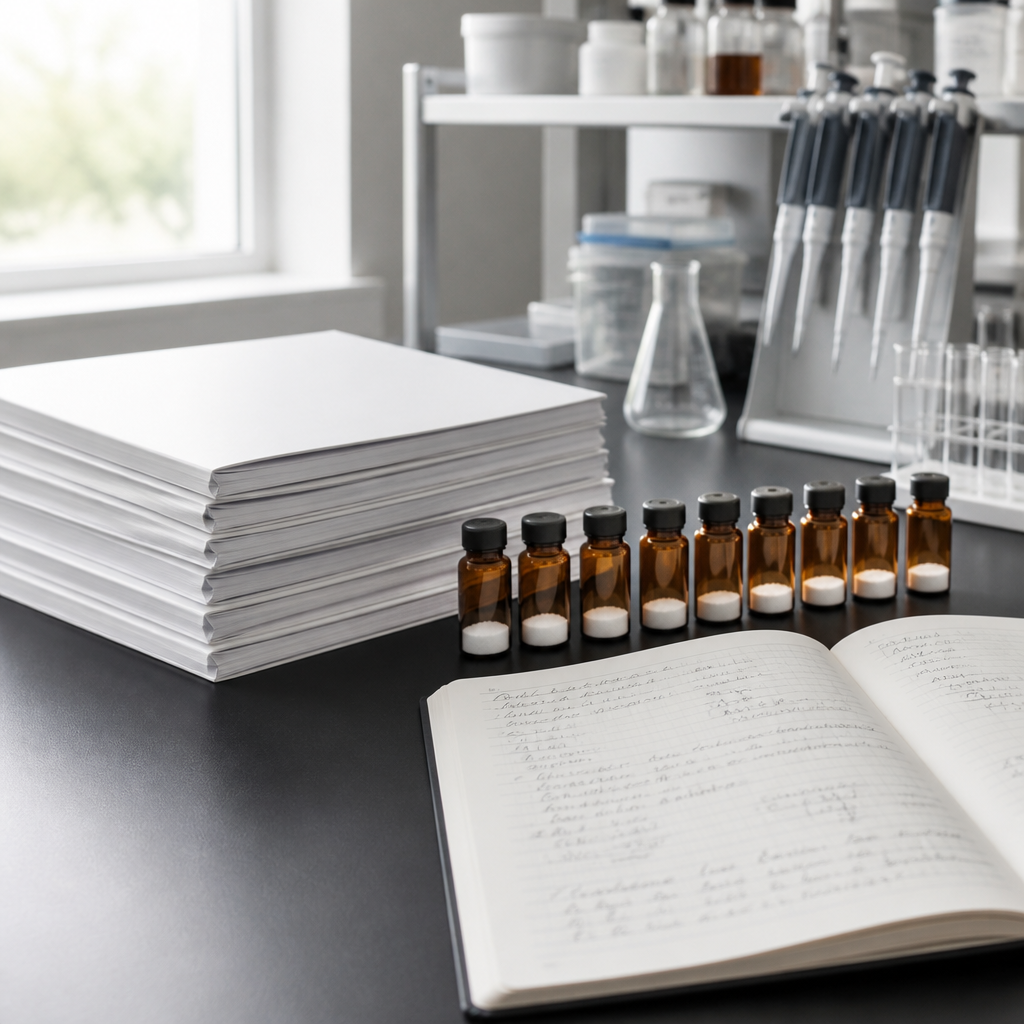
A checklist turns that general expectation into specific yes or no items. Taylor and Francis describes a peer review checklist as a way to rate each part of a paper according to its strength, and that structure suits materials well, because a sourcing gap is easy to score once there is a line for it. The AAMC's review criteria for research manuscripts were written in the same spirit, as an aid to help reviewers improve the quality of their reviews.
The four questions behind every sourcing comment
Almost every reviewer comment about sourcing maps to one of four questions. "Which compound?" usually means the salt form, sequence, or modification is missing. "From where?" means the supplier is unnamed or described only as a commercial vendor. "How pure?" means the number has no method attached, and "Same lot?" appears when a multi-month study reports one purity figure for material bought in several orders.
In practice, answering all four in one methods paragraph removes most of the back-and-forth. Authors who push the details into a footnote still need the key facts in the main text, because many reviewers read the methods before anything else.
Why unverified claims get flagged
A certificate that is mentioned but not attached looks the same to a reviewer as no certificate at all. Editors ask for the document because it is the only thing that can be checked. If the number on the page does not match the lot in the paper, that discrepancy is what gets flagged, even when the material itself was fine.
Writing the Source Statement in Your Methods
The source statement is the sentence reviewers read most closely. It should carry the compound name, physical form, supplier, location, lot identifier, and purity figure with its method. Everything else can go into supplementary material, but these elements belong in the main text.
A sentence that survives review
A workable template reads: "Retatrutide was supplied as a lyophilized powder by [supplier], [city, province, country], lot [number], with a stated purity of [value] determined by [method]. The certificate of analysis is provided as Supplementary File [X]." Each bracket is a fact a reader can check. Phrases such as "high-purity peptide from a reputable source" cannot be checked, and editors routinely send them back.
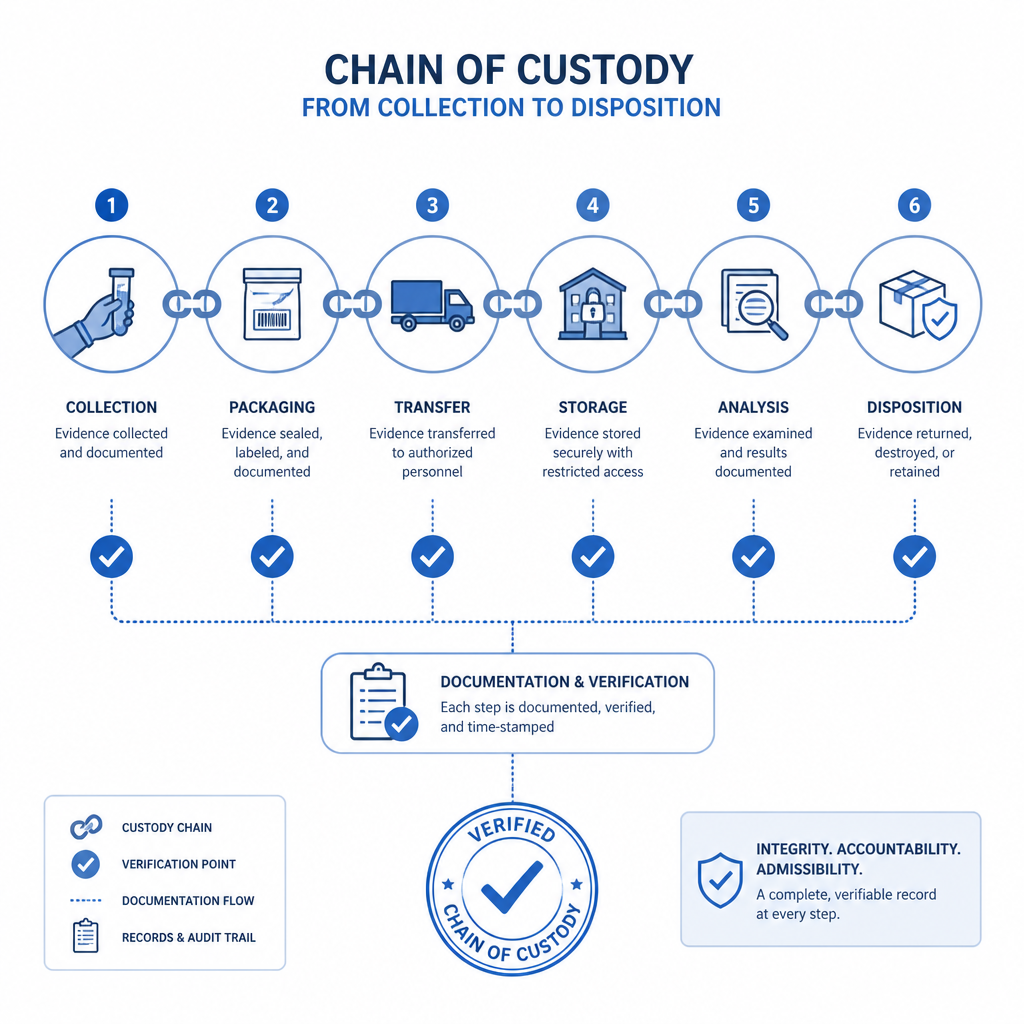
Suppliers differ in what they hand over. Pepura Labs, for example, ships lyophilized compounds with lot-level chain of custody documentation and independent verification by Canadian laboratories, which gives authors a specific document to cite and attach rather than a general assurance. Whatever supplier you use, make sure the paperwork names the same lot you tested.
Lot numbers, dates, and vial labels
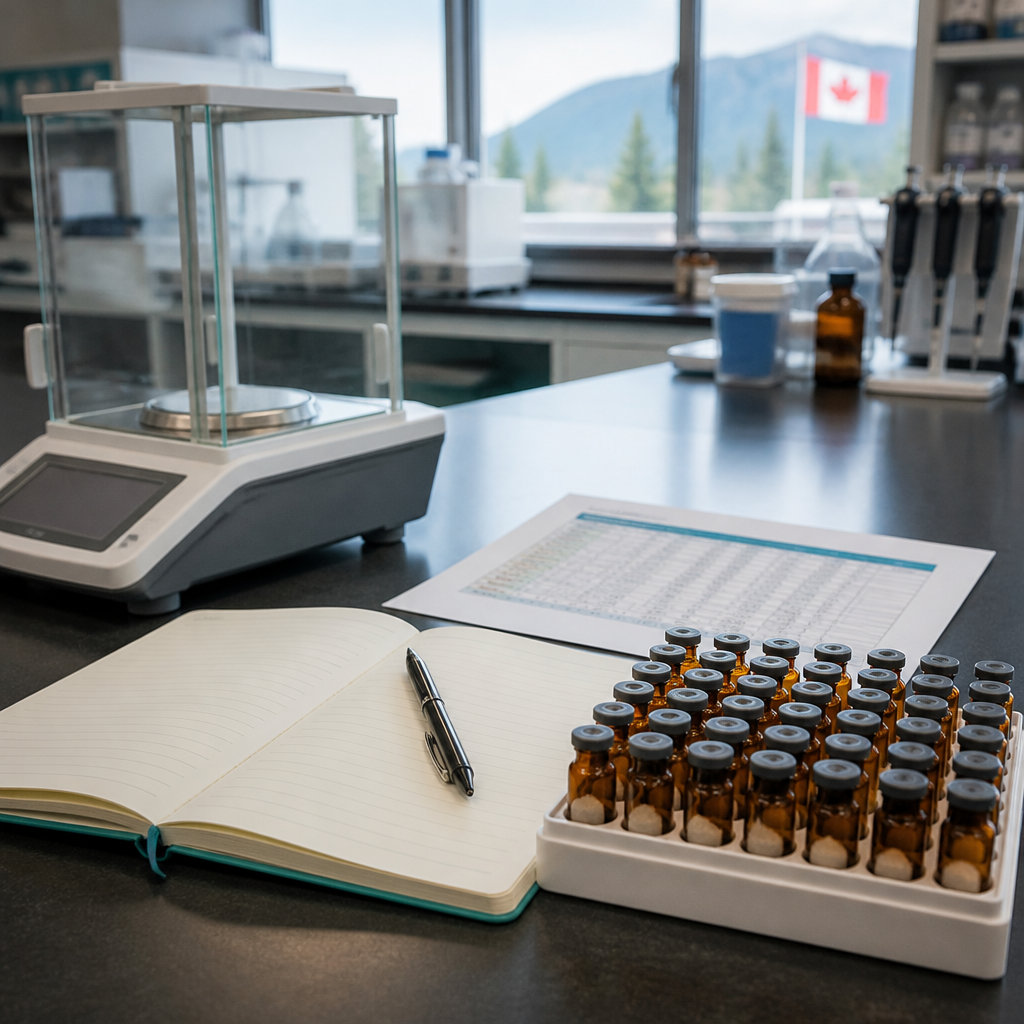
Record the lot number from the vial label and the certificate, not from the order confirmation. Order confirmations can cover several lots, and a common error is citing the order number as if it were a batch identifier. Note the date of receipt and the date of reconstitution as well, since those dates show how long the material sat before use.
If your laboratory keeps a stock register, cite its entry number in the methods or supplementary files. That single link between a physical vial and the reported data is the strongest traceability you can offer without a formal audit.
Documenting Purity Without Overstating It
A purity figure is a claim about a specific measurement, and its meaning changes with the method. A chromatographic percentage tells you the share of detected peak area belonging to the main peak. That is not the same as the mass fraction of peptide in the powder. Writing "99% pure" without a method makes a claim that nobody can evaluate.
What a purity percentage actually measures
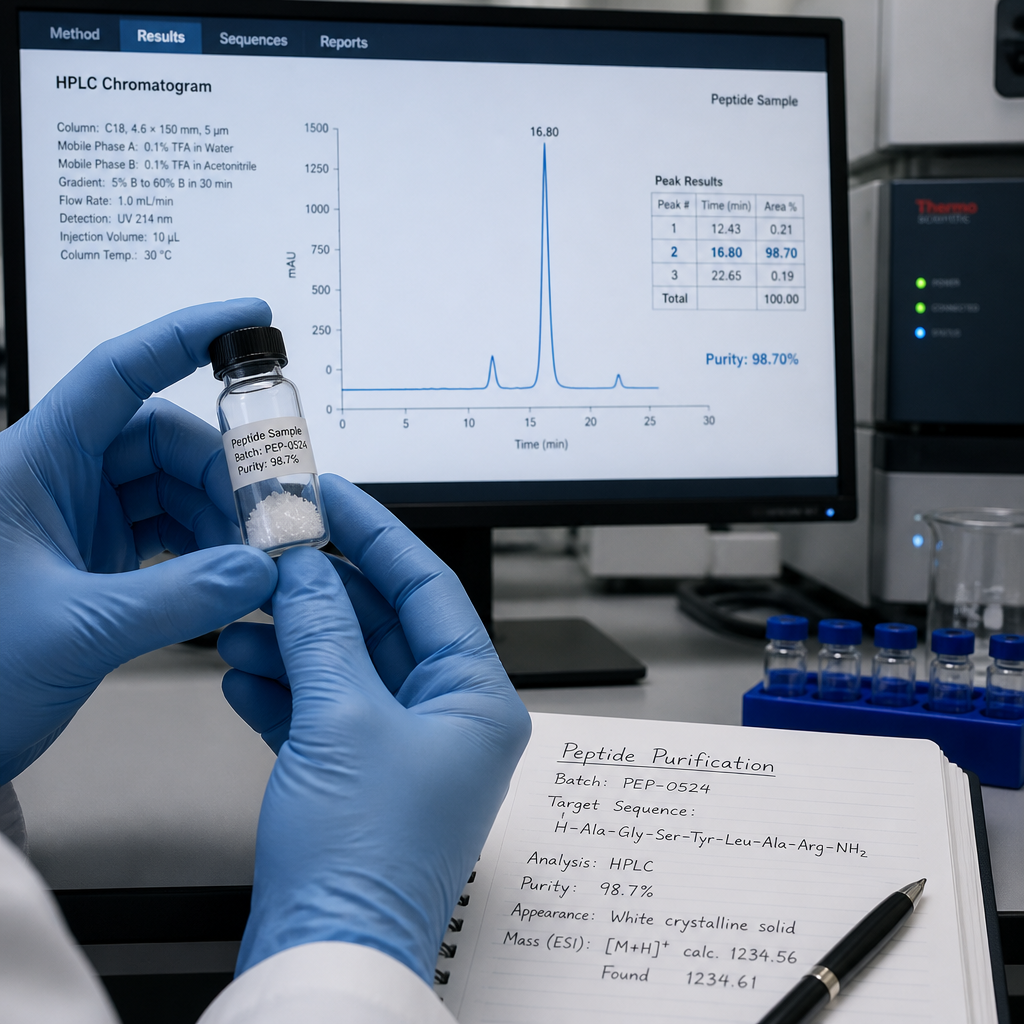
HPLC purity usually reports area percent of the main peak at a given detection wavelength. It does not account for water, residual solvents, or salt counterions, and it can miss impurities that do not absorb at the wavelength you chose. Mass spectrometry confirms identity by mass but is not a purity measure on its own. Name the technique and, where it matters, the detection wavelength or mass range.
Reviewers will also want to know whether the number is area percent or peptide content. In a lyophilized powder those two values can differ substantially, and the concentration you calculate for an assay depends on which one you used.
Mass balance and amino acid analysis
The Bureau International des Poids et Mesures (BIPM) notes that peptide purity can be assessed by mass balance, but that this approach can require unviably large quantities of material. It describes peptide impurity corrected amino acid (PICAA) analysis as a simpler alternative. PICAA quantifies the constituent amino acids after hydrolysis and corrects for amino acids that originate from impurities, with traceability to pure amino acid certified reference materials.
A purity number is a claim about a specific measurement. If the manuscript cannot say which measurement produced it, no reader can evaluate the number.
Pro tip: Ask your supplier whether the stated purity is HPLC area percent, peptide content, or both, and write the answer into the methods. A supplier that cannot answer that question has told you something about how the number was produced.
Lot-to-Lot Variation and Repeat Orders
Many multi-month studies buy the same compound more than once. Each order can be a different lot with its own certificate, and a manuscript that reports one purity figure for the whole project may be describing material that never existed as a single batch. Document every lot used, and map each experiment to the lot that produced it.

Why a second order is a different material
Even when two lots meet the same specification, they can differ in water content, salt form, or minor impurity profile. These differences rarely matter for a single experiment, but they matter when a dose-response curve spans two lots. A reviewer will then ask whether a discontinuity came from the biology or from the material, so plan for that question before you submit.
Bridging experiments when you change lots
If you must switch lots mid-study, run a short side-by-side comparison in the same assay, with old and new material tested on the same day, on the same plate, with the same reagent batch. Report that comparison in the methods, even if the result is unremarkable. A bridging experiment shows the reviewer that you checked, which is more persuasive than a bare claim that the lots are equivalent.
Reconstitution is another variable that changes between orders. If you dissolve lyophilized material in bacteriostatic water, name the diluent product, its lot, and its preservative content, because the diluent is part of the test system. Write the final concentration and storage temperature for each aliquot set.
Comparing Documentation Approaches
Authors usually document peptide sourcing in one of three ways. The table below compares them by what a reviewer can actually verify, since that question decides whether an editor accepts the methods without a query.
Documentation Approach | What a Reviewer Can Verify | Where It Falls Short |
|---|---|---|
Supplier statement only | Supplier name and a claimed purity | No lot link, no analytical method, and nothing to check against the vial used |
Certificate of analysis for the specific lot | Lot identity, stated purity, and the method the supplier reported | Still depends on the supplier's own analysis unless the report is independently reviewed |
Certificate plus independent verification and chain of custody | Lot identity, independent testing, and custody from production to receipt | Adds cost and time, and the verifying laboratory's scope must be stated clearly |
For most research manuscripts, the second row is the minimum acceptable standard, and the third removes the majority of sourcing questions. A supplier statement without a lot number is the approach that most often triggers a revision request.
Choosing the level of detail
Match the documentation to the claim. If the compound serves as a control, lot identity and stated purity may be enough. If the peptide's identity or concentration is central to the result, invest in independent verification and report it in the main text.
When a certificate is not enough
A certificate of analysis is a snapshot of one batch at one point in time. It does not show how the vial was stored after shipping. If your conclusions depend on material integrity, describe how storage was managed from receipt to use.
Pro tip: Attach the certificate as a supplementary file named for the lot number, and cite that file name in the methods. Reviewers can then match the document to the paper in a minute or less.
Reviewer Checklist for Peptide Sourcing
Use the lists below as a working document. Authors should confirm every item before submission, and reviewers can use the same list to write specific requests instead of general comments.
Items for authors to confirm
Compound name, physical form (lyophilized or solution), and any salt form or modification
Supplier name, city, province, and country
Lot number for every batch used, matched to the experiment it supports
Purity value with the analytical method named
Whether the purity is area percent or peptide content
Certificate of analysis attached as supplementary material
Storage conditions and reconstitution details, with dates
Items for reviewers to request
Reviewers should ask for the specific missing item rather than writing that the methods are unclear. A request such as "Please report the lot number for the material used in the time-course experiment, and state whether it matches the lot used for the dose-response curves" gets a faster and more useful answer than "sourcing insufficient."
Ask whether the reported concentrations were calculated from gross weight or from net peptide content. If the authors cannot say, the concentrations may be off by an amount that matters for the conclusion.
Common Objections and How to Answer Them
Most objections to sourcing sections are predictable. Authors who answer them before the first review round spend less time in revision, and reviewers who know the usual objections can phrase their requests in a way editors can act on.

"The certificate came from the vendor, so it is not independent"
That objection is fair. The answer is to say so plainly, name the testing laboratory if independent verification was done, and describe the chain of custody. Where no independent testing exists, acknowledge it as a limitation rather than implying certainty you do not have.
"The methods say high purity but give no number"
Replace the adjective with the figure, the method, and the lot. "High purity" is a judgment the reader cannot evaluate, and it invites a request for exactly the information you left out.
Frequently Asked Questions
Do I need to attach the certificate of analysis if the purity is already in the methods?
Yes. The number in the text is a claim, and the certificate is the document that supports it. Attaching it as supplementary material costs little and prevents one of the most common requests editors send.
Should purity be reported as HPLC area percent or as peptide content?
Report the value your concentrations were calculated from, and state the other one if you have it. If you calculated concentrations from gross weight, say so, because lyophilized powders contain water and salts that lower the peptide fraction.
How do I handle a study that used material from several lots?
Report each lot separately and map every experiment to its lot. If the same lot was not used across all experiments, add a bridging comparison and describe it in the methods.
Is the supplier's location relevant to a manuscript?
Yes, name the supplier, city, and country, because readers use that information to judge traceability and to locate the same material. Location alone does not establish quality, so pair it with lot-level documentation.
Does a high purity value prove the compound is active in my assay?
No. Purity establishes what fraction of the material is the target compound by the measured method. Activity has to be shown separately, with appropriate controls and an assay designed to test it.
How should research peptides be described in the manuscript?
Describe the compound by its research use only, and keep the language within in vitro scope. Avoid wording that implies clinical or personal use, since that wording invites scope questions before the science is even reviewed.
What sourcing question has a reviewer asked you most often, and which wording finally satisfied the editor?