Multi-day assays punish sloppy stock handling in a way single-day experiments never do. A vial that looks clean on Monday can carry a microbial problem by Thursday, and by then the plate data already reflects it. Bacteriostatic water, often called BAC water, is the diluent many labs reach for because its preservative slows bacterial growth between uses. That slowing is not sterility, and treating it as sterility is where most contamination stories begin. This guide explains how to build a bacteriostatic water assay workflow around peptide stocks, from the day a lot arrives to the final read.
Table of Contents
- Quick Takeaways
- Why Multi-Day Assays Change the Contamination Math
- How Bacteriostatic Water Works in the Vial
- Verifying Your BAC Water Lot Before Use
- Aseptic Stock Preparation for Peptide Solutions
- Storage Conditions and Shelf Discipline
- Comparing Stock Management Approaches
- Common Mistakes That Ruin Multi-Day Stocks
- Lot Records and Chain of Custody
- Frequently Asked Questions
Quick Takeaways
| Key Insight | Explanation |
|---|---|
| Bacteriostatic does not mean sterile | The preservative slows bacterial growth after the seal is broken. It does not make a poorly handled vial safe to use indefinitely. |
| Contamination compounds with time | Each puncture, each uncapped minute, and each temperature swing adds risk. Multi-day runs multiply those exposures. |
| Aliquot before the first draw | Splitting a master stock into single-use working aliquots limits how often one vial is opened during the study. |
| Date every opening | Write the first-puncture date and time on the label. Without it, you cannot defend an in-use window in your records. |
| Keep freeze-thaw cycles low | Repeated freezing and thawing can change peptide behavior. Check stability guidance for each compound before choosing a storage plan. |
| Tie lot numbers to every data point | Record the BAC water lot and the peptide lot in every run sheet, so a contamination event can be traced back to its source. |
Why Multi-Day Assays Change the Contamination Math
A single-day assay gives contamination little time to matter. You prepare the stock, run the plate, and read the results before the vial has been through many cycles of opening and closing. Multi-day work changes that arithmetic, because the same stock may be sampled on day one, day three, and day five.
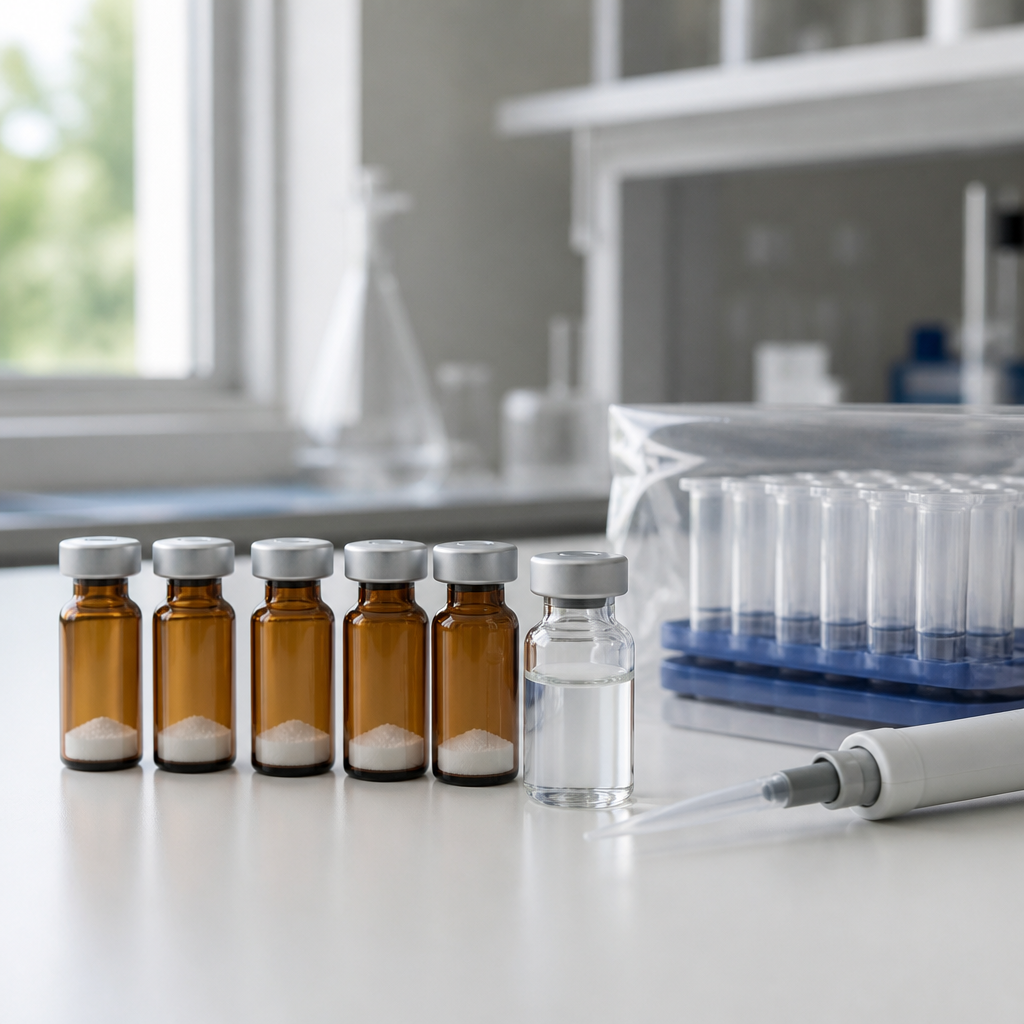
In practice, the risk does not arrive as one dramatic event. It builds in small steps: a cap left off during plate setup, a pipette tip that touched a bench surface, or a vial pulled from the refrigerator and left at room temperature for an hour. Each step looks harmless on its own, which is why the failure usually shows up only as drift in the data.
Where the Risk Actually Accumulates
Most contamination in multi-day work enters through the open vial rather than through the diluent itself. Every access point matters, including the septum, the cap, the bench surface around the vial, and the gloved hand that reaches in. If you log each access during a run, you will quickly see which steps carry the most risk.
Why Drift Is the First Warning Sign
Microbial contamination rarely announces itself with turbidity on day one. More often, a control well starts to behave differently, a baseline wanders, or replicate spread widens over several days. A sudden change in a single run deserves an investigation before you assume the peptide is the problem.
A contaminated stock rarely fails on the day it gets contaminated. It fails on the day someone finally checks the control.
How Bacteriostatic Water Works in the Vial
Bacteriostatic water is sterile water that contains a preservative intended to inhibit bacterial growth. The distinction matters. The preservative is there to hold back organisms that enter the container during repeated access, which is why the product suits multi-dose work. It is not a replacement for aseptic technique, and it cannot restore sterility once a vial has been compromised.
What the Preservative Does and Does Not Do
The preservative slows the growth of many common contaminants between uses. It is not designed to clear a heavy contamination load, and it does not protect a vial that was opened in a dirty environment and left uncapped. Treat it as a buffer that buys time, not as a barrier that makes poor handling acceptable.
Why Bacteriostatic Is Not Insurance for Poor Technique
Researchers often assume that a preserved vial can tolerate a few extra openings. In practice, the preservative cannot compensate for a septum punctured dozens of times with a dirty needle. The product label tells you what the manufacturer designed the water to do, and your standard operating procedure has to supply everything else.
Pro tip: Write your in-use window into the SOP as a lab-specific limit, based on your own validation data and the labeled instructions for the exact product you bought. Do not carry a window from one product to another.
Verifying Your BAC Water Lot Before Use
Your stock is only as clean as the diluent you add to it. Before a new bacteriostatic water lot enters a multi-day workflow, check the packaging for seal integrity, expiry date, and clear labeling of the preservative. A cracked seal or a missing lot number is a reason to quarantine the product, not a reason to hope for the best.
Reading the Label and Filing Lot Documentation
Record the manufacturer, lot number, expiry date, and receipt date in your study notebook. If the supplier provides documentation for the lot, file it with the study records. You should be able to answer where a diluent came from without searching through old email threads.
Setting Up a Quarantine and Release Step
A simple release step prevents most lot-related problems. Open the new lot in a clean hood, dispense a small test volume into a sterile container, and hold it under the same conditions your samples will see, alongside an untouched control. Release the lot to the project only after the test volume stays clear for the period your lab has defined.
Pepura Labs supplies Bacteriostatic Water alongside its lyophilized Retatrutide compounds, so you can keep both lots on one documentation trail. Keeping the diluent and the peptide in the same records makes any later investigation far faster.
Aseptic Stock Preparation for Peptide Solutions
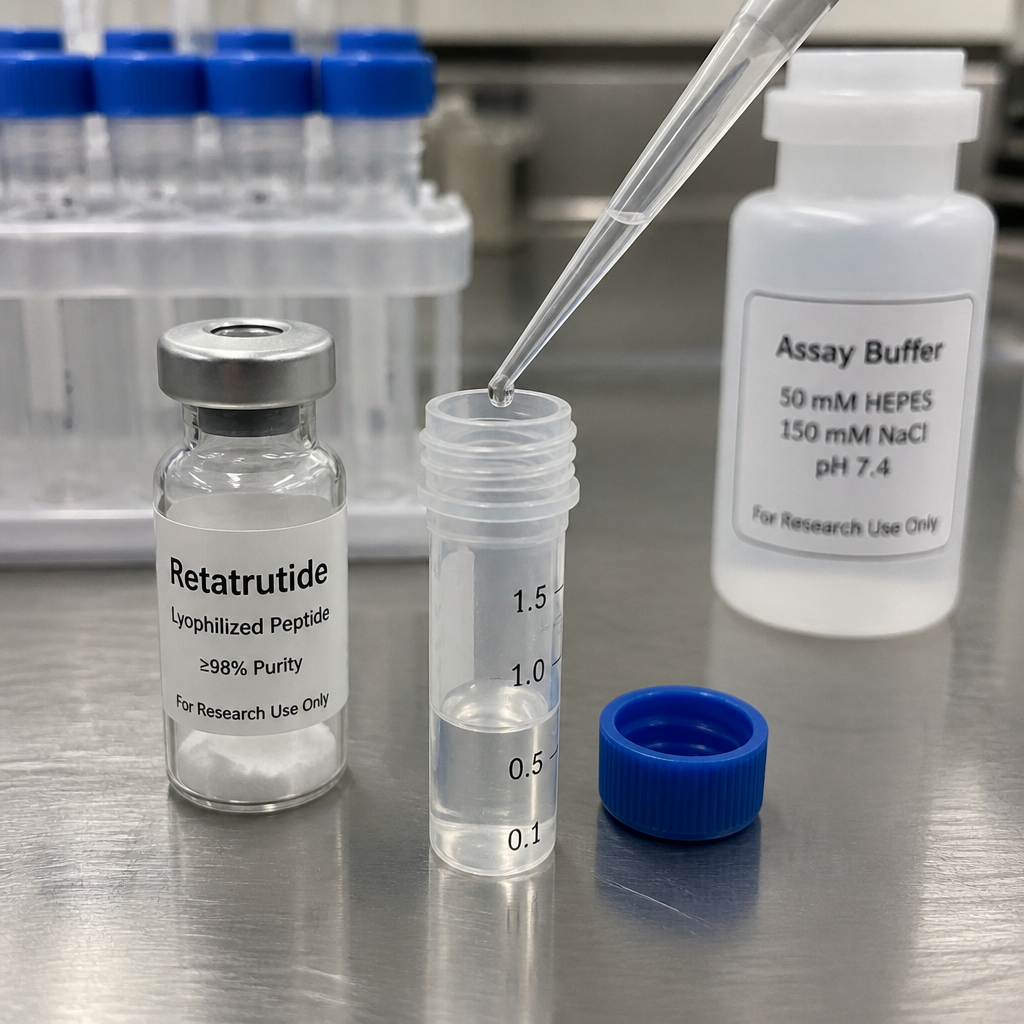
Stock preparation is where most multi-day contamination is decided. Reconstitution puts a sterile diluent into a vial that already holds a sealed, lyophilized cake, and every extra second of exposure counts. Work inside a biosafety cabinet or an equivalent clean hood, wipe each septum with an appropriate disinfectant, and let it dry before you puncture it.
Direct the diluent gently down the vial wall rather than straight onto the cake, and avoid vigorous shaking that creates foam and aerosols. Let the peptide dissolve fully before you touch the vial again. A clean solution that took a few extra minutes is always worth more than a fast one you cannot trust.
Drawing Doses Without Introducing Organisms
Use a fresh sterile syringe or pipette tip for every withdrawal, and never return unused solution to the stock vial. Pulling a plunger back into a vial can draw air and contaminants into the reservoir. Keep the needle tip away from bench surfaces and away from other people's workspaces.
Single-Use Aliquots Versus Repeated Puncture
Splitting the master stock into single-use aliquots is the most effective change most labs can make. Each aliquot is opened once, used, and discarded, so the master vial is punctured a fixed, small number of times rather than dozens. The extra preparation takes a few minutes and removes an entire category of exposure from the study.
Pro tip: Label each aliquot with a sequential identifier and the preparation date, then keep a simple inventory sheet. That sheet lets you match every data point back to the specific tube it came from.
Storage Conditions and Shelf Discipline
Storage is the quiet half of contamination control. A stock handled perfectly on day one can still fail by day six if it sits in a refrigerator door that opens dozens of times a day, or on a bench in a warm room. Choose a storage location with stable temperature, away from the door, and log the temperature range on a regular schedule.
Refrigerated Storage for Working Stocks
Working stocks that will be used within your validated window belong in a dedicated refrigerator with a calibrated thermometer. Keep them in a closed secondary container labeled with the compound name, concentration, preparation date, and the initials of the person who prepared them. Unlabeled vials in a shared refrigerator are how stocks get swapped.
Freezing and Freeze-Thaw Limits
Freezing can extend the usable life of some aliquots, but it is not a universal fix. Repeated freeze-thaw cycles can alter a peptide, and thawing a cold vial in a humid room lets condensation enter the container. Confirm the stability guidance for your specific compound before choosing to freeze, and thaw each aliquot only once.
Pro tip: Attach a small card to each refrigerator shelf showing the date you last verified the temperature. An undated check tells you nothing about what happened overnight.
Comparing Stock Management Approaches
Labs running multi-day work usually settle on one of three stock strategies. Each makes a different trade between convenience and exposure. The table below compares them on the factors that matter most for contamination control.
| Stock Strategy | Contamination Exposure | Best Fit |
|---|---|---|
| One master vial opened for the whole run | High. Every draw adds a puncture and an access event. | Short runs with few draws and tight bench control |
| Single-use aliquots drawn from a master | Low. Each aliquot is opened once and then discarded. | Multi-day assays with frequent sampling across several days |
| Fresh BAC water and peptide prepared each session | Moderate. Fewer punctures per vial, but more reconstitution events overall. | Labs with a validated same-day preparation routine and enough staff time |
Choosing Between the Three Options
In our experience, single-use aliquots win for almost any study longer than a couple of sessions. The preparation time pays back quickly through fewer contamination investigations and fewer discarded plates. Fresh daily preparation can work well, but only if the reconstitution step is consistently clean, because it multiplies the number of times the process can go wrong.
When One Master Vial Is Acceptable
A single master vial can be reasonable for a short study with a small number of draws, provided every access is logged and the vial is kept under strict bench discipline. Once the number of planned draws climbs, the risk climbs with it. If you cannot count the punctures in advance, you should not use this approach for a multi-day run.
Common Mistakes That Ruin Multi-Day Stocks
Most contamination problems trace back to a short list of habits. None of them is exotic. They are the routine shortcuts that feel efficient on a busy bench and cost weeks of reruns later.

Leaving Vials Uncapped During Setup
Plate setup takes longer than most people plan for, and vials sit open while pipetting is in progress. Cap every vial the moment you finish a draw, and keep a dedicated rack on the bench for vials currently in use so they do not wander across the workspace.
Returning Unused Solution to the Stock
Pouring leftover solution back into the master vial is one of the fastest ways to spread contamination through an entire series. Once the solution has touched a pipette tip, a tube wall, or a bench surface, it belongs in waste. Saving a few microliters is never worth compromising the rest of the study.
Mixing Unlabeled or Mislabeled Vials
A stock without a date and identifier is effectively unusable, even when it looks fine. Mislabeling is also a common reason a clean lot gets blamed for a problem that was really caused by a swap in the refrigerator. Relabel any vial the moment its markings become unclear.
Lot Records and Chain of Custody
A contamination investigation is only as good as its paperwork. If you cannot tell which bacteriostatic water lot, which peptide lot, and which aliquot went into a given well, you cannot isolate the cause. Good records turn a vague failure into a specific, fixable problem.
What Belongs in Every Run Sheet
Record the diluent lot, the peptide lot number, the aliquot identifier, the open date and time, and the person who handled the vial. Add the storage location and any temperature excursions you noticed. This takes a couple of minutes per session and saves days of guesswork if something goes wrong.
How Pepura Labs Supports Traceability
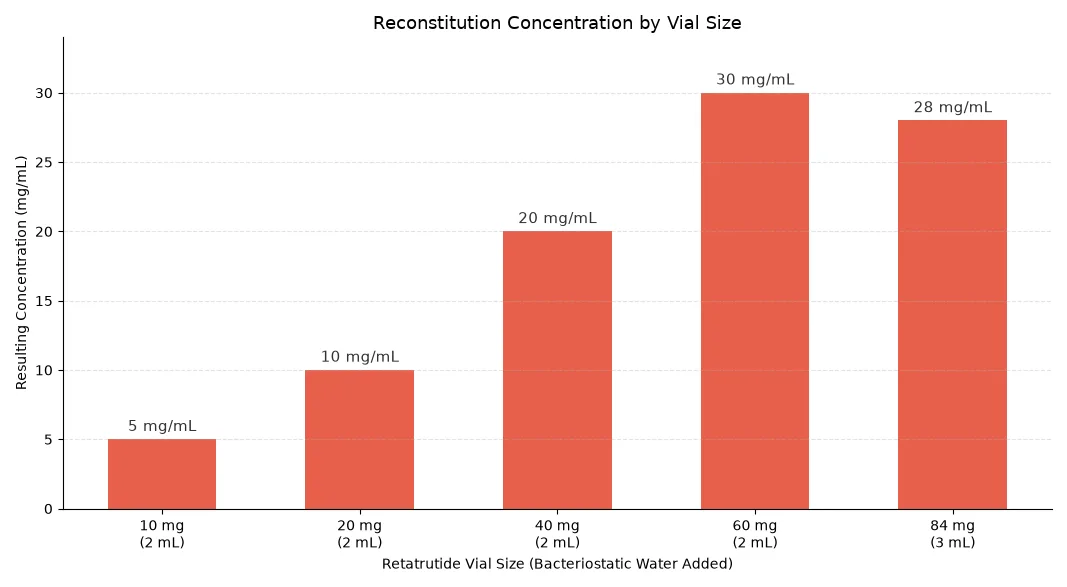
Pepura Labs supplies lyophilized Retatrutide compounds in 10mg, 20mg, 40mg, 60mg, and 84mg options, with independent laboratory verification and full Chain of Custody documentation. Lot-level records make it far easier to connect a working stock back to its source. All products are supplied for in vitro research use only. You can review the range at Pepura Labs.
Frequently Asked Questions
Can I use bacteriostatic water for a multi-day assay without any additional precautions?
No. The preservative slows bacterial growth in the diluent between uses, but sterility after the seal is broken depends on your technique. Use a fresh sterile syringe for each draw, keep the vial capped between uses, and follow a lab-specific in-use window.
How long can an opened bacteriostatic water vial stay in use?
There is no universal number that applies to every lab or product. Follow the labeled instructions for the specific product, then set an in-use window based on your own validation data. Date every opening so the limit can actually be enforced.
Does bacteriostatic water prevent contamination of a peptide stock?
It helps slow growth of some organisms, but it does not sterilize a peptide solution that was prepared or sampled improperly. Treat it as a secondary buffer and rely on clean preparation, aliquoting, and storage as your primary controls.
Should I freeze reconstituted peptide aliquots?
Sometimes, but not by default. Check the stability information for the specific compound, divide the stock into single-use volumes, and thaw each aliquot only once. Freeze-thaw cycles and condensation are common ways a good stock degrades.
What is the first sign of contamination in a multi-day assay?
It is usually drift rather than visible cloudiness. Watch control wells, baseline readings, and replicate spread across days. A change that appears in one run with no protocol change deserves a contamination check before you blame the compound.
How do I tell whether a problem comes from the peptide or the diluent?
Run a diluent-only blank from the same lot alongside your samples, and compare a freshly prepared stock against the suspect one if you have material to spare. Without a blank and clear lot records, you are guessing at the cause.
We would love to hear about your own multi-day assay setups, including any contamination problem you eventually traced to a surprising source, so please share your experience below.
We would love your feedback and any insights you would share with others. What perspective would you add?