A retatrutide 10mg pilot study usually fails for dull reasons: the team bought more material than the question needed, planned too few controls, or never verified what was actually in the vial. The 10mg size exists for the stage where those mistakes are cheapest to avoid. If you are running a feasibility experiment, you need enough compound to test your handling, your assay and your readouts without committing a full budget to a question you have not framed yet. This guide covers how we see the 10mg vial used in practice, what to verify before opening it, and when a small pilot should hand off to a larger study. All material discussed here is supplied for in vitro research use only.
Table of Contents
- Quick Takeaways
- What a 10mg Vial Actually Gives a Pilot Study
- Designing a Feasibility Experiment Around 10mg
- Reconstitution and Handling With Bacteriostatic Water
- Verifying Purity With Canadian Lab Testing and COA Documentation
- Scaling From 10mg to Higher Vial Sizes
- What the Published Human Data Tells Us, and Where It Stops
- Common Mistakes in Small-Scale Peptide Pilots
- Frequently Asked Questions
- References
Quick Takeaways
| Key Insight | Explanation |
|---|---|
| Use the 10mg vial when the question is feasibility, not final data | A lyophilized 10mg vial leaves room to test dissolution, dilution and readout stability before you scale up. |
| Write the pilot endpoint before you open the vial | Without a defined pass or fail condition, a small study produces notes instead of a decision. |
| Match the lot number on the vial to the certificate of analysis | Paperwork from a different batch makes any result impossible to trace. |
| Choose bacteriostatic water deliberately and keep the lot constant | The diluent becomes part of your experimental system, so switching lots mid-pilot adds a variable you cannot separate out. |
| Aliquot the stock once and avoid repeated freeze-thaw cycles | Each thaw is a chance for concentration drift between runs that looked identical on paper. |
| Size the next vial only after assay variance is known | Moving to 20mg, 40mg, 60mg or 84mg before your readout is stable multiplies the cost of a flawed protocol. |
What a 10mg Vial Actually Gives a Pilot Study
Retatrutide is an investigational molecule that acts on three receptors: GLP-1, GIP and glucagon. A systematic review and meta-analysis of randomized controlled trials for obesity treatment, published in the Baylor University Medical Center Proceedings in 2025, summarized its efficacy and safety across that trial work. That body of clinical research is the reason many laboratories now ask about the compound. Our catalog supplies it for in vitro research only, so the questions you bring to it should be bench questions.
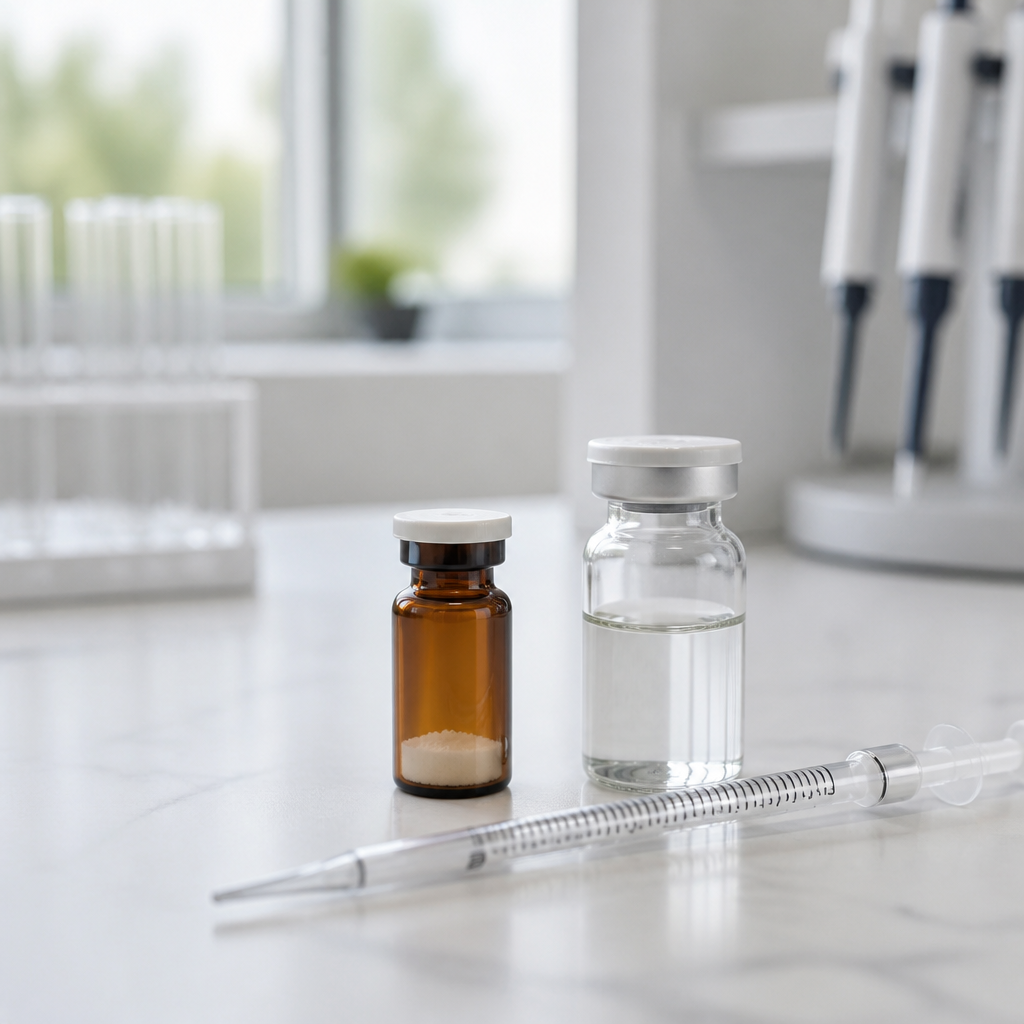
A 10mg lyophilized vial is the smallest unit in this range, and it suits a pilot whose job is to answer whether a method works. In practice, that means checking whether the powder dissolves cleanly, whether your assay responds at all, and whether the signal is strong enough to compare across later batches. You are buying information about your process, not a finished dataset.
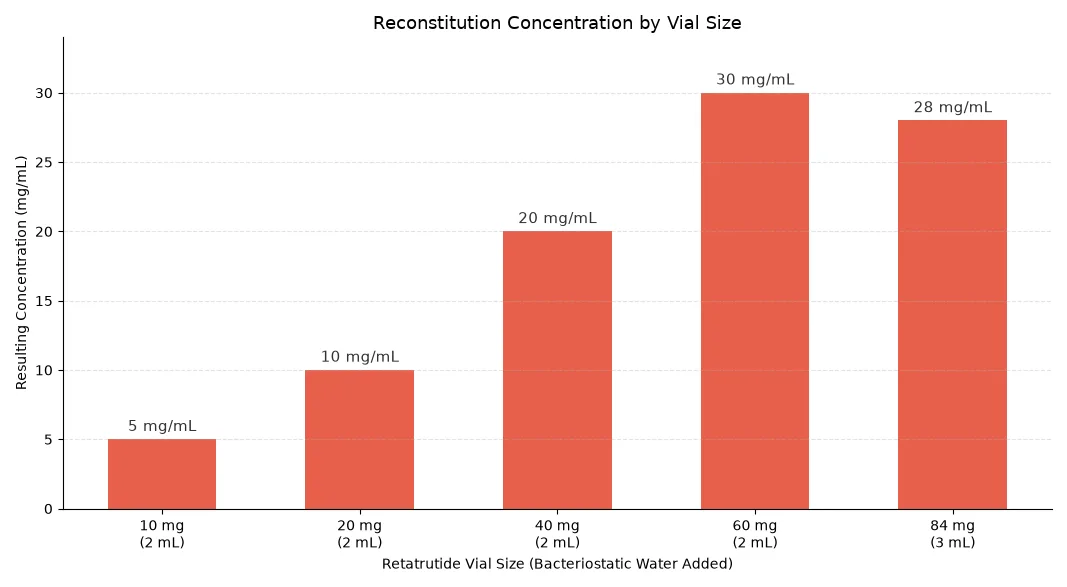
The arithmetic is simple, and it is worth writing down before you open anything. Reconstituting a 10mg vial in 2 mL of diluent gives a stock concentration of 5 mg/mL, so a 500 microliter working aliquot carries 2.5 mg of compound. Confirm the net content on the batch documentation before you rely on any label figure.
Plan the vial around three jobs: a handling check, a short concentration range finder, and one reproducibility run. The 10mg size lets you do all three without splitting the material so thin that a single pipetting error ruins the work.
Designing a Feasibility Experiment Around 10mg
A feasibility experiment answers a narrow question: can this compound, in this assay, produce a readout stable enough to justify a larger study? That is a different question from whether retatrutide does something interesting. Keep the goal small, and the 10mg vial will cover it.
Defining the Question Before the Vial Arrives
Write one primary endpoint and one failure condition before the shipment lands. For example, "the assay returns a signal at least three times the vehicle control at two concentrations on two separate days" is a pilot endpoint you can pass or fail. "See what happens" is not, and a pilot built on that sentence will generate notes instead of a decision.
A common mistake is choosing the endpoint after seeing the first data. Lock the analysis plan in a dated lab notebook, including the threshold for moving forward. This is the cheapest step in the whole workflow, and it is the one most often skipped.
Pro tip: Run a blank diluent control alongside the first reconstituted sample. If the blank produces a signal in your assay, you have a background problem to fix before any retatrutide data can mean anything.
Sample Size and Replicate Planning
Small pilots fail on replicates more often than on concentration choice. Two technical replicates per condition, run across at least two independent days, is a reasonable minimum for a feasibility read. That design separates pipetting noise from run-to-run drift. A single plate tells you the assay produced a number, not that the number repeats.
Do the replicate math before you commit material. Six concentrations, two replicates and two days gives you 24 compound-containing wells per run. Check that total volume against your stock concentration, and you will usually find the vial covers the pilot with room to spare.
Reconstitution and Handling With Bacteriostatic Water
Reconstitution is where many pilots quietly lose material. The powder is lyophilized, so it should dissolve with gentle swirling or inversion, not vigorous shaking. Shaking can foam the solution and stress the peptide, and foam is a poor thing to find in a pilot you expected to be clean.
Add diluent slowly down the inner wall of the vial rather than squirting it directly onto the powder. Let the cake wet and settle, then swirl gently until the solution is clear. If it is cloudy or contains visible particulates, stop and check the batch documentation before you go further.
Choosing Bacteriostatic Water for Dilution
We supply bacteriostatic water alongside the compound because it is the diluent most researchers ask for when they plan multi-draw work. Its preservative content suits repeated withdrawals from one vial over a short window, which fits a pilot that samples the same stock several times. It is still a choice to document, because the diluent becomes part of your experimental system.
Use the same diluent lot for every run in a pilot. Switching lots mid-study adds a variable you cannot separate from the compound effect, and a feasibility study exists to prevent that kind of confusion.
Storage After Reconstitution
Aliquot the reconstituted stock into single-use volumes as soon as it is made. Each freeze-thaw cycle risks concentration drift, and repeatedly opening one vial raises contamination risk. A labeled aliquot log with the date, volume and freezer position is a small habit that rescues pilots.
Store unopened lyophilized vials according to the conditions printed on the batch documentation. Do not improvise storage from a general rule, because the documentation for your specific lot is the authority on your specific material.
Verifying Purity With Canadian Lab Testing and COA Documentation
A pilot is only as reliable as the material behind it, which makes verification the first real experiment of the project. Our target for this compound is 99% purity or higher, and each batch is backed by Canadian laboratory analysis and a certificate of analysis. The paperwork is not decoration. It tells you whether a bad result came from your protocol or from the vial.

What a Certificate of Analysis Should Show
A useful COA names the batch, describes the test methods, and reports purity by a stated analytical technique. High-performance liquid chromatography is a common choice for peptide purity. Check that the lot number on the COA matches the lot printed on your vial before you reconstitute anything, because mismatched paperwork should stop the study before it starts.
Read the identity result as carefully as the purity number. A purity percentage alone tells you how clean the sample is, not that it is the compound you ordered. Identity is commonly confirmed by mass spectrometry, so ask for both results and file them with your pilot records.
Batch Traceability and Chain of Custody
Chain of custody documentation records where the material has been, from production through shipment to your bench. For a pilot, its real value appears weeks later, when a result looks odd. If a second batch behaves differently, traceability lets you compare lot records instead of guessing.
Pro tip: Photograph the vial label and the COA together on the day you receive them, then store both in your study folder. Labels wear and memories drift, while a dated record is far easier to defend.
Scaling From 10mg to Higher Vial Sizes
The 10mg vial is a starting point, not a verdict on your project. Once a pilot shows a stable readout across independent runs, the next question is whether you need more material for longer experiments or more replicates. Our catalog also lists 20mg, 40mg, 60mg and 84mg compounds, and the choice among them should follow your assay data, not your enthusiasm.
Where the 10mg Vial Stops Being Enough
The 10mg size runs out first when a study moves to longer time courses, larger plates, or several assay arms run in parallel. If your pilot consumed most of a vial in three runs, budget the next size before the phase begins rather than stretching the stock. Running short mid-study forces a change of material, and that resets your baseline.
Calculate consumption per run from your actual protocol, including dead volume in syringes and pipette tips. Most underestimates come from forgetting those losses.
Comparing Vial Sizes Side by Side
The table below compares three sizes by the stage of work each suits best. It is written for research planning only.
| Vial size | Best fit for | Main trade-off |
|---|---|---|
| 10mg | Feasibility runs, handling checks and a first readout | Limited headroom if the protocol changes |
| 40mg | Multi-week assay series with several arms | Higher upfront commitment before the assay is validated |
| 84mg | Long program with a confirmed assay and a fixed protocol | Only sensible once variance is known and storage is controlled |
What the Published Human Data Tells Us, and Where It Stops
Published clinical work explains why researchers care about this molecule, but it does not transfer directly to a bench experiment. The meta-analysis pooled randomized trials and assessed efficacy and safety across them. Its value to you is as background on target biology, not as a template for your readouts.
A pilot that cannot state its failure condition is not a feasibility study. It is a collection of observations waiting for a question.
What the Phase 2 Numbers Show
Phase 2 results summarized by ADA Meeting News reported an average weight reduction of 24.2% at 11 months at the highest retatrutide dose, in trials covering obesity, type 2 diabetes and NASH. Those are clinical outcomes measured in people under trial conditions. They show a strong effect in that setting, and nothing about how the compound behaves in your buffer, your cell line or your plate reader.
Why Trial Data Does Not Transfer to Your Bench
Clinical endpoints such as body weight, blood glucose or liver fat are integrated outcomes across a whole organism. An in vitro pilot measures a narrow signal from a defined system. A positive clinical result does not tell you which assay to build, which concentration range to test, or whether your readout is sensitive enough. Those answers come from your own feasibility work.
Keep the literature in your introduction as context, and tie your pilot conclusions to your own data. Reviewers notice quickly when a feasibility report borrows a clinical effect size as if it were a bench result.
Common Mistakes in Small-Scale Peptide Pilots
Most pilots that fail do not fail because the compound was wrong. They fail because the process around the compound was loose. The mistakes below repeat across laboratories, and most of them are cheap to prevent.
Opening the Vial Before the Assay Is Ready
Reconstituting material before your assay is calibrated wastes both the vial and your time. Run your controls, confirm the instrument is in range, and only then open the compound. A vial that sits reconstituted for a week while you troubleshoot a plate reader has already lost value.
Treating One Run as a Result
One clean run is a promising observation, not a finding. Repeat the pilot across independent days, with the same diluent lot and aliquot scheme, before you decide anything. If the second run disagrees with the first, that disagreement is the most useful data you have.
Do not change the protocol between runs to chase a better number. Record every deviation in the notebook, and treat any unplanned change as a new experiment.
Pro tip: Set a recurring reminder to review the COA, the aliquot log and the assay controls together after each run. Problems that look random in isolation often line up when the records sit side by side.
Frequently Asked Questions
What is a 10mg retatrutide vial mainly used for?
It is sized for feasibility work, such as testing dissolution, assay response and readout stability before committing to larger material. It is supplied for in vitro research only.
How many runs should a small retatrutide pilot include?
At least two independent runs on separate days, each with technical replicates. A single run shows what happened once, not whether the result repeats.
Which diluent should I use to reconstitute a 10mg vial?
Bacteriostatic water is the diluent we supply, and it is the choice most researchers make for multi-draw work. Keep the same diluent lot across the whole pilot so the solvent does not become a variable.
What should I check first on a certificate of analysis?
Confirm the lot number matches your vial, then read both the purity result and the identity confirmation. Purity alone does not confirm that you have the compound you ordered.
When should I move from a 10mg vial to a larger size?
Move up after your assay shows stable readouts across independent runs and your protocol is fixed. Calculate per-run consumption including dead volume, and order the next size before the 10mg stock runs low.
Can published clinical results replace my own feasibility data?
No. Clinical outcomes such as weight change are measured in people, while a pilot measures a narrow signal in a defined system. Use the literature for background and let your own runs set the protocol.
Have you run a small retatrutide feasibility experiment, and what did your first pilot teach you that the protocol did not?